


|
Whole-Person Wellness
for Vital Living
This
is the beginning of a five-part series on senior wellness matters by SFA
professional Jan Montague, MGS. Ms. Montague has a Master of Gerontological
Studies degree and has been involved in wellness and health promotion
for over 25 years. She serves on several international and national
Advisory Boards and has authored numerous articles on whole-person
wellness. Prior to becoming Vice President of Community Life for
Lakeview Village, Lenexa, KS, Ms. Montague was President and founder of
Montague, Eippert & Associates, a nationwide consulting service that
specialized in the design, development, and implementation of wellness
cultures, programs and centers. (913-744-2467, www.jmontague@lakeviewvillage.org

Part One of five installments
Why Wellness? Why
Now?
Newspapers, magazines, television, radio, and the Internet -- all are constantly
reminding us that our population is aging. Haven't we always been aging? Well,
yes and no. Never before in our history have we had so many older people living
so long. Life expectancy at birth has increased by about thirty years, from 47
years of age in 1900 to about 76 years of age in 1996. Furthermore, demographers
predict the number of persons age 65 and older to increase to 69 million by the
year 2030. To understand the enormity of growth within this defined market,
consider this: In 1980 there were 25.7 million individuals age 65 and older in
the United States. From 1980 to 2050, this group is projected to nearly double,
from 12 percent to 23 percent of the population.
This demographic switch has numerous implications for both individuals and
society; perhaps the most vital is the concern surrounding health care needs and
resources. Proponents of the "live longer and healthier" model cite research
that indicates older people have increased knowledge and awareness about the
importance of health management -- including both traditional and integrative
medicine techniques. Research also shows that older people are more health
conscious than other age groups and when health promotion programs are
available, accessible, and appropriate, older people participate. Information
provided by American Sports Data Research in the report Tracking the Fitness
Movement showed the 55 and older market leading the way in healthy living,
for example:
-
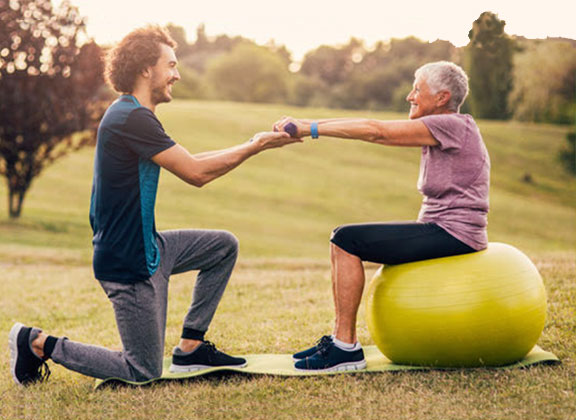
Individuals 55 and older have the
largest percentage (29 percent) of frequent participants in fitness
activities, compared to all other groups;
-
The number of people 55 and older who
exercise frequently has soared by 75 percent since 1987 to 14.2 million;
-
2.7 million belong to a health club;
-
More than a million lift weights
twice a week.
However, as the older population increases
in numbers and age in the coming years, some fear that medical costs will
continue an upward spiral at alarming rates. To address this concern, the
wellness concept has emerged as a model that can lead not only to decreased
health care consumption, but also to improved health and quality of life for
many Americans.
The desire for optimal health as we age -- to be functionally-able for as long
as possible -- has people embracing the concepts of wellness as a leading model
of health management. The wellness model promotes self-responsibility for health
and well-being within all areas of a person's life. This model incorporates a
holistic perspective: The whole is greater than the sum of the parts. It
integrates, balances, and blends the six dimensions of wellness (emotional,
social, intellectual, physical, spiritual, and vocational) into individualized
programming. Research shows that for many aging individuals, participation in
whole-person health programs slows the aging process and promotes independence.
Click here for Part Two of Whole-Person Wellness for
Vital Living, which will address society's new interest in wellness and
provide a working definition of the wellness philosophy.)

Return
to SeniorFitness.net Home Page
|