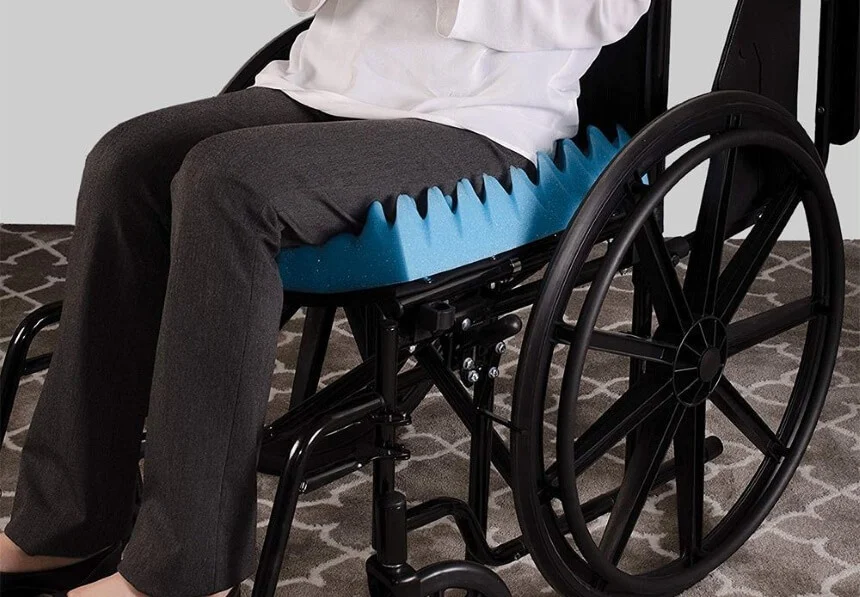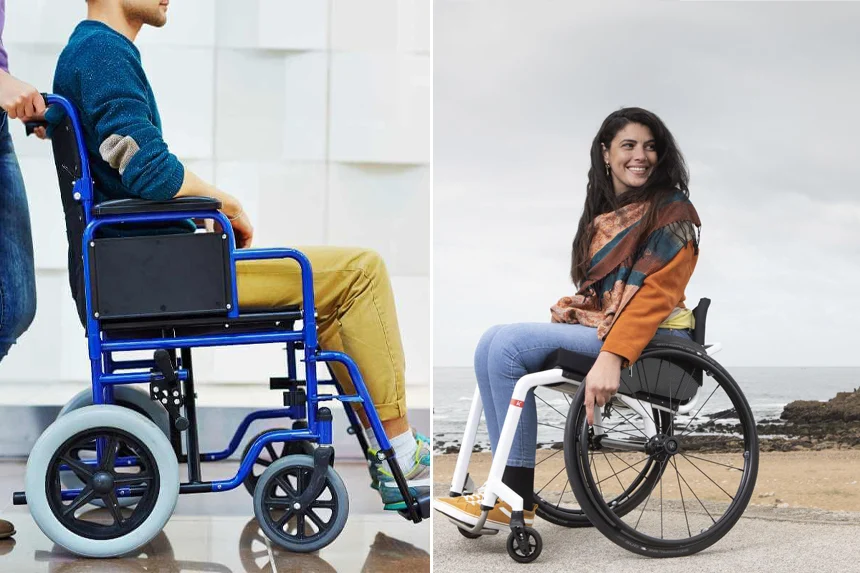
A rollator transport chair combo combines two mobility aids in one frame. It can be used as a rollator when the user is able to walk independently and then converted into a caregiver-pushed transport chair when they need to sit down or become too tired to continue walking. That flexibility can be particularly useful for seniors and adults whose walking ability varies throughout the day. If you are still comparing different walking aids, our guide to walkers for seniors explains how standard walkers, rollators and other mobility aids differ.
Unlike a conventional wheelchair, most of the models in this guide are designed primarily as walking aids with an occasional transport-chair function. The seated user is pushed by a caregiver rather than propelling the chair independently, so it is important to choose a model based on both the user’s walking needs and the caregiver’s ability to steer, brake, fold and lift the device.
For this 2026 update, we compared seven current rollator transport chair combinations using factors such as weight capacity, seat dimensions, handle adjustment, wheel size, product weight, folding design and ease of conversion between modes. Our selection ranges from lightweight everyday hybrids to wider-seat and outdoor-oriented options.
SeniorFitness is reader-supported. We may earn a commission through products purchased using links on this page. Learn more about our process here
TLDR;
The Drive Medical Duet 795 is our best overall rollator transport chair combo for 2026 because it provides an excellent balance of low weight, a 300-pound capacity and straightforward conversion between walking and transport modes. Buyers willing to spend more should consider the Drive Medical Nitro Duet, which adds larger front wheels, a substantially wider seat and a more refined folding frame.
The GOPLUS 2-in-1 is our value option, while the Lumex HybridLX LX1000 stands out when frequent car transport and storage are priorities. Taller users should look closely at the ProBasics Transport Rollator, the Helavo H1070 offers a useful balance of low weight, seating comfort and everyday outdoor usability, and the Medline Translator has the widest and deepest seat in this comparison.
Quick Summary
- Editor’s Choice – Best Overall:Drive Medical Duet 795 — A 20-pound hybrid with a 300-pound capacity, 8-inch wheels and straightforward conversion between rollator and caregiver-pushed transport-chair modes.
- Upgrade Pick – Best Premium Combo:Drive Medical Nitro Duet — A more refined Drive hybrid with a 17.5-inch-wide seat, larger 10-inch front wheels and a cross-brace folding design.
- Best Value:GOPLUS 2-in-1 Folding Rollator Walker — A value-focused aluminum hybrid with adjustable handles, 8-inch wheels, folding footrests and a reversible backrest.
- Best for Easy Transport:Lumex HybridLX LX1000 — A roughly 22-pound combination chair with an 18-inch-wide seat, folding frame and broad handle adjustment.
- Best for Tall Users:ProBasics Transport Rollator — A higher-seat model with a 21.75-inch seat height and handles extending to approximately 40 inches.
- Best for Everyday Outdoor Use:Helavo H1070 — A 21.2-pound aluminum hybrid with an 18.3-inch seat, four 8-inch wheels, parking brakes and useful everyday accessories.
- Best Wide-Seat Option:Medline Translator — A compact hybrid with a notably roomy 19 x 16-inch seat and a listed capacity of 250 pounds.
Top 7 Rollator Transport Chair Combo Models Review 2026
1. Editor’s Choice for Rollator Transport Chair Combo for Seniors
Amazon
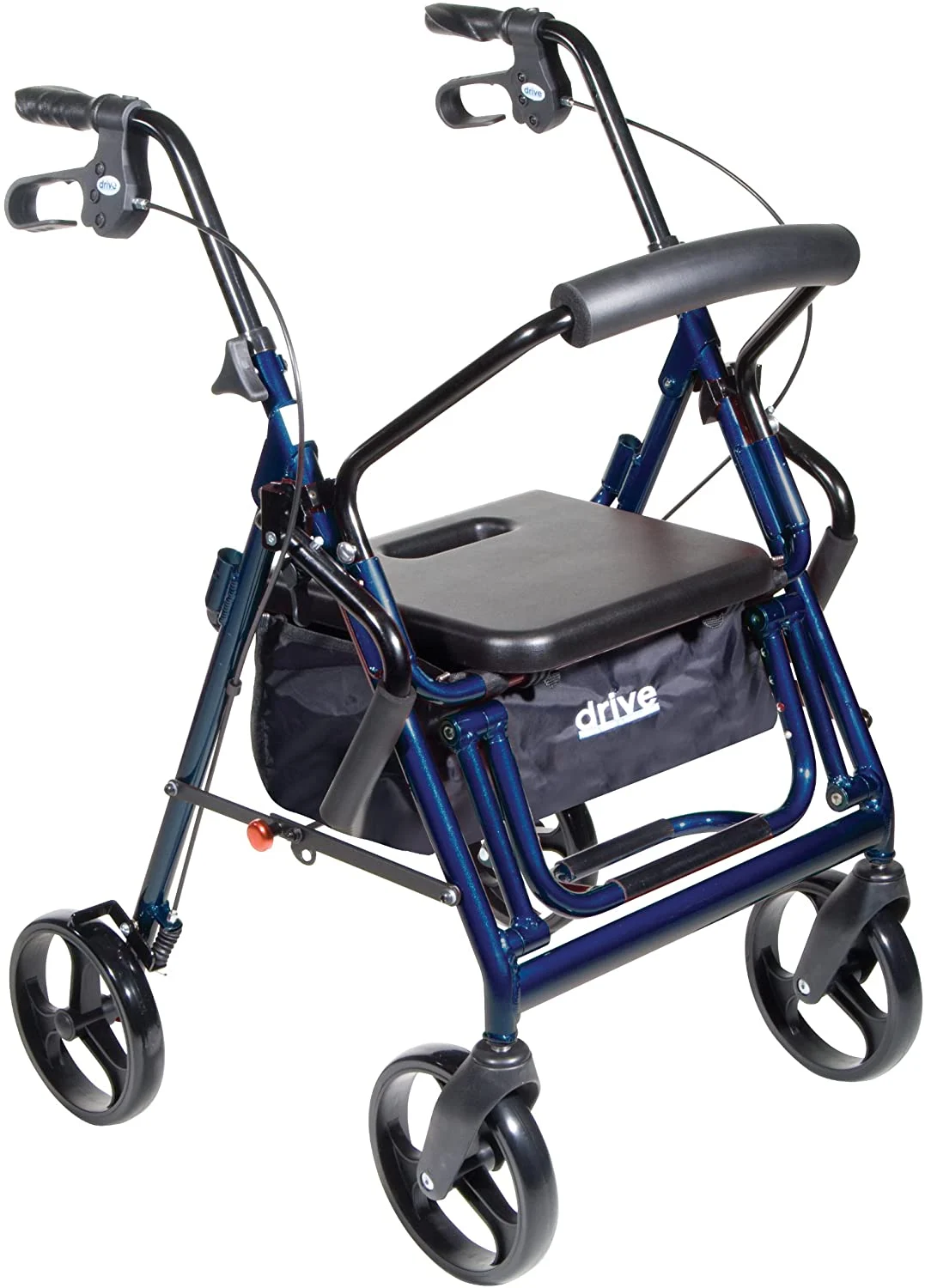
Drive Medical 795 Duet Folding Transport Wheelchair and Rollator Walker
Features
- Weight support: 300 lbs
- Seat-to-floor height: 21″
- Seat size: 13.5″ (W) x 13″ (D)
- Handle height: 31.5″–37″
- Overall dimensions: 25.5″ (W) x 37″ (H) x 26″ (L)
- Weight: 20 lbs
More features: locking flip-up armrests and flip-down footrest; folding frame with lock-out feature; 8″ wheels; limited lifetime warranty
The Drive Medical Duet 795 earns our Editor’s Choice because it combines the two functions without making the device excessively heavy or complicated. At only 20 pounds, it is one of the lighter models in this roundup while still supporting users up to 300 pounds, and the 31.5–37-inch handle adjustment gives it a useful range for everyday walking support.
Conversion between modes is straightforward. In rollator mode, the footrest and armrests can be stored out of the way; when the user needs to be pushed, the footrest folds down, the armrests lock into position and the reversible padded backrest changes orientation. Drive also incorporates a frame lock that holds the unit open during use and closed while being transported.
What do we love it for?
The biggest advantage is the balance between weight, simplicity and genuine two-in-one functionality. Some hybrid products become cumbersome because of all the additional wheelchair components, but the Duet remains relatively light at 20 pounds.
The 8-inch casters are also a sensible compromise for people who expect a mixture of indoor and normal paved outdoor use. They will not provide the rough-surface ability of a dedicated large-wheel outdoor rollator, but they keep the chair compact and easy to maneuver.
What could be better?
The 13.5-inch-wide seat is relatively narrow, especially compared with models such as the Medline Translator or Helavo H1070. Larger users should therefore check seat dimensions rather than relying only on the 300-pound weight rating.
It is also important to understand that this is a caregiver-pushed transport chair, not a self-propelled wheelchair. The occupant cannot use the rear wheels to independently move the chair while seated.
2. Upgrade Pick for Rollator Transport Chair Combo

Amazon
Drive Medical Nitro Duet Rollator Rolling Walker and Transport Wheelchair
Features
- Weight support: 300 lbs
- Seat-to-floor height: 20″
- Seat size: 17.5″ (W) x 13″ (D)
- Handle height: 32″–37″
- Overall dimensions: 24″ (W) x 37″ (H) x 30″ (L)
- Weight: 22 lbs
More features: 10″ front wheels and 8″ rear wheels; tool-free two-position contoured backrest; brake cables routed inside the frame; lifetime limited warranty
The Drive Medical Nitro Duet is the premium alternative to the standard Duet, with a more refined frame design and larger front wheels. Its approximately 17.5-inch-wide seat is also significantly roomier than the standard Duet’s 13.5-inch seat, which may make a noticeable difference for users who regularly need the transport-chair mode.
The Nitro design routes the brake cables inside the frame rather than leaving them exposed around the outside. Its cross-brace folding system also allows the chair to fold sideways, creating a narrower profile for storage while retaining a stable seating platform when opened.
What makes it special?
The 10-inch front wheels are the feature that most clearly separates the Nitro from a basic hybrid rollator. Larger front casters generally handle pavement joints, carpet transitions and minor surface irregularities more easily than smaller wheels.
We also like the larger seat and reversible contoured back support. If transport-chair use is going to be more than occasional, those comfort improvements make the premium price easier to justify.
What could be better?
The Nitro Duet costs considerably more than many conventional rollator-chair combinations. If most of the device’s use will be indoors and the transport-chair function will only be needed occasionally, the standard Drive Duet may represent better value.
It is also still a relatively compact hybrid mobility device rather than a full wheelchair. People who require prolonged seated mobility should consider whether a dedicated transport chair or wheelchair would provide better support.
3. Best Value for Rollator Transport Chair Combo

Amazon
GOPLUS 2-in-1 Folding Rollator Walker
Features
- Weight support: 300 lbs
- Seat-to-floor height:21.5″
- Seat size: 17.5″ (W) x 12″ (D)
- Handle height: 33.5″–38.5″
- Overall dimensions: 26″ (W) x 38.5″ (H) x 40.5″ (L)
More features: 8″ PVC wheels; non-slip footrests; dual brake system; 6-step handle height positioning; 90-day return policy
The GOPLUS 2-in-1 Rollator Walker offers many of the features found on more expensive hybrid rollators at a more value-focused price point. Current versions use a lightweight aluminum frame, 8-inch wheels, a wide padded seat, adjustable handles and a reversible backrest that allows the device to change between walking and transport-chair modes.
At approximately 21 pounds, it is also reasonably manageable for a full-size hybrid. The folding frame and detachable storage bag make it practical for shopping, appointments and trips where the user may walk independently for part of the outing but need caregiver assistance later.
What makes it special?
Value is its strongest argument. The GOPLUS gives you adjustable handles, a folding aluminum frame, 8-inch wheels, transport footrests and a reversible backrest without immediately moving into premium-brand pricing.
The seat is also wider than that of the standard Drive Duet, which may make it more comfortable for users who expect to spend reasonable periods resting or being pushed.
What could be better?
There is some variation between current GOPLUS listings and versions, particularly around dimensions and stated weight capacity. For that reason, buyers should check the exact specifications on the listing they are purchasing rather than assuming every GOPLUS 2-in-1 has identical specifications.
The 8-inch wheels are best regarded as general-purpose indoor/outdoor wheels. They are not designed to turn this into a dedicated rough-terrain mobility aid.
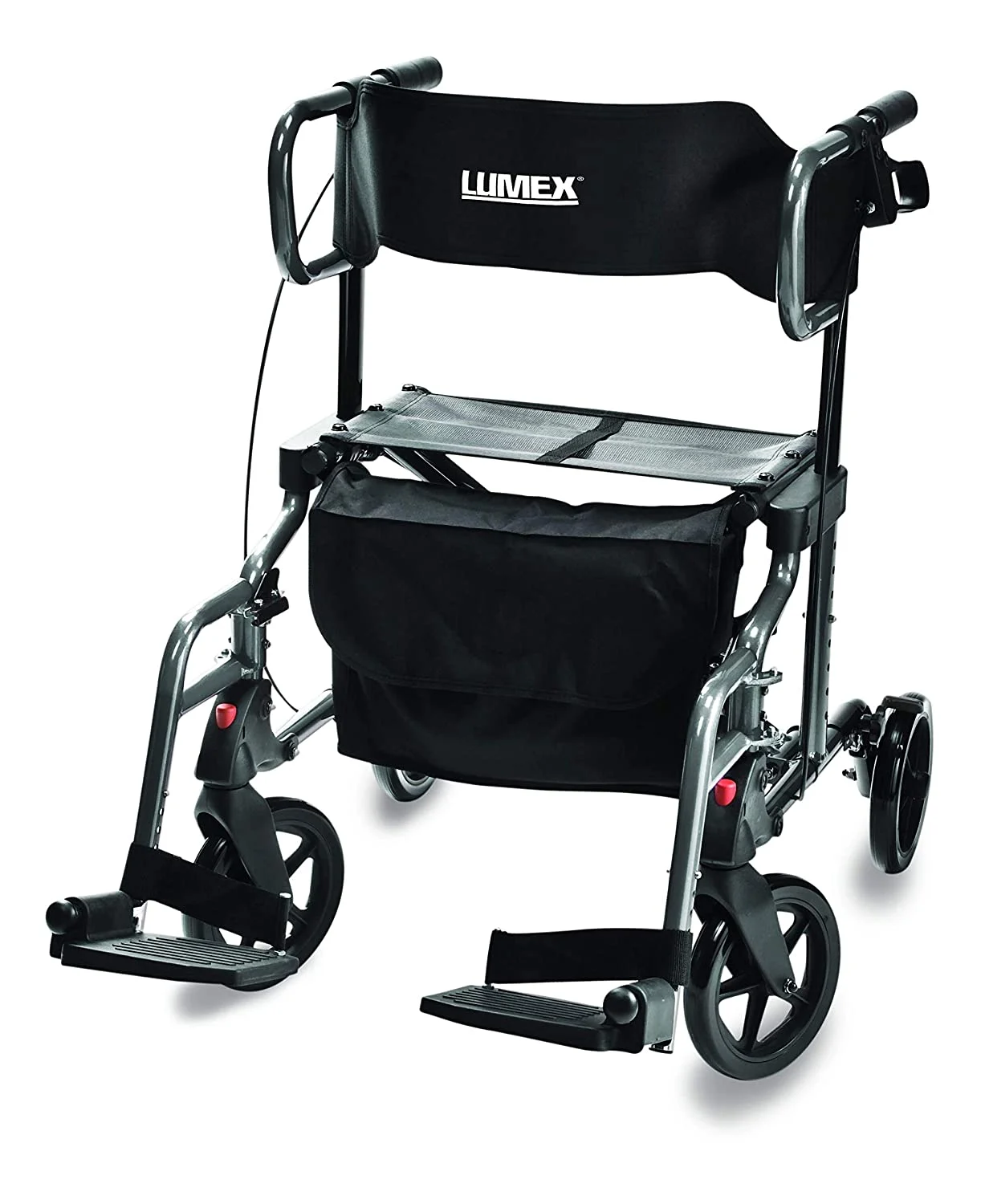
4. Easiest to Transport Rollator Transport Chair
Amazon
Lumex HybridLX LX1000 Rollator Walker & Transport Wheelchair
Features
- Weight support: 300 lbs
- Seat-to-floor height: 21.25″
- Seat size: 18″ (W) x 11″ (D)
- Handle height: 30″–37″
- Overall dimensions: 37″ (W) x 37″ (H) x 26″ (L)
- Weight: 22 lbs
More features: 8″ wheels; easy-to-use handbrakes; 3-year limited warranty on frame
The Lumex HybridLX LX1000 is a strong choice for users who expect to regularly load and unload their mobility aid. At approximately 22 pounds, it stays relatively light for a combination rollator and transport chair while providing a 300-pound capacity and an approximately 18-inch-wide seat.
Its conversion system is also fairly straightforward. The footrests can be removed when walking, while the backrest and foot support configuration allow the device to be converted when caregiver-assisted transport is needed.
What makes it stand out?
The Lumex is particularly appealing for car travel and storage. A pull-up strap helps collapse the frame without requiring tools, and its aluminum construction keeps weight down compared with heavier steel-framed alternatives.
We also like the broad handle adjustment. An approximately 30–37-inch range gives shorter users more flexibility than several hybrids that begin closer to 33 inches.
What could be better?
The 11-inch-deep seat is relatively shallow compared with some of the roomier transport-chair options in this guide. Users expecting to spend longer periods seated should compare the seat dimensions carefully.
As with most lightweight hybrids, portability comes with compromises. If transport-chair comfort is more important than lifting weight, a wider and more substantial model may be preferable.
5. Best for Tall People Rollator Transport Chair
Amazon
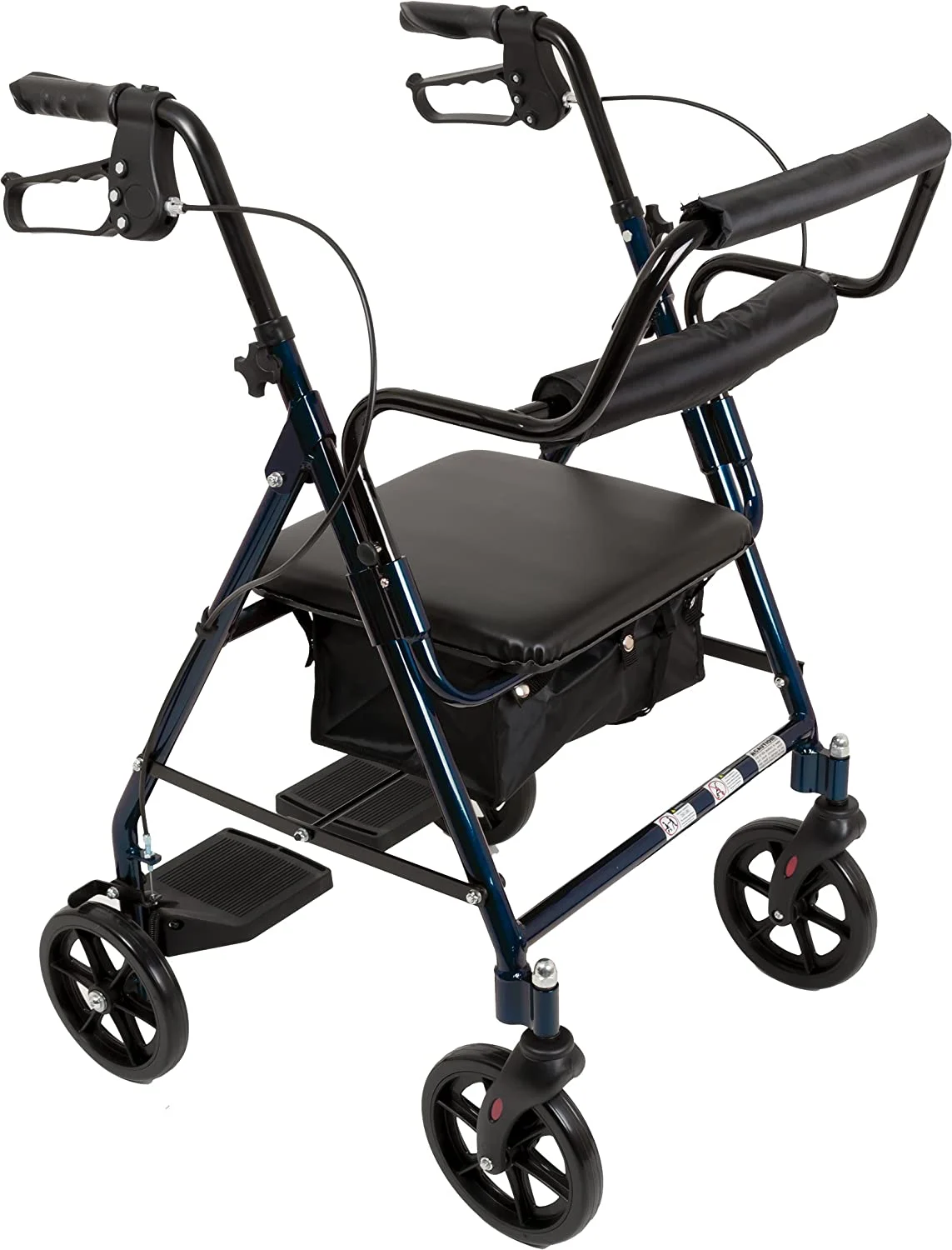
ProBasics Transport Rollator with Seat
Features
- Weight support: 250 lbs
- Seat-to-floor height: 21.75″
- Seat size: 14.25″ (W) x 13.25″ (D)
- Handle height: 35″–40″
- Overall dimensions: 34″ x 24″ x 10″ (folded)
- Weight: 22 lbs
More features: 8″ wheels; padded seat and backrest; limited lifetime warranty on frame and 1-year warranty on other parts
The ProBasics Transport Rollator earns its place here because its relatively high seat position and adjustable walking configuration may suit taller users better than some lower hybrid models. The seat sits 21.75 inches from the floor, and the frame combines an aluminum construction with 8-inch non-marking casters and ergonomic hand brakes.
At 22 pounds, the ProBasics remains reasonably portable despite its taller configuration. Its backrest reverses for transport mode, while fold-down footrests provide support when the user is being pushed by a caregiver.
Why are we impressed?
The higher seat position is particularly useful for taller users or people who find standing from a low seat difficult. Its 24-inch overall width also keeps it from becoming excessively wide despite the taller seating geometry.
The aluminum frame, folding mechanism and water-resistant under-seat pouch give it a sensible collection of everyday features without adding unnecessary complexity.
What could be better?
The biggest limitation is the 250-pound weight capacity, which is lower than most of the other products in this roundup. This should not be considered a heavy-duty option simply because it is suitable for taller users.
Its 14.25-inch-wide seat is also relatively narrow. A tall user who also requires more seating width may be better served by another model with a larger seat.
6. Best Rollator for Everyday Use
Amazon
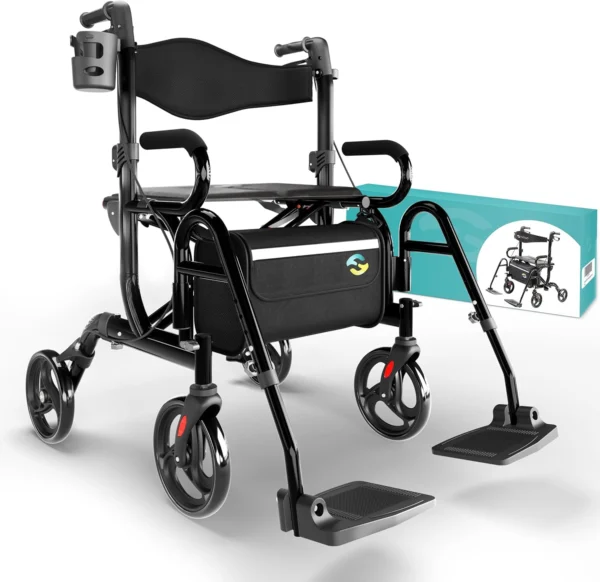
Helavo H1070 2-in-1 Rollator and Wheelchair Combo
Features
- Weight capacity: 300 lbs
- Product weight: 21.2 lbs
- Seat height: 21.7″
- Seat size: 18.3″ W x 12.2″ D
- Handle height: 32.7″–37.8″
- Overall width: 25.6″
- Wheels: 8″ all-round tires
- Frame: aluminum
More features: dual braking and parking brakes; foldable frame; adjustable footrests; padded backrest; cup holder; cane holder; storage bag.
The Helavo H1070 combines useful outdoor-oriented features with a relatively low 21.2-pound product weight. Helavo rates it to 300 pounds and fits it with four 8-inch all-round tires designed for a mixture of indoor and normal outdoor surfaces.
It also has one of the roomier seats in this roundup at 18.3 inches wide, together with a 21.7-inch seat height. The handles adjust from 32.7 to 37.8 inches, while the dual braking system incorporates both normal braking and a parking-brake function.
What do we love it for?
The Helavo balances outdoor usability with everyday practicality particularly well. At only 21.2 pounds, it is considerably lighter than many bulky outdoor mobility aids, while its aluminum frame and four all-round wheels remain useful for sidewalks, paved paths and normal shopping trips.
The standard equipment is also generous. A cup holder, cane holder and storage bag are included, while the frame folds to approximately 27.9 x 11.4 x 32.7 inches for storage or transport.
What could be better?
Despite Helavo describing the H1070 for all-terrain use, its 8-inch wheels should not be confused with genuinely large-wheel rough-terrain rollators. Grass, broken pavement or minor surface irregularities are one thing; demanding gravel, steep slopes or rough trails are another.
The 21.7-inch seat height may also feel high for shorter users. Checking both handle and seat height before purchasing is therefore important.
7. Best Combo Rollator for Large People
Amazon
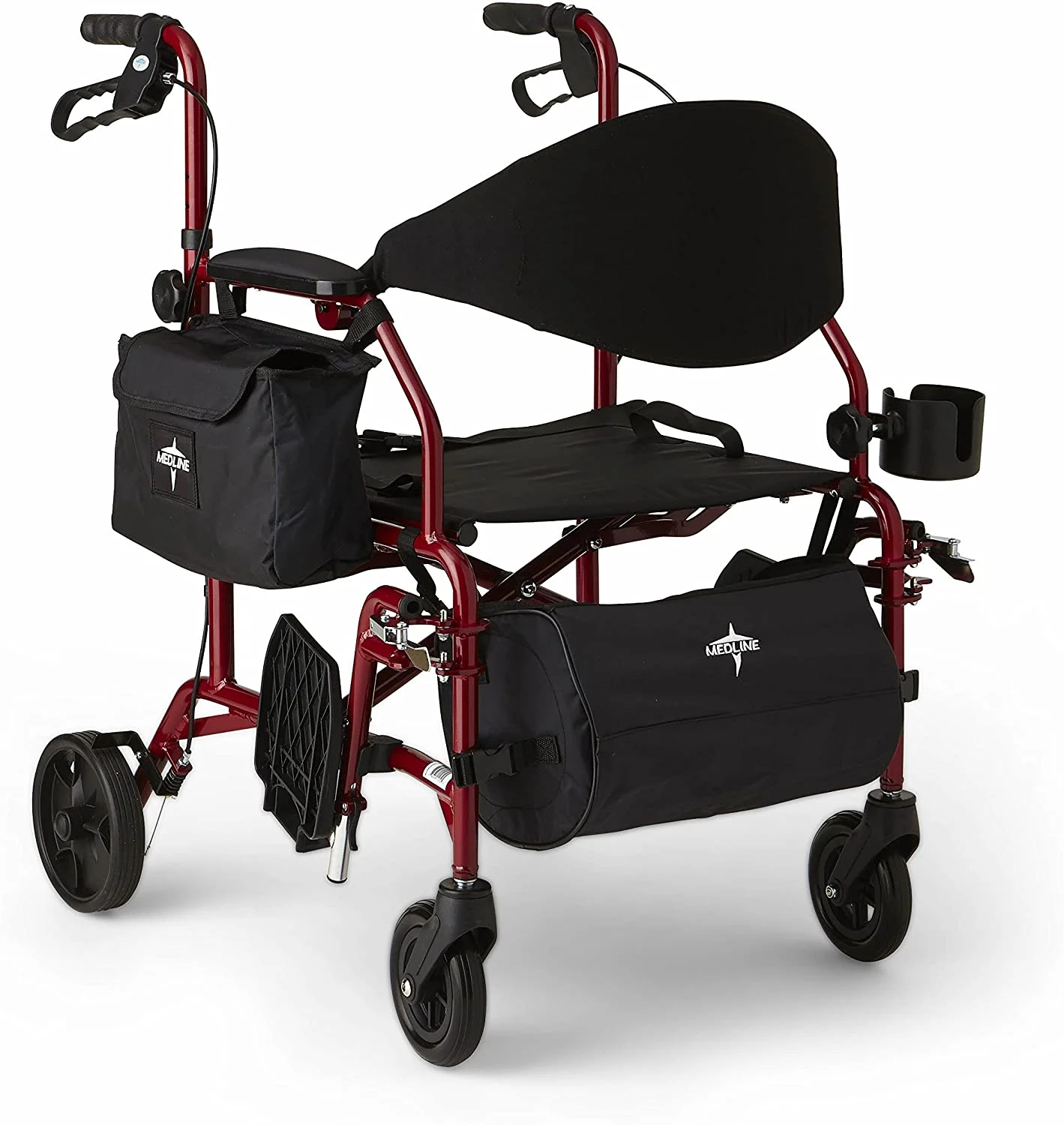
Medline Combination Rollator and Transport Chair
Features
- Weight support: 250 lbs
- Seat-to-floor height: 19.5″
- Seat size: 19″ (W) x 16″ (D)
- Handle height: 32″–36.5″
- Overall dimensions: 24.5″ (W) x 36.5″ (H) x 30″ (L)
- Weight: 19.5 lbs
More features: 6″ and 8″ wheels; swing-away detachable footrest; ergonomic handbrakes
The Medline Translator is the best choice in this lineup for someone prioritizing a roomier sitting area. Its 19 x 16-inch seat is substantially larger than the seats fitted to many compact hybrids, yet the current standard Translator weighs under 20 pounds and supports up to 250 pounds.
It converts from a rollator into a caregiver-pushed transport chair and includes swing-away footrests that can be secured along the sides when they are not needed. Height-adjustable push grips, hand brakes and several storage options give it the practical features expected from an everyday combination mobility aid.
Why are we impressed?
The obvious advantage is the wide, deep seat. At 19 inches wide and 16 inches deep, it gives the user considerably more seating space than narrow hybrids such as the standard Drive Duet or ProBasics.
It is also surprisingly manageable for its seat size. Medline describes the standard Translator as weighing less than 20 pounds, making it one of the lighter options in this comparison.
What could be better?
The 250-pound capacity is the important limitation. A wide seat does not make this a bariatric or heavy-duty rollator, so users approaching or exceeding that limit will need a model specifically designed for higher weight capacity.
The steel frame also means that seat width and low listed product weight should not be interpreted as proof that it will be the easiest model for every caregiver to lift. Folded size, vehicle opening and the caregiver’s lifting ability should all be considered.
Things to Consider
A rollator transport chair combo can be extremely useful when someone is still able to walk but may need assistance after becoming tired. The main advantage is that one device can support independent walking and then provide a seat from which a caregiver can push the user when necessary. This can make longer outings much easier without requiring both a separate rollator and transport chair.
That versatility does not mean a combination chair is automatically the best choice for everyone. A dedicated rollator may be lighter and easier to maneuver for someone who rarely needs to be pushed, while a dedicated transport chair or wheelchair may provide better seating support for someone who spends longer periods seated. The right choice depends largely on how frequently each mode will actually be used.
Why Get a Rollator Transport Chair Combo?
A hybrid model makes the most sense when the user’s mobility changes throughout an outing. Someone may be comfortable walking through a shop, medical centre or park initially but become tired before they are ready to return home. Instead of carrying two mobility aids, the caregiver can convert the same device into seated transport mode when needed.
This can also help people continue walking when they are able rather than defaulting to seated transport for an entire outing. The user has the opportunity to remain active while comfortable, with a practical backup option available if fatigue develops later.
Advantages
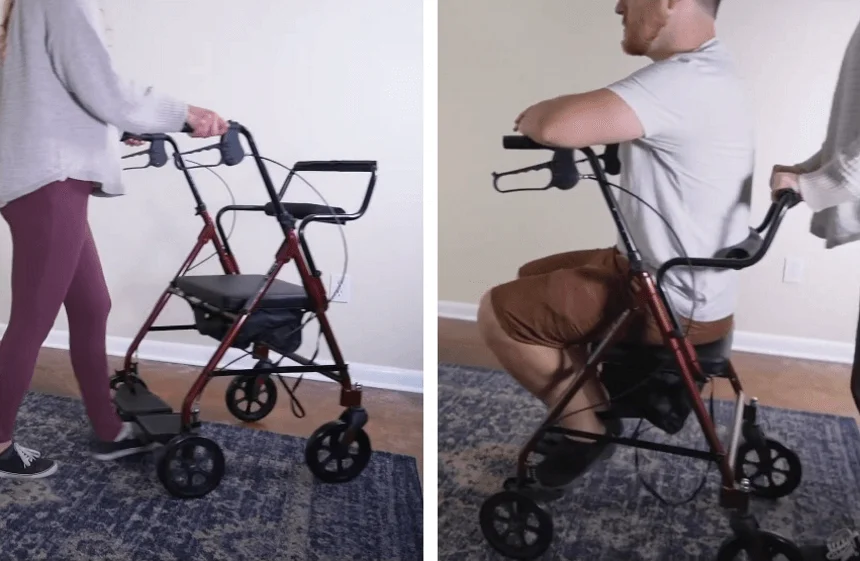
The biggest advantage is flexibility. One frame provides both walking support and caregiver-assisted seated transport, which can simplify appointments, shopping trips and travel while reducing the amount of equipment that needs to be stored at home or loaded into a vehicle.
Hybrid models are also generally lighter than many full-size wheelchairs and most fold for transport. The products in this roundup sit around the 20–22 pound range in many cases, making several of them realistic choices for caregivers who regularly need to load the device into a car.
Possible Drawbacks
A combination rollator is necessarily a compromise because the extra footrests, reversible backrest and transport-chair hardware generally make it heavier and more complicated than a simple rollator. Likewise, the transport-chair mode is designed for caregiver-assisted mobility, not independent wheelchair propulsion, because these models do not have large rear wheels that the seated user can operate themselves.
Seat dimensions can also vary dramatically even when weight ratings appear similar. For example, the Drive Duet has a relatively narrow 13.5-inch seat, whereas the Medline Translator provides a much roomier 19 x 16-inch seating area. If seated comfort is particularly important, those physical dimensions can matter just as much as the manufacturer’s weight capacity.
If you primarily need seated transport rather than walking support, our comparison of a transport chair vs. wheelchair can help determine whether a dedicated mobility chair would be more appropriate.
8 Crucial Features Before You Buy a Rollator Transport Chair Combo
The most important specifications are not necessarily the most heavily promoted features. Fit, seat dimensions, brakes, wheel size, weight capacity and actual product weight should generally take priority over accessories such as cup holders or storage bags. It is also worth thinking realistically about how and where the device will be used, because a model that works beautifully in a shopping centre may be frustrating on rough paths or difficult to lift into a small vehicle.
1. Rollator Mode vs Transport-Chair Mode
The first question is how often each function will actually be used. If the person expects to walk almost all the time and only occasionally needs to be pushed, a lightweight model such as the standard Drive Duet may make the most sense. If transport-chair use will be more frequent, seat width, seat depth, back support and footrest design become increasingly important.
The Drive Nitro Duet, for example, provides considerably more seating width than the standard Duet, which may justify its higher price for someone who expects to spend more time seated. None of these products should be confused with a self-propelled wheelchair, however, because another person still needs to push the chair in transport mode.
2. Overall Dimensions and Maneuverability
Overall width matters in doorways, hallways, shops and bathrooms. A wider seat may be more comfortable, but the wider frame needed to accommodate it can make a chair less convenient in tight indoor spaces. Before purchasing, measure any narrow doorway or hallway the device will routinely need to pass through, particularly in older homes where internal doors can be comparatively narrow.
Length matters as well because transport-chair footrests can noticeably increase the overall footprint once deployed. A model that feels compact as a rollator may therefore require considerably more space when configured for seated transport.
3. Seat Size, Height, and Comfort
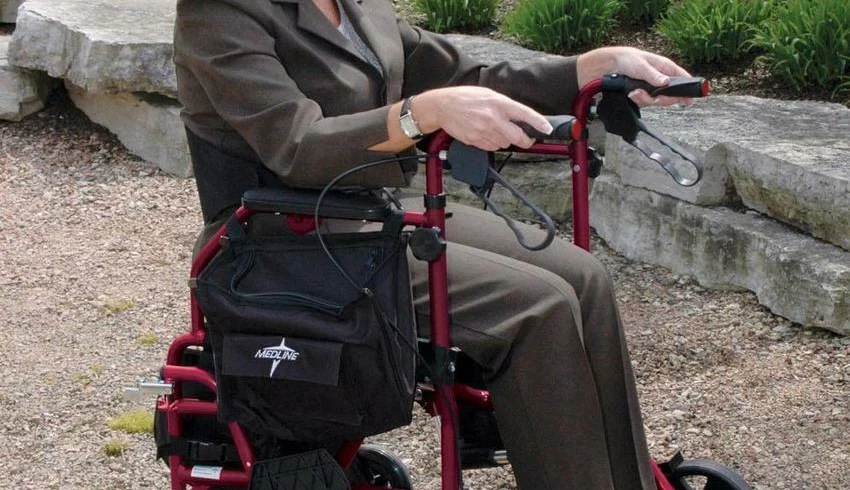
Weight capacity tells you how much load a frame is designed to support, but it does not tell you whether the seat will fit comfortably. Seat widths in this roundup vary substantially, from approximately 13.5 inches on the standard Drive Duet to around 19 inches on the Medline Translator, so comparing physical dimensions is particularly important if transport-chair use will be frequent.
Seat height also influences comfort and ease of standing. A higher seat can suit taller users or people who find it difficult to rise from a low position, while a seat that is too high may leave a shorter user’s feet poorly positioned. Ideally, the user should be able to sit comfortably and stand without excessive effort.
4. Weight Capacity
Most rollator transport chair combos in this guide support around 300 pounds, although there are important exceptions. The ProBasics and Medline Translator models reviewed here have capacities of approximately 250 pounds, so they should not be treated as heavy-duty models simply because one has a tall seat or the other has a wide seat.
Always use the manufacturer’s stated capacity for the exact model being purchased. Bags, accessories and other items placed on the chair also contribute to the total load, so the published rating should never be treated as something to exceed.
5. Handle Height and User Fit
The rollator handles should allow the user to walk in a comfortable upright position rather than forcing them to bend forward or raise their shoulders. Adjustable handles are therefore particularly important, especially for taller or shorter users.
The ProBasics Transport Rollator, for example, offers a relatively high seating position and handles extending to approximately 40 inches, making it worth considering for taller users. If conventional rollators consistently feel too low, our guide to the best walkers for tall people covers additional purpose-specific options.
6. Weight and Transportability
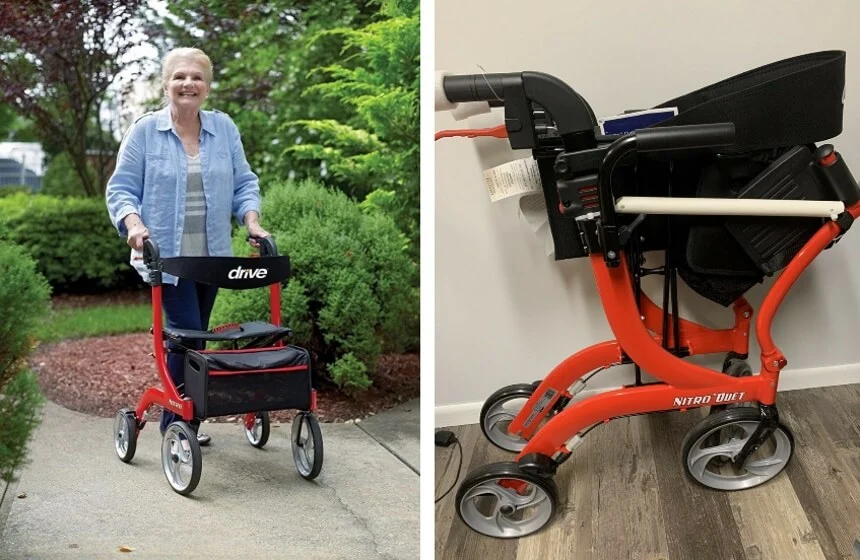
Product weight becomes particularly important when a caregiver is responsible for loading the chair into a vehicle. The standard Drive Duet weighs approximately 20 pounds, while the Helavo H1070 is around 21.2 pounds and the Nitro Duet, Lumex and ProBasics are around 22 pounds.
Those differences may appear small on paper but can become significant when a device needs to be lifted repeatedly. Folded dimensions matter just as much as weight because a lightweight chair that does not fit comfortably through the vehicle opening may be less practical than a slightly heavier model with a narrower folding system.
7. Wheel Size and Outdoor Use
Wheel size influences how easily a rollator crosses pavement joints, doorway transitions and minor surface irregularities. Most models in this roundup use 8-inch wheels, which are suitable for indoor floors, shopping centres and maintained sidewalks, while the Drive Medical Nitro Duet stands out with larger 10-inch front wheels that can roll more smoothly over everyday surface transitions.
The Helavo H1070 is our preferred model for normal outdoor use because it combines four 8-inch all-round wheels with a comparatively light frame. That means paved paths, shopping areas and ordinary sidewalks rather than demanding trails, loose gravel or steep terrain. Larger wheels help with minor obstacles, but they do not remove the need to slow down around cracks, slopes and uneven transitions.
8. Brakes and Parking Locks
Brakes have two different jobs on these devices. The caregiver or walking user needs to be able to slow and stop the rollator, while parking locks keep it stationary as someone sits down, stands up or remains seated.
Before regular use, make sure the brake levers are comfortable to reach and that the parking mechanism fully locks the wheels. Brake cables, wheel attachments and locking components should also be checked periodically for wear or looseness, particularly on a device that is folded and transported frequently.
Using a Rollator Transport Chair in a Motor Vehicle
The previous version of this article placed too much emphasis on WC19 without establishing that the reviewed chairs were actually designed and certified for occupied motor-vehicle transport. WC19 specifically concerns wheelchairs designed and tested to be occupied as seats in motor vehicles, including requirements relating to structural performance, securement and occupant restraints.
That does not mean every rollator transport chair is suitable for use as an occupied vehicle seat. Unless the manufacturer specifically identifies the exact model as complying with an applicable transportation standard and provides instructions for securing the occupant and chair, the safer approach is for the user to transfer to the vehicle’s normal passenger seat and use the vehicle’s own restraint system.
A positioning belt supplied with a transport chair also should not be mistaken for an automotive seatbelt. Its purpose may simply be to help keep the person correctly positioned while a caregiver pushes the chair.
Durability and Warranty
A rollator transport chair is repeatedly folded, opened, braked, loaded and pushed, so frame joints and moving components deserve just as much attention as the appearance of the frame itself. Check whether replacement wheels, brake components and footrests are readily available and whether the manufacturer provides useful product support.
Warranty length can also provide some reassurance about long-term ownership, although it should not be interpreted as proof that one chair is inherently safer than another. Established mobility-equipment brands may have an advantage when the device is expected to be used regularly over several years.
Price
Prices for hybrid rollators vary frequently depending on brand, construction and features, so fixed dollar ranges can become outdated quickly. In general, standard combination models cost less than premium chairs with larger wheels, wider seating or more sophisticated folding systems.
Rather than choosing purely by price, determine which features genuinely matter to the user and caregiver. A wider seat may justify spending more for someone who expects substantial transport-chair use, while low product weight may be more valuable for a caregiver who needs to load the device into a car every day.
The GOPLUS 2-in-1 is our value-focused model in this roundup, while the Nitro Duet sits toward the premium end because of its larger seat, larger front wheels and upgraded frame design.
Medicare Part B Coverage
Medicare Part B can cover walkers, including rollators, as durable medical equipment when they are medically necessary and prescribed by an eligible provider for use in the home. After the Part B deductible has been met, the beneficiary generally pays 20% of the Medicare-approved amount when the supplier accepts assignment.
That does not mean every rollator transport chair combo bought online automatically qualifies for Medicare reimbursement. Coverage depends on the equipment prescribed, documented medical need and whether the supplier meets Medicare requirements. If coverage is important, confirm eligibility with the prescribing provider and a Medicare-enrolled DME supplier before purchasing directly from Amazon or another retailer.
Safety Advice: How to Use a Rollator Transport Chair Combo
Make sure the device is correctly adjusted before regular use, following the manufacturer’s instructions for handle height, backrest orientation, footrest positioning and conversion between rollator and transport-chair modes. Before someone sits down or stands up, engage the parking brakes fully and confirm that the chair is stationary rather than attempting to convert or reposition the device while the user is partially transferring their weight.
When transport-chair mode is being used, deploy the footrests correctly so the occupant’s feet remain supported and clear of the wheels. If the manufacturer provides a positioning belt, use it according to the supplied instructions. Brakes, wheel fasteners, folding locks and footrest attachments should also be checked periodically, and any looseness, damaged cable, wheel wobble or locking mechanism that does not fully engage should be corrected before further use.
A rollator transport chair should not be ridden on stairs, escalators, steep slopes or uncontrolled rough terrain. If the transport-chair function turns out to be unnecessary, a simpler 4-wheel walker may ultimately be lighter and easier to manage.
Rollator Transport Chair Combo FAQ
What Is the Main Benefit of a Rollator Transport Chair Combo?
The main benefit is the ability to switch between independent walking and caregiver-assisted transport using one device. This is particularly useful when someone can walk comfortably for part of an outing but becomes fatigued over longer distances, because the same mobility aid can then be converted rather than requiring a separate chair.
Can You Use a Rollator Transport Chair as a Wheelchair?
It can function as a caregiver-pushed transport chair, but most models are not self-propelled wheelchairs. The occupant cannot independently push the chair using large rear wheels because those wheels are not present. Someone who requires independent seated mobility or spends most of the day in a wheelchair may be better served by a dedicated wheelchair.
Is WC19 Certification Important for a Rollator Transport Chair?
WC19 is relevant when a wheelchair is specifically designed to remain occupied while travelling in a motor vehicle. You should not assume that a rollator transport chair is suitable as a vehicle seat unless the manufacturer explicitly confirms that the exact model meets an applicable transport standard and provides appropriate securement instructions.
If that information is not provided, transferring to the vehicle’s normal passenger seat and using the vehicle restraint system is generally the more appropriate approach.
Does Medicare Cover a Rollator Transport Chair Combo?
Medicare Part B can cover medically necessary walkers and rollators when prescribed for use in the home. However, coverage of a particular hybrid model is not automatic and depends on the documented medical need, the equipment prescribed and whether the supplier meets Medicare requirements.
If reimbursement matters, check with the prescribing provider and a Medicare-enrolled DME supplier before buying the model yourself.
How Much Weight Can a Rollator Transport Chair Support?
Most models in this comparison support approximately 300 pounds, although capacity varies. The Drive Duet, Nitro Duet, GOPLUS, Lumex and Helavo sit around this range, while the ProBasics and Medline Translator are rated at approximately 250 pounds.
Always check the specification for the exact version being purchased rather than assuming every model from a product family has the same rating.
Should I Choose 8-Inch or 10-Inch Wheels?
Eight-inch wheels are common and generally work well for indoor use, shopping centres and maintained sidewalks. Larger wheels can roll more easily over pavement joints and small surface irregularities, which is one reason the Drive Nitro Duet’s 10-inch front wheels are an attractive upgrade.
Larger wheels still do not make a transport chair suitable for unrestricted rough terrain, so surface conditions and user control remain important.
Is a Safety Belt Required in Transport-Chair Mode?
Follow the manufacturer’s instructions for the exact model because some chairs include a positioning belt while others do not. A supplied positioning belt can help keep the occupant correctly positioned while being pushed, but it should not be confused with a crash-tested motor-vehicle restraint system.
Which Rollator Transport Chair Has the Widest Seat?
Among the seven models reviewed here, the Medline Translator has the widest seat at approximately 19 inches, together with a 16-inch seat depth. Its 250-pound capacity means it should be considered a wide-seat option rather than a bariatric or heavy-duty chair.
What Is the Lightest Rollator Transport Chair Combo?
The current Medline Translator is listed at under 20 pounds, while the standard Drive Duet weighs approximately 20 pounds. Product weights can vary slightly with accessories and revisions, so users who prioritize lifting weight should check the exact current configuration before purchasing.
Our Verdict: Choosing the Best Rollator Transport Chair Combo
There is no single hybrid chair that will suit every user because the right choice depends on how often the person walks versus being pushed, their seat requirements, body weight, height, typical terrain and how frequently a caregiver needs to lift the device. For the strongest overall balance, the Drive Medical Duet 795 remains our Editor’s Choice. Its approximately 20-pound weight, 300-pound capacity and straightforward conversion system make it particularly practical for someone who primarily walks but wants reliable caregiver-assisted transport available when needed.
The Drive Medical Nitro Duet is our premium recommendation because its wider 17.5-inch seat and larger 10-inch front wheels provide meaningful improvements for users who expect more regular transport-chair use or encounter pavement transitions during everyday outings. If cost is the main consideration, the GOPLUS 2-in-1 Folding Rollator Walker provides most of the essential hybrid features at a more value-focused price point, while the Lumex HybridLX LX1000 deserves consideration from caregivers who regularly load the chair into a vehicle because of its relatively light frame and straightforward folding system.
For taller users, the ProBasics Transport Rollator offers a higher 21.75-inch seat and taller handle adjustment, although its 250-pound capacity and relatively narrow seat should be checked carefully. For mixed indoor and normal paved outdoor use, the Helavo H1070 combines a 21.2-pound frame, 300-pound capacity and roomy 18.3-inch seat with useful everyday accessories. Finally, users prioritizing seating space should look closely at the Medline Translator, whose 19 x 16-inch seat is the largest in this roundup despite the chair’s more modest 250-pound weight capacity.
Whichever model you choose, treat the rollator and transport-chair functions as two distinct modes with different requirements. Adjust the handles correctly for walking, fully engage the brakes for transfers, deploy the footrests before caregiver-assisted transport and confirm that the chair is suitable for the user’s weight and seating dimensions. If you are still deciding whether a hybrid is necessary at all, our comparison of walkers vs. rollators can help determine whether a simpler walking aid would be enough.
References
RESNA – Position on WC19 Wheelchairs Designed and Tested for Use as Seats in Motor Vehicles
Explains the purpose and application of the WC19 transportation standard.
RESNA
Medicare – Walkers
Medicare Part B coverage information for walkers and rollators, including medical-necessity and supplier requirements.
Medicare.gov
Medicare – Durable Medical Equipment (DME) Coverage
Medicare requirements relating to covered durable medical equipment and eligible suppliers.
Medicare.gov
RESNA – Wheelchairs and Transportation
Guidance and standards concerning wheelchairs used during motor-vehicle transportation.
RESNA