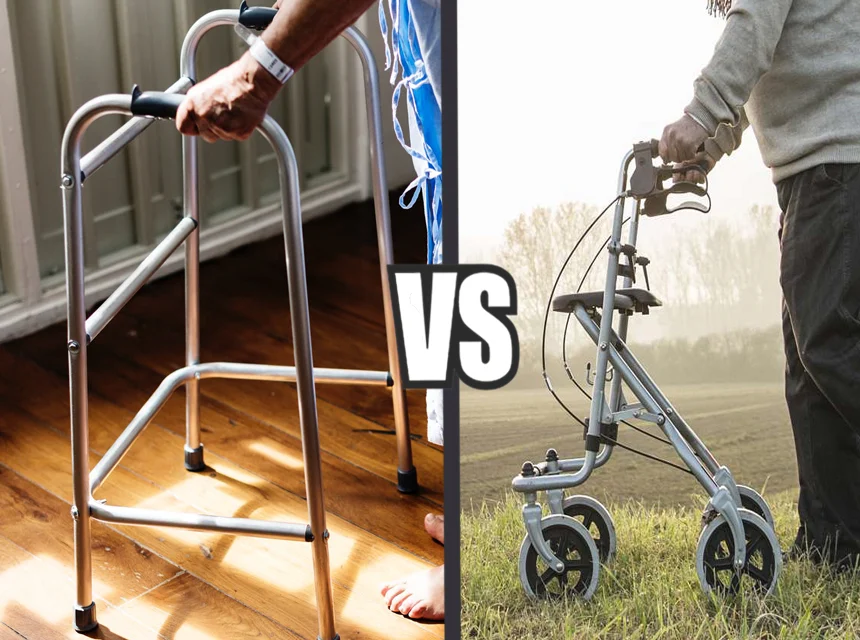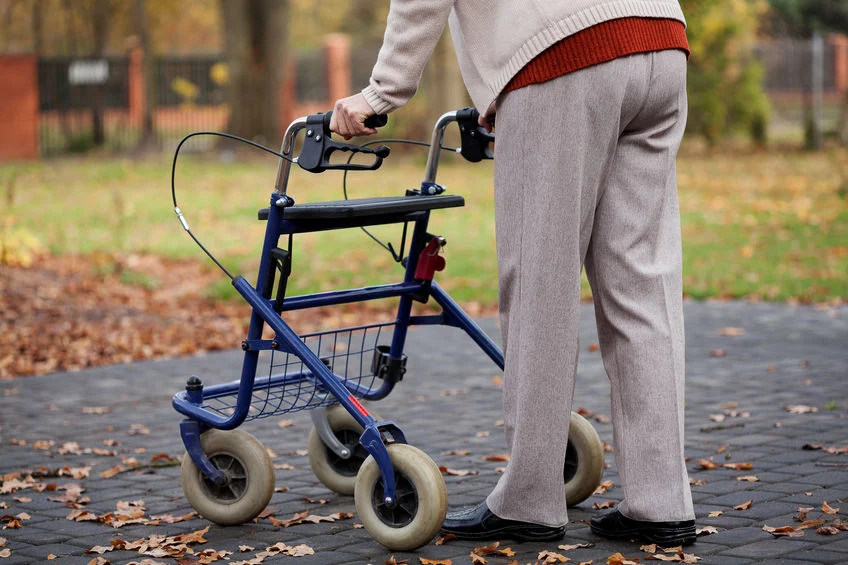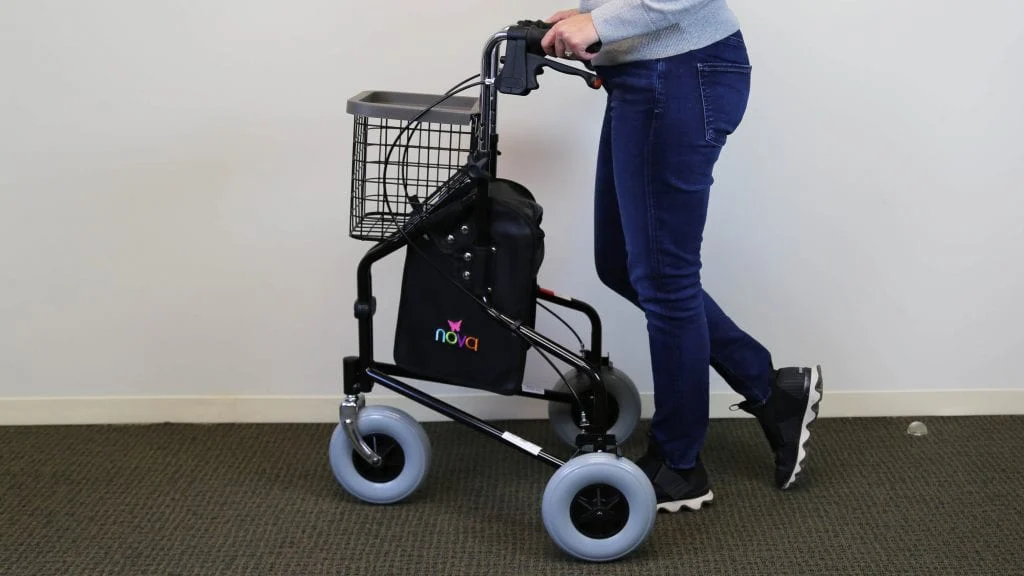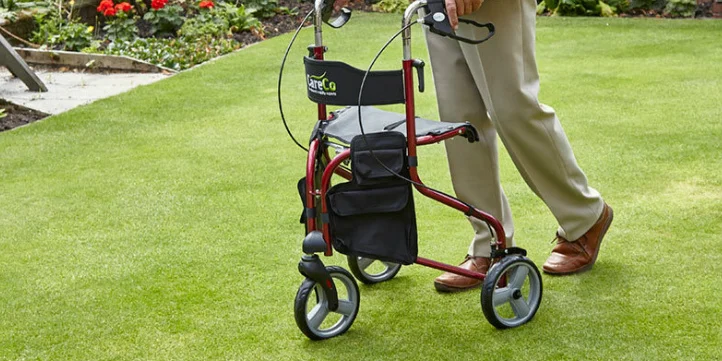
As we age, staying mobile becomes increasingly challenging. Muscle loss, arthritis, balance issues, and other conditions can make walking painful or unsafe. That’s why upright walkers are emerging as the most popular mobility aid for seniors who want to stay independent and active.
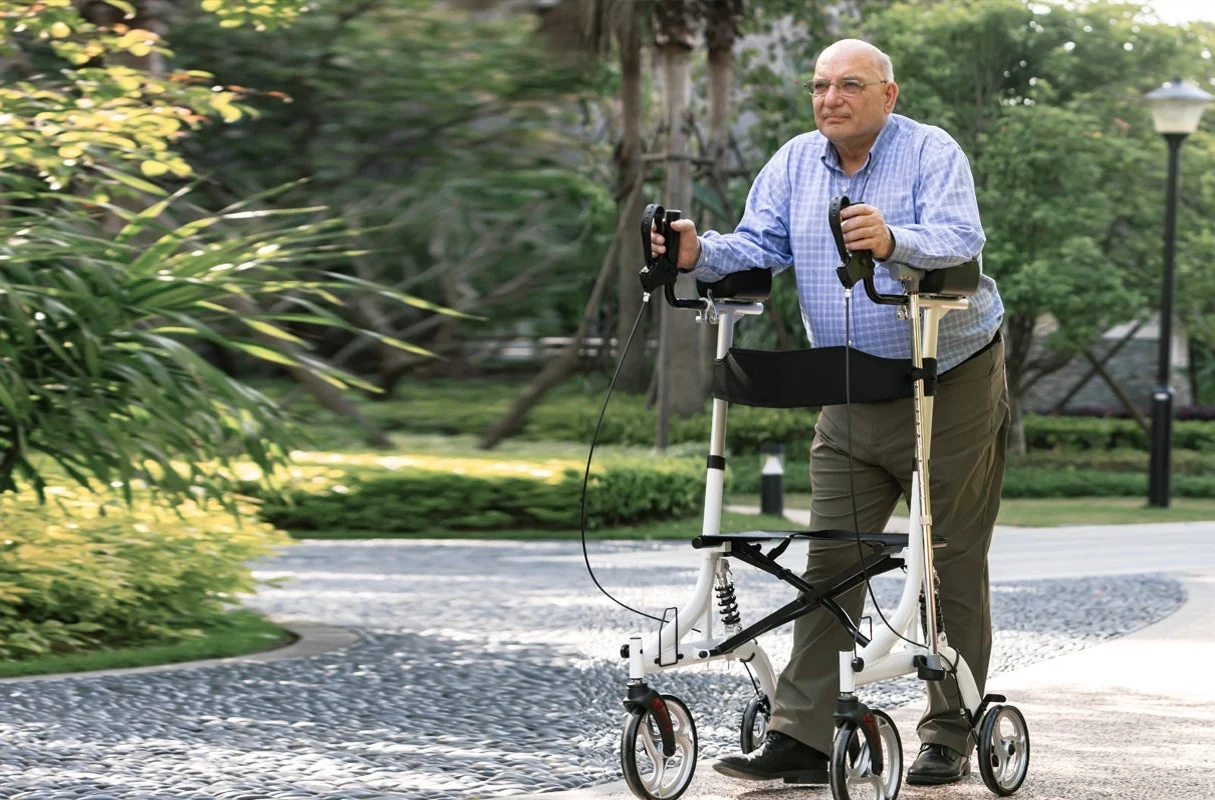
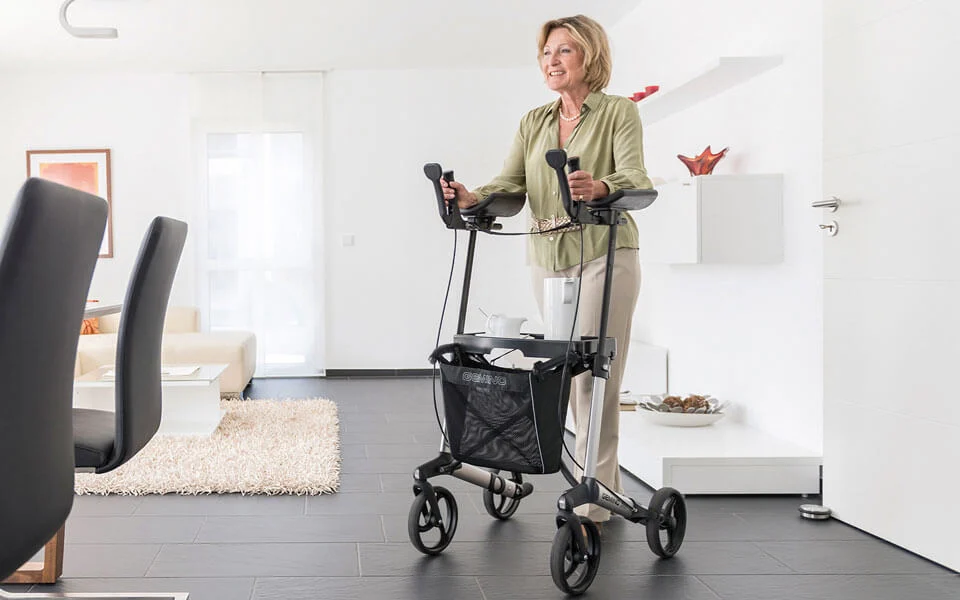
Unlike traditional walkers that force you to hunch forward, upright walkers (also called upright rollator walkers or stand-up walkers) let you walk tall with proper posture. You stand inside the frame with your forearms resting on padded supports, taking pressure off your back, wrists, and shoulders. Upright models are a growing category within modern walkers for seniors, especially for those looking to improve posture and reduce back strain.
We have made a list of the 7 best upright walkers for seniors with the Vive Mobility Upright Walker as our Editor’s Choice, considering essential features such as a user’s height, a walker’s size and adjustability, weight capacity and foldability, and others. If you do not define yourself as an average-sized person, you will find here the bariatric upright walkers and those specifically designed for tall people. We also included models with a seat to rest during a long walk and the ones which are great for moving around any terrain.
SeniorFitness is reader-supported. We may earn a commission through products purchased using links on this page. Learn more about our process here
TL;DR Summary
Upright walkers help seniors walk with better posture, reducing neck, shoulder, and back pain by up to 40% compared to standard walkers. These devices feature elevated armrests that support your forearms, keeping you standing straight instead of hunched over. Upright walkers are frequently chosen as the preferred choice of walkers for tall seniors. Our top picks include the Vive Mobility Upright Walker (Editor’s Choice for all-around quality), UPWalker Lite Original (premium lightweight option), and Goplus Foldable (best value under $200). Key features to consider: adjustable height range, weight capacity (300-500 lbs), wheel size for your terrain, and foldability for transport. Clinical studies show forearm-support walkers can offload 39-46% of body weight from your legs while improving walking efficiency. But here’s what most buyers miss when choosing their walker…
Quick Summary
- Editor’s Choice: Vive Mobility Upright Walker “Featuring a sturdy aluminum frame, soft armrests, textured hand grips, and folding design, this model is one of the best to promote proper posture and eliminate tension in the shoulders and neck.”
- Premium Pick: UPWalker Lite Original Upright Walker “While being ISO Safety certified, this premium upright walker offers Sit-to-Stand handlebars, lightweight design, ergonomic hand brakes, mesh fabric seat, and comes fully assembled.”
- Best Value: Goplus Foldable Upright Walker “While featuring wear-resistant and shock-absorbing wheels, the most lightweight construction, and one-click folding design, this upright walker wins the nomination of the best price-quality ratio.”
- Best for Tall Seniors: BEYOUR Walker “Designed explicitly for tall seniors, this upright walker sets apart with a dual braking system, threshold aid pedal, and a great armrest height range that can be adjusted according to your needs.”
- Best All Terrain Walker: Oasis Space Pneumatic Armrest Walker “This all terrain model with pneumatic tires and inflatable wheels with shock absorption function is perfect for using it inside and outside while featuring impressive adjustability.”
- Best Heavy Duty Walker: Elenker Heavy Duty Upright Walker “This heavy-duty upright walker provides users with a high-capacity weight limit, the widest seat, and extra space for feet which makes it suitable for seniors who weigh up to 500 pounds.”
- Best Upright Walker with Seat: Rinkmo Upright Walker “This quality rollator walker features an upgraded design with an ultra-comfortable cushioned padded backrest, and its handgrip tube can adjust armrest length and holding angle for your desired posture.”
Top 7 Upright Walkers for Seniors Review 2025
1. Editor’s Choice for Upright Walkers for Seniors
Amazon
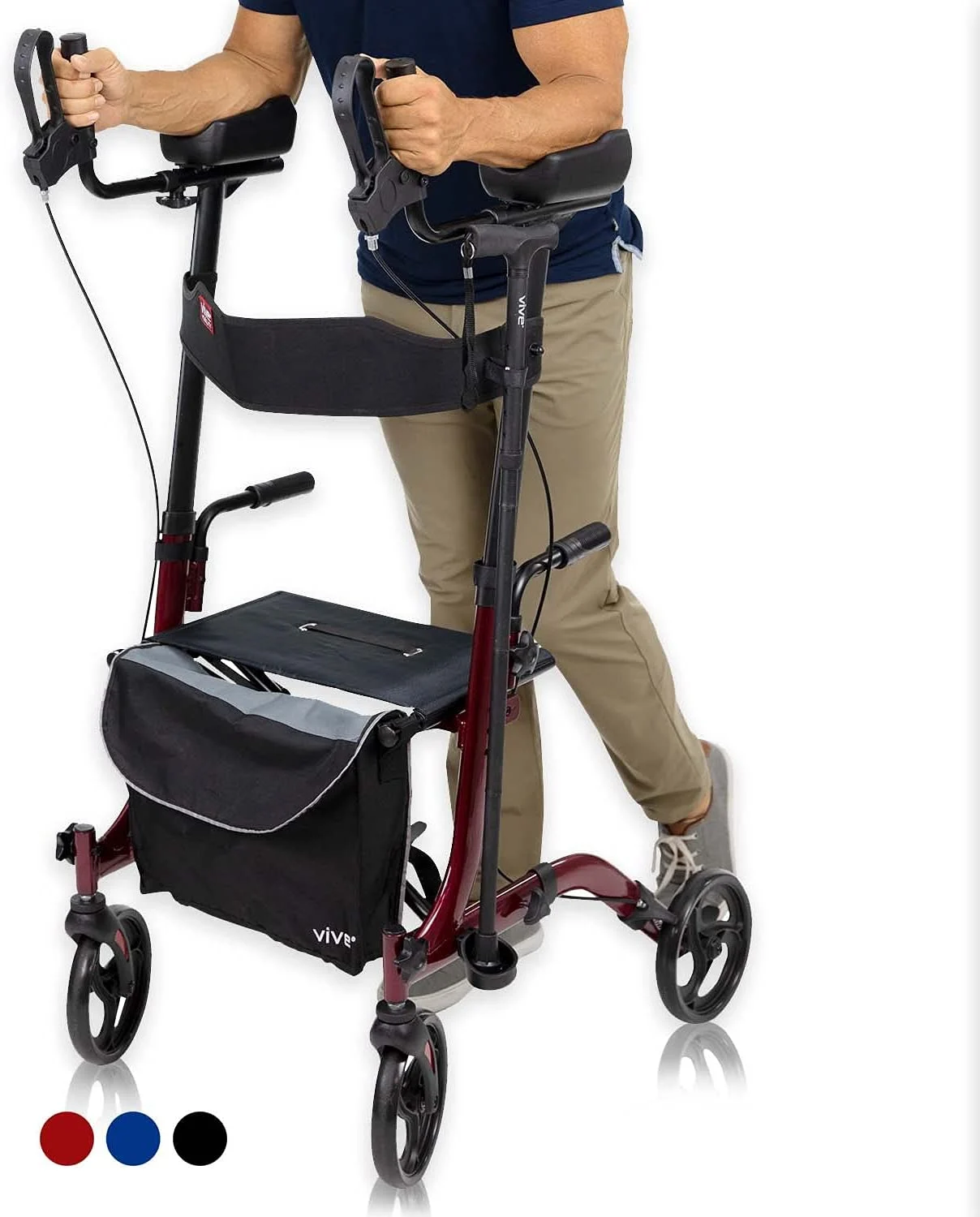
Vive Mobility Upright Walker
Features
- Armrest height range: 45” – 52”
- Weight capacity: 300 lbs.
- Wheel size: 8” front
- Weight: 20 lbs.
- Warranty: 1 year
More features: foldable; height-adjustable; detachable shoulder bag; aluminum frame; soft, contoured armrests; textured hand grips
Of all the products we have reviewed and tested, we find the Vive Mobility the best upright walker. First, this model has an adjustable height armrest with loop brakes which you can efficiently operate with your fingers. It also comes with 8-inch front wheels that allow you to roll smoothly over different surfaces. Its detachable shoulder bag helps to carry all the essentials with you. Plus, the frame of the Vive Mobility is made of quality aluminum alloy that is durable enough to hold up to 300 pounds.
The Vive Mobility upright walker is as good as the OasisSpace model, which we nominated as the Best All Terrain Walker. Most walkers on this list are better for smooth surfaces, but seniors can use both walkers on even rougher terrains while retaining a good posture. Vive features flat-free wheels that will give you seamless stability on these surfaces.
What do we love it for?
- The shape of the walker provides a tension-free walk and reduces pain in the shoulders, neck, and lower back
- The soft armrests and textured hand grips help you achieve a comfortable upright position
- The lightweight aluminum alloy frame with a folding design can be effortlessly collapsed for storage or transport
- This upright walker is easy to assemble, and it weighs only 20 pounds
What were we disappointed with?
- Some users have commented that the front wheels are too close to the upright arm brace, so you have to be very careful with any “obstacles”
- This walker may be too large for the petite elderly as it is best suited for regular-sized people
2. Premium Pick for Upright Walkers for Seniors
Amazon
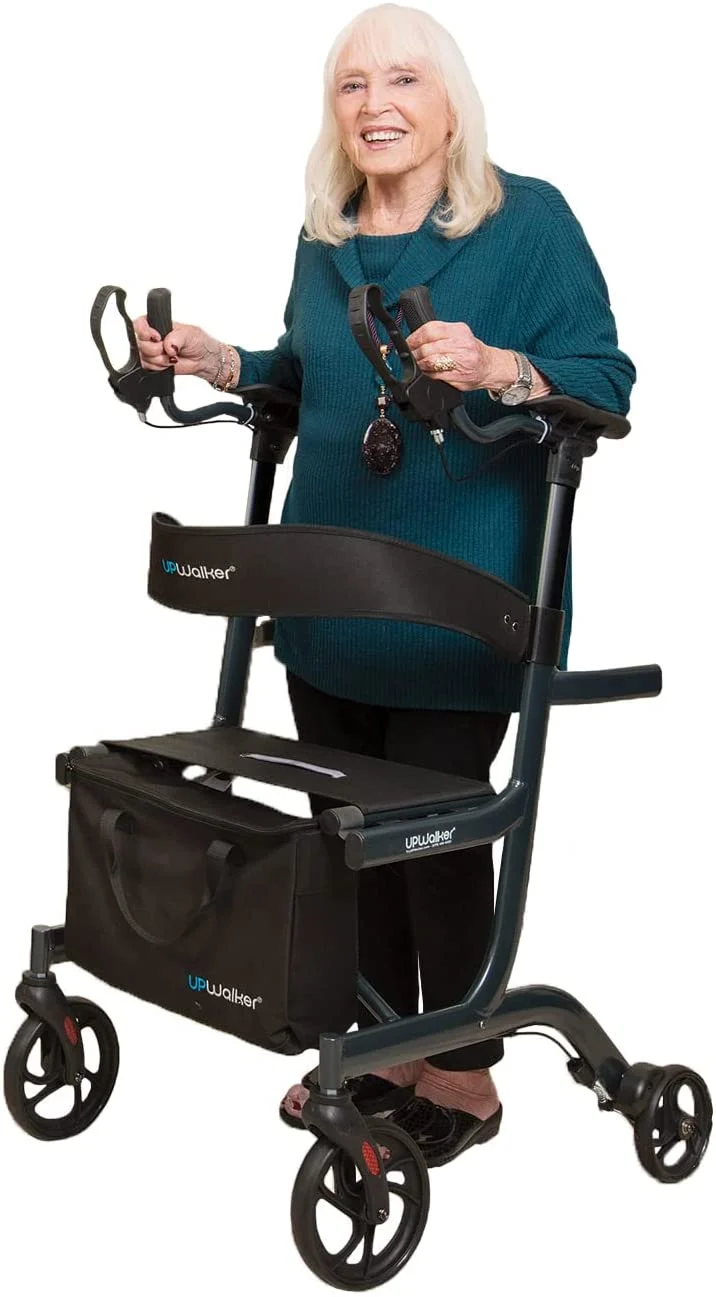
UPWalker Lite Original Upright Walker
Features
- Armrest height range: not specified
- Weight capacity: 300 lbs.
- Wheel size: 8” front; 5.75” rear
- Weight: 15.5 lbs.
- Warranty: 1 year
More features: ISO Safety certified; fully assembled; mesh fabric seat; Sit-to-Stand handlebars; foldable; carrying bag; cup holder; detachable backrest
If you are looking for a premium upright walker, we recommend considering the UPWalker Lite Original model. It offers best-in-class comfort and safety for users between 4’7″ – 5’10” and has ergonomic hand brakes for secure use. The best part is that it weighs only 15.5 pounds, so seniors will not have trouble lifting it when they need to use the bathroom, go out to do some shopping, or just take a walk outside without any help.
While our Editor’s Choice offers flat-free wheels, the UpWalker Lite Original upright walker goes the extra mile with the safe brake cables. Those are hidden within the frame and increase safety while walking since the wires cannot get tangled in anything. It also makes it easy to stand in one place with the brake cable. Plus, this upright walker is capable of holding up to 300 pounds like many other models on our list.
Why are we impressed?
- This model is ISO Safety certified, has been tested for safety, and meets the requirements of international standards
- Sit-to-Stand handlebars make it easy to transition from a sitting or standing position
- This upright walker comes fully assembled, so you can use it as soon as you take it out of the box
- The low weight helps seniors to lift and even carry with them when they need to go out or move around the house effortlessly
What negatives must you be aware of?
- This model can seem pricey, especially if you have a tight budget
- If you have small hands, then you might find it hard to use the hand brakes
3. Best Value Upright Walker for Seniors
Amazon
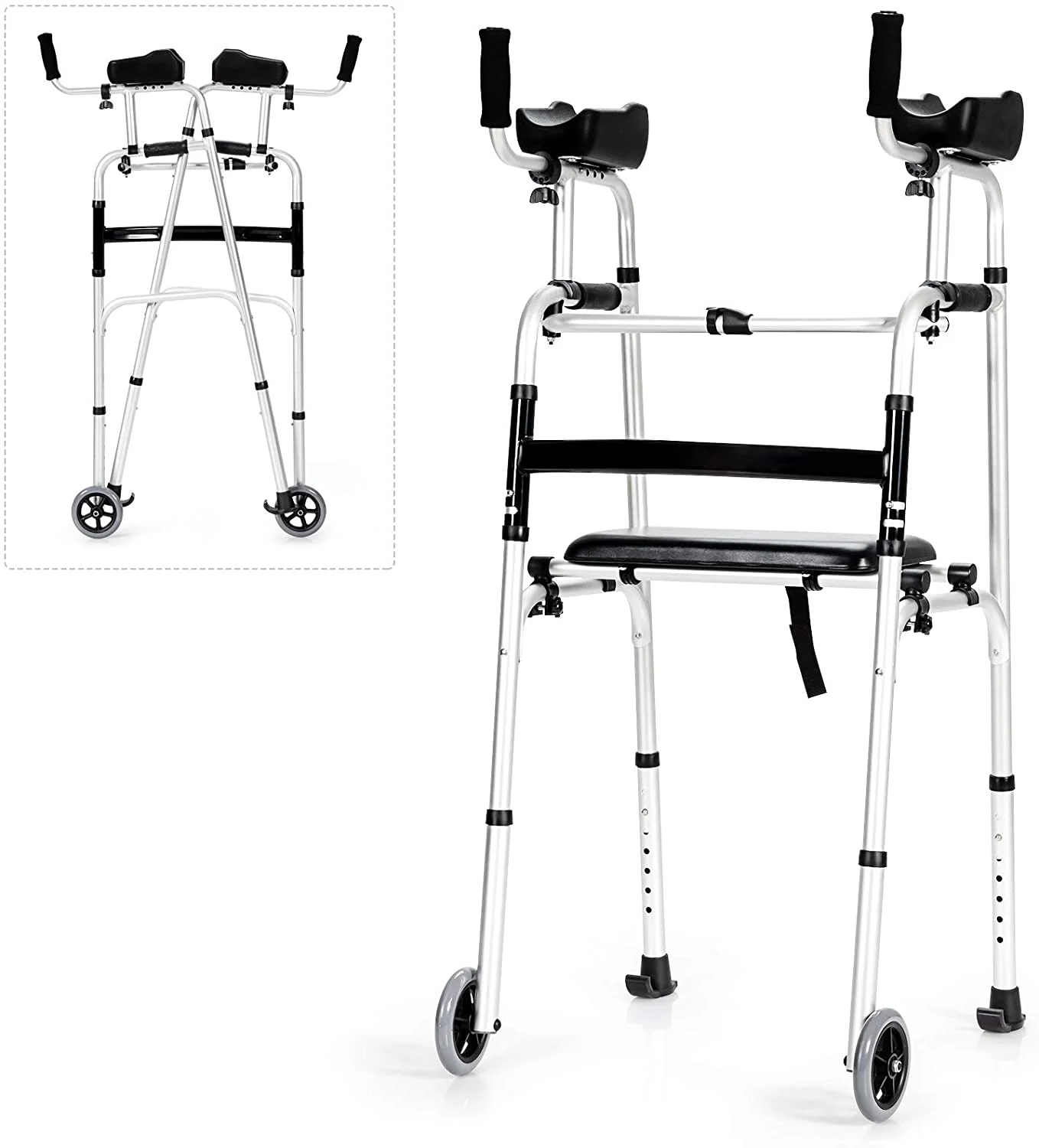
Goplus Foldable Upright Walker
Features
- Armrest height range: 42” – 48”
- Weight capacity: 330 lbs.
- Wheel size: 5” front
- Weight: 10 lbs.
- Warranty: lifetime
More features: 7-level height-adjustable support feet; 4-level adjustable double-arm rest; wear-resistant and shock-absorbing wheels; sled-style foot mats
The last but not least model on our list that pleases us with its price-quality ratio is the Goplus Foldable. This H-shaped upright walker is an ideal choice for those who are on a budget but want to enjoy the benefits this device offers. It features a one-click folding design that allows you to quickly fold it down within seconds so you can store it practically anywhere. The Goplus Foldable has a weight capacity of 330 pounds and fits average-sized users (up to 6’1”).
Unlike any other walker on our list, the Goplus Upright Walker comes with two modes, which are interactive and fixed modes. Asides from assisting seniors while they walk or stand and acting as a seat when there is none available, the walker can also be used as a toilet handrail. It is easy to navigate and features shock-absorbing, wear-resistant wheels.
What stands out?
- This walker offers 7-level height-adjustable support feet and 4-level adjustable double-arm rest that allow you to find the right balance for your height
- The wear-resistant and shock absorbing wheels make it more comfortable to move around
- The sled-style foot mats provide non-slip footing for your safety
- This lightweight walker makes carrying the walker around with you not be a big issue
What cons did we manage to find?
- The walker has a tendency to tip over when used on asphalt, so you need to be very careful
- A few users complain about the armrest being too narrow and uncomfortable to use
4. Best for Tall Seniors for Upright Walkers for Seniors
Amazon
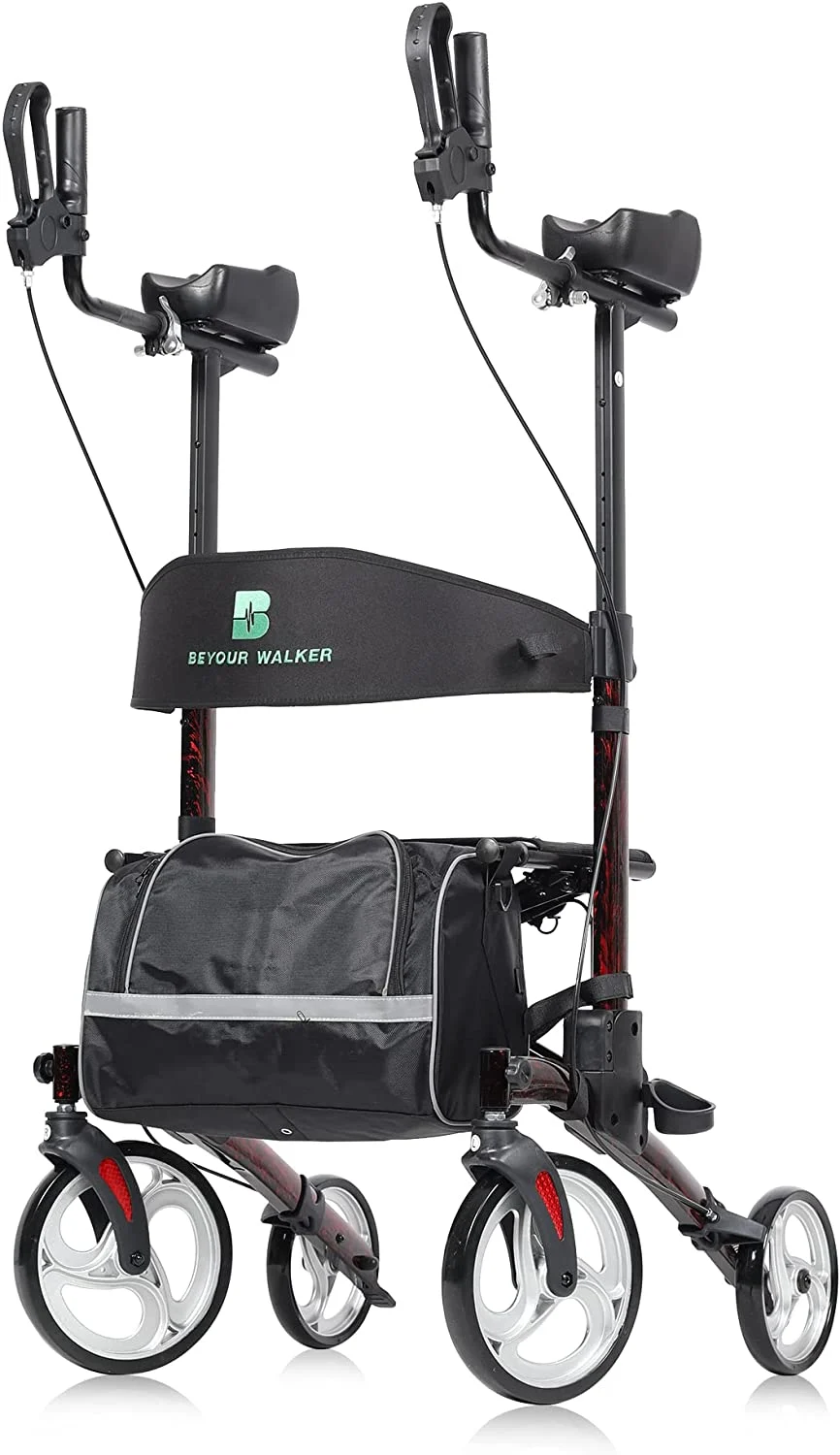
BEYOUR Walker
Features
- User’s height: from 5’ to 6’2”
- Weight capacity: 300 lbs.
- Wheel size: 10” front, 8” rear
- Frame material: steel
- Seat height: 24”
- Weight: 22 lbs.
More features: length adjustable armrest tube and holding angle; detachable zippered storage bag; threshold aid pedal; U-shape padded armrests; backrest support; lifetime limited warranty
The one more upright model, the Beyour Walker, deserves to be called one of the best walkers for tall seniors. The first things you will notice about this model are its sturdy steel frame, large seat, and padded armrest. Also, the 24-inch seat height is comfortable for any person over the middle size, and its armrest height range of 39” – 46” will surely fit most tall seniors. Plus, with the detachable zippered storage bag, your belongings will always be close at hand.
There is also an upgraded Beyour Walker, which improves on this one on our list. Even with this, this Beyour Walker does better in terms of preventing back pain and pain in wrists and the leg joints. Seniors can easily walk upright with this walker, and it is easy to maneuver because the wheels are smaller than the upgraded version.
Why did it make our list?
- The length-adjustable armrest tube and holding angle make it easy for seniors to find a comfortable position when using the walker
- The threshold aid pedal allows seniors to easily step over obstacles without having to lift the walker up
- The U-shape padded armrests provide extra comfort and support for the arms
- The lifetime warranty guarantees that your walker will last for years to come
What is not ideal about it?
- Some users find that the walker is too easy to tip over, especially when they are trying to step up or down
- The top of the basket tends to fall forward and off, making it difficult to carry items around with you
5. Best All Terrain Upright Walker for Seniors
Amazon
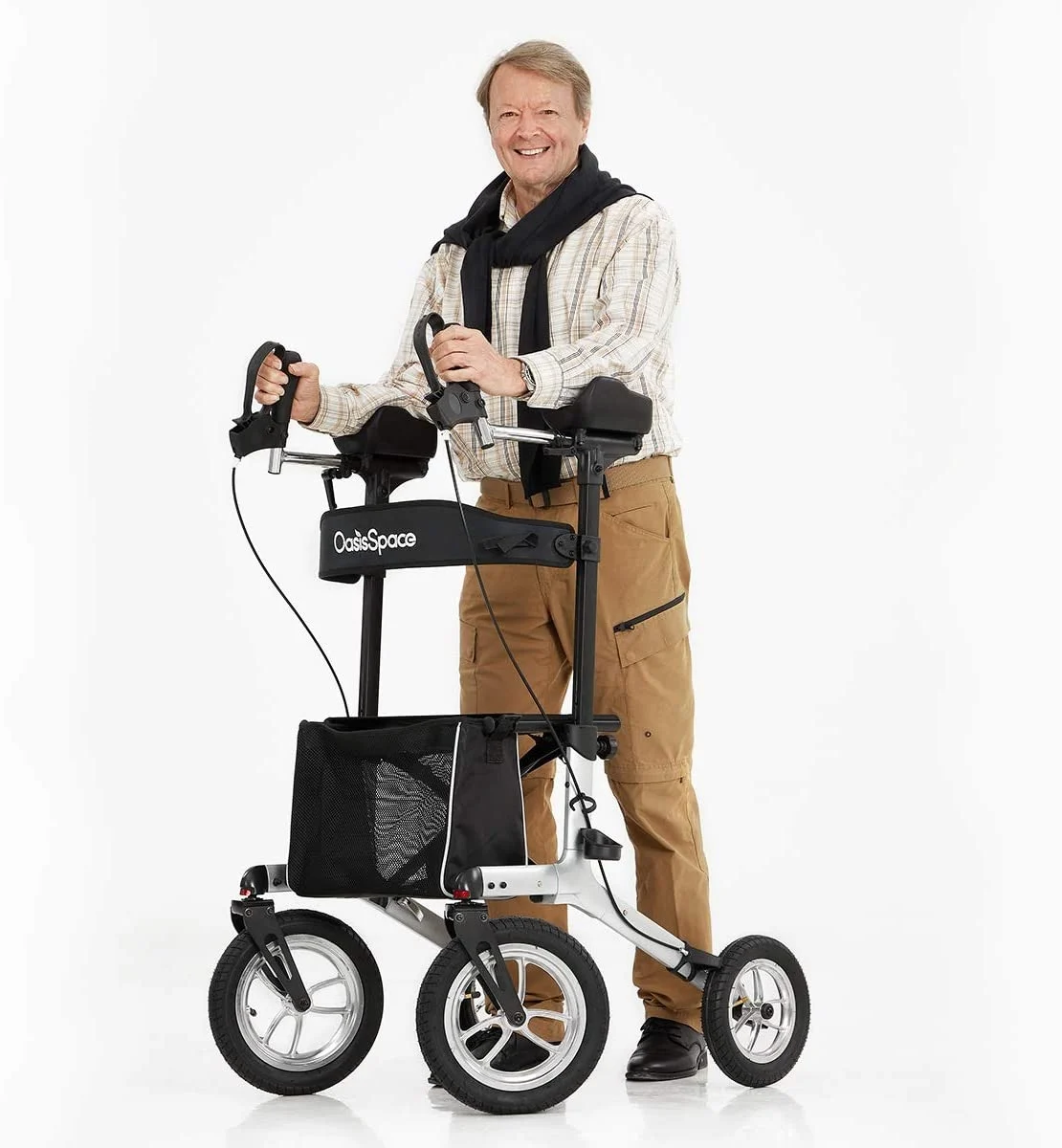
Oasis Space Pneumatic Armrest Walker
Features
- Wheel size: 12″ front, 8″ rear
- Weight support: 300 lbs
- Handle height: 39″ – 48″
- Seat dimensions: 17.7″ (L) x 9.8″ (D)
- Overall dimensions: 34″(L) x 18″(W) x 37.4″(H)
- Weight: 25 lbs
More features: pull up foldable design; adjustable hand rest; non-slip tires; locking hand brakes; 1-year warranty
Weighing 25 lbs, the OasisSpace standup walker is small and light, although not like the Oasis Aluminum. And it is easy to lift and maneuver while indoors or outdoors. It is effortlessly foldable for storage or transport. You can carry it around to have a walk around the park.
The OasisSpace rollator has a set of 12-inch front tires, the largest in this review. Then there are the 8-inch rear tires, ideal for navigating on dirt, grass, gravel, and potholes in sidewalks. The wheels are inflatable and come with a shock-absorbing function that makes them usable on bumpy paths. However, if that’s your fear, the wheels are puncture resistant as the metal frame prevents this.
This walker comes with a padded seat supported by a strong and soft thickened back belt that lets you relax calmly. The pneumatic walker is relatively easy and comfortable to use. You can control the speed with a squeeze and lock its brakes into a parking mode by pressing it down to lock. Finally, it is considered one of the best walkers for tall people.
What makes it special?
- It’s easy to store or transport as it is foldable
- Features easy to control pneumatic tires for all-terrain use
- We liked how wide the seat is and the included armrests
- The tires don’t slip
What cons did we find?
- It’s a cheap alternative
6. Best Heavy Duty Upright Walker for Seniors
Amazon
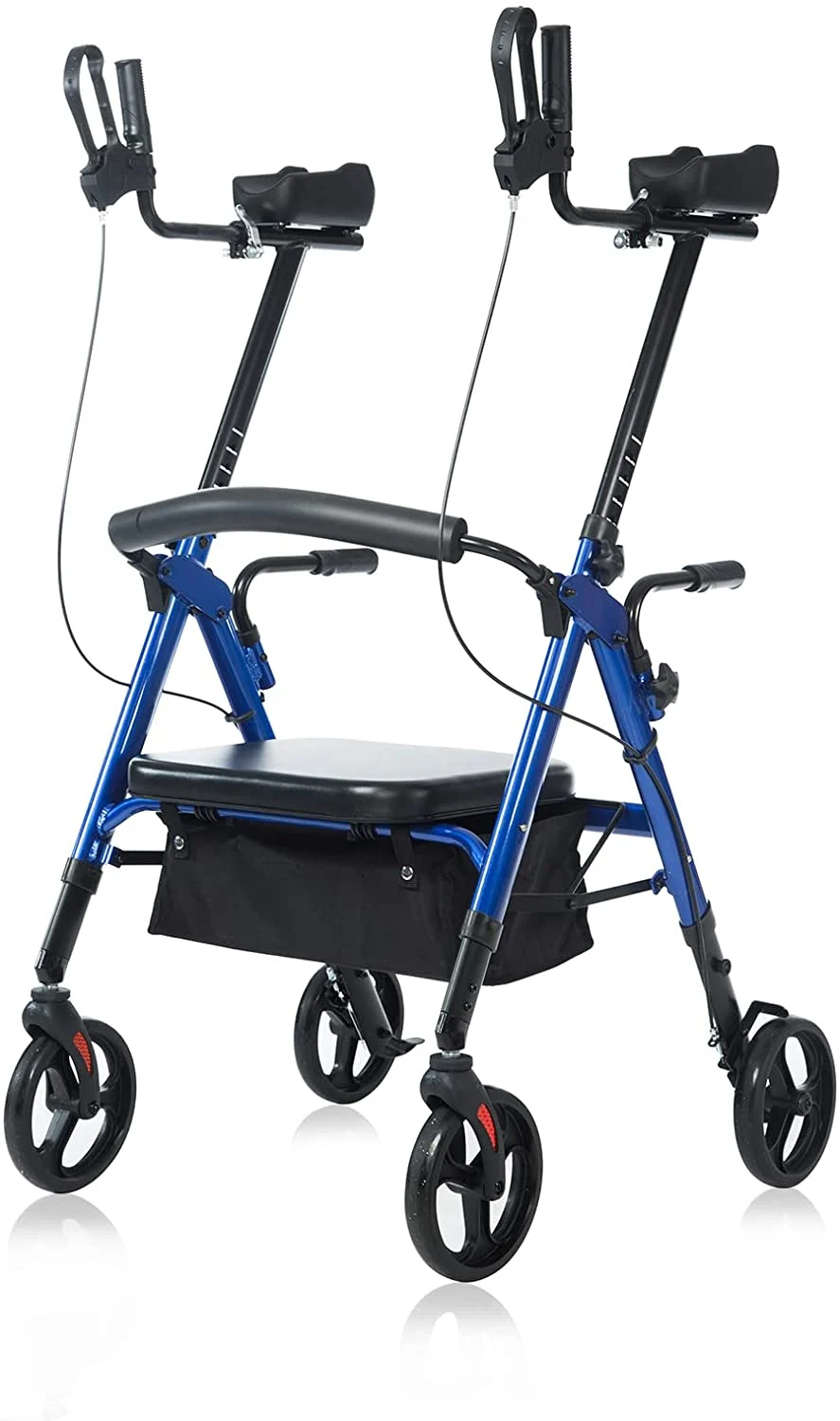
Elenker Heavy Duty Upright Walker
Features
- Armrest height range: 42” – 47”
- Weight capacity: 500 lbs.
- Wheel size: 8” front, 8” rear
- Weight: 25 lbs.
- Warranty: not specified
More features: bariatric; extra-wide padded seat; extra space for feet; steel frame; under-seat bag; cane holder
If you are in need of a high in a capacity model, you will be interested in the Elenker upright walker. This rolling walker is designed for heavier people up to 500 lbs. It also comes with a wide seat of 22 inches, which makes it more suitable for those who want to sit down and rest after walking any distance. Additionally, its armrest height range can be adjusted between 42 and 47 inches, which is ideal for 5’3″ and higher seniors.
What makes this Elenker walker different from other folding rollator walkers from the same brand is its focus on extra comfort. It has extra-wide padded cushions on the backrest and provides enough space between wheels for feet to walk. Also, most folding upright walkers come with an ergonomic hand brake, but this heavy duty model goes the extra mile with the dual brake system and reinforced frame.
What makes it stand out?
- The extra-wide padded seat provides you with more space to sit down and rest after when your body just needs a break
- The enormous weight capacity of this upright walker is ideal for seniors who have high body mass and need a strong device for walking
- The frame is made from a heavy-duty aluminum alloy that is sturdy enough to provide stability during use and minimize the risk of tipping
- The under-seat bag can be used to store your items such as water bottles or grocery
Which disadvantages must you keep in mind?
- The walker’s width makes it difficult to fit into the trunk of a car, so you will need to take the arm pieces off every time you need to store it
- This model is hard to steer on carpet or pad due to its high weight
7. Best Upright Walker with Seat for Seniors
Amazon
Rinkmo Upright Walker
Features
- Armrest height range: 46” – 51”
- Weight capacity: 300 lbs.
- Wheel size: 8” front, 8” rear
- Weight: 22.5 lbs.
- Warranty: 1 year
More features: detachable nylon bag; cane/umbrella holder; breathable padded backrest; customized handgrip tube
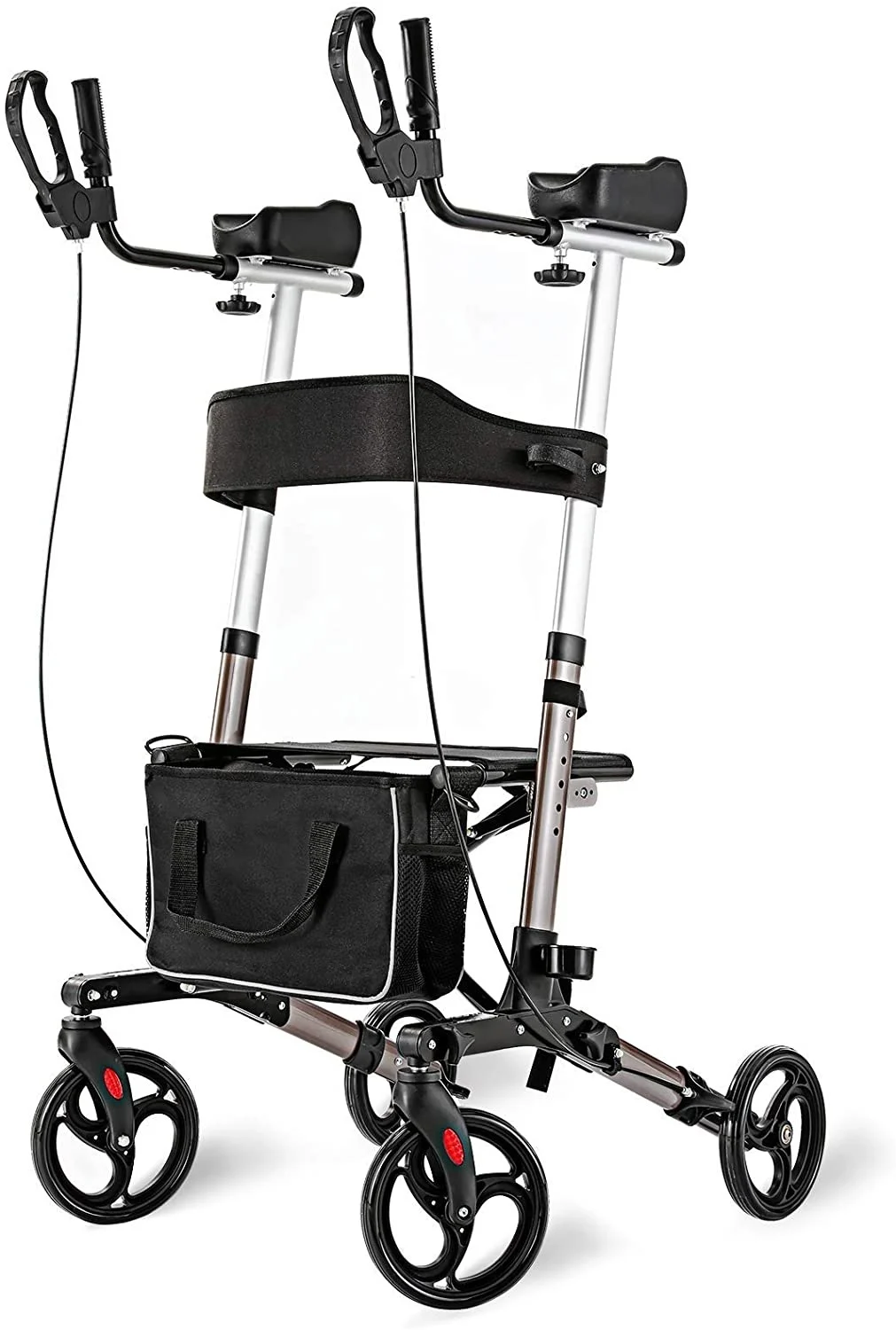
The next model on our list is the one from Rinkmo. It is the best upright rollator walker with a seat, which features an upgraded design with thicker, broader ergonomic handles that are contoured for an easy grip. It also provides 8-inch front and rear wheels for maneuverability in tight spaces. As we have tested, the Rinkmo upright walker is most appropriate for seniors who need to walk for a few hours with the convenience of seated break periods.
The highlight of the Rinkmo Upright Walker is its 360-degree swivel anti-skid wheels which make it easy to move and maneuver the walker on diverse terrains. They also prevent accidents by making it easy to keep the walker in place. It also comes with a comfortable backrest to avoid aches and discomfort.
Why are we impressed?
- The seat of the walker provides you with superior comfort while sitting down during your break periods
- The breathable backrest is upholstered with a layer of padding that saves seniors from developing back pains
- The handgrip tube can be customized to your height for the ultimate fit and adjustability
- The cane/umbrella holder and a detachable nylon bag allow you to securely hold your items without having to worry about them falling out of your hands
What negatives must you be aware of?
- Some users of 5’0″ height and lower have reported the seat to be slightly higher than what they had expected
- This upright walker is not a good fit for a skinny person
Choosing The Best Upright Walkers for Seniors
Upright walkers for seniors are a great alternative to canes and crutches. Why are seniors switching from canes and standard walkers to upright models? The benefits go beyond just getting around. However, it is not always easy to find the one that meets all your expectations as upright frames affect overall walker weight and balance. In this buying guide, we will cover all the essential factors you should consider before making a final decision on a new walker.
Benefits of Using Upright Walkers
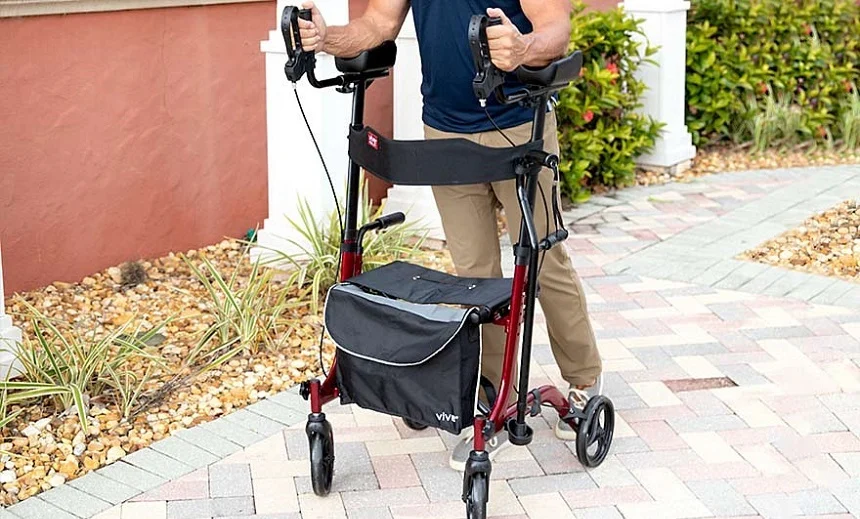
With the help of an upright walker, you will keep up with your companion.
If you’ve been using a cane or crutches till now, it is time to switch to an upright walker. This popular type of walking aid makes many things easier and allows you to move around without putting too much strain on your arms and legs. Below are the main benefits that you can enjoy using a stand-up walker:
Better Posture & Less Pain
Upright walkers encourage you to stand straight rather than hunched over. This proper alignment of your head, neck, and back can dramatically reduce pain. You’ll also walk at eye level, making conversations and enjoying your surroundings much more pleasant. Clinical research shows that forearm-support walkers led to significantly improved upright posture and reduced trunk sway compared to standard rollators.
Reduced Strain on Arms and Wrists
By supporting your forearms on elevated armrests, upright walkers take pressure off your wrists and hands. This is especially helpful if you have arthritis or weak grip. Unlike canes or low rollators where you bear weight through your hands, upright walkers distribute load across your forearms.
Walk Farther and Faster
With improved posture and support, many users find they can walk longer distances with less fatigue. Studies demonstrate that forearm-support walkers can offload 39-46% of body weight from the lower extremities while improving gait efficiency. Standing upright leads to a more natural stride, and some users even walk slightly faster than they could with standard walkers.
Confidence Boost
Being able to walk upright can significantly boost your confidence. Modern upright walkers have a sleeker, more contemporary look compared to traditional walkers. Looking forward instead of down at the ground means you engage more with your surroundings and companions. You’ll feel less self-conscious in public.
Built-In Resting Seat
Most upright rolling walkers include a seat. When you get tired, simply lock the brakes and sit down safely anywhere. This feature is a game-changer for endurance, allowing you to participate in longer outings without worry. Whether shopping, visiting museums, or taking neighborhood walks, you always have a resting spot ready.
How to Choose the Best Upright Walker for Seniors
There are many different types of walkers on the market that differ in size, weight capacity, design, etc. Some models might work better for your needs, while others will not suit you at all. Therefore, this section will break down the most important factors to consider when choosing the right one for you or an older person you care about.
Height & Size
The walker must match your height for proper posture. Most upright walkers list a recommended user height range (typically 5’0″ to 6’2″). Measure your height and ensure the model’s handle height adjusts to that range.
For very tall individuals, there are walkers specifically designed with greater height adjustment. The BEYOUR Walker, for example, accommodates users up to 6’4″ with an adjustable armrest height from 39″ to 48″. Using a walker that’s too low will force you to stoop, defeating the purpose.
Also consider overall width: ensure the walker fits through your home doorways. Some models are sleek, while bariatric models are wider for weight support.
Weight Capacity
Check the walker’s maximum weight limit to ensure it can safely support you. Most standard upright rollators support up to 300 pounds, covering the majority of users. If you need more support, look for heavy-duty or bariatric upright walkers that handle 400-500 lbs capacity.
The Elenker Heavy Duty Upright Walker, for instance, supports users up to 500 lbs with a wider, reinforced frame. Even if you’re under the limit, higher capacity often means sturdier construction that lasts longer.
Adjustability
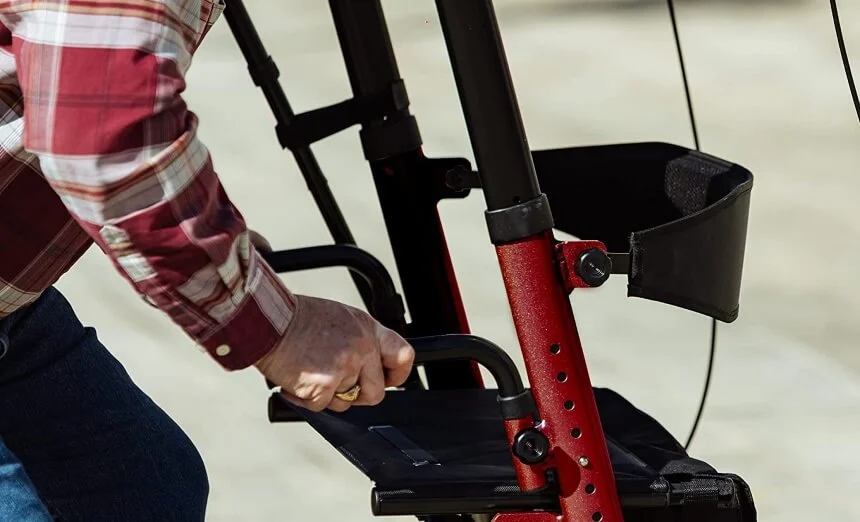
A quality upright walker should be highly adjustable. Key adjustment points include handle/armrest height and sometimes the forearm pad angle. Set the forearm supports so your elbows bend about 90 degrees with relaxed shoulders.
Many models like the Vive Mobility Upright Walker have easy push-pin adjustments (ranging from 45″ to 52″ height). The more adjustable, the better you can tailor the walker to your optimal, ergonomic posture. Some models like the Rinkmo let you adjust the armrest angle to suit your arm position perfectly.
Foldability & Weight
If you plan to travel or store the walker when not in use, consider how easily it folds and its weight. Many upright walkers fold by pulling a strap or lifting a lever, collapsing the frame somewhat flat.
The Goplus Upright Walker features a one-click folding design and is among the most lightweight options at around 20 lbs, making it easier to lift into vehicles. Lighter walkers (15-22 lbs) are easier to manage, though ultra-lightweight frames might sacrifice some sturdiness. Find a balance that suits your strength level.
Most models on our list are small and lightweight, designed to fit easily even into a closet at home. If this feature plays a vital role for you in choosing the upright walker, you should look at our in-detail review of the best narrow walkers for seniors that do not take much space and allow you to get through any doorway.
Wheels

The standard tires of the Beyour Walker upright rollator allow you to move it on asphalt with ease.
Wheel size and type determine where you can comfortably use the walker. Standard indoor-focused upright walkers have 8-inch wheels that work great on smooth floors and sidewalks.
For outdoor enthusiasts who tackle rougher terrain (gravel paths, grass, uneven pavement), consider an all-terrain upright walker with larger wheels (10-12 inches) and treaded tires. The OasisSpace Upright Walker comes with big pneumatic air-filled tires that absorb shocks, making it our top pick for all-terrain use. Larger wheels roll more easily over bumps and won’t get stuck in cracks.
Check if all four wheels swivel or only the front pair. Swiveling front wheels improve maneuverability in tight spaces, while non-swivel rear wheels provide stability.
Safety Features
Look for features like anti-tip wheels or rear extensions that prevent backward tipping. Ensure the walker has a dual braking system where both wheels brake simultaneously. You should be able to comfortably squeeze the brake levers with your hands.
Some upright walkers include a parking brake feature (push down to lock for sitting). Since upright walkers place you in a higher position, always engage brakes before sitting down or standing up. Never attempt to ride the walker as a wheelchair—they’re not designed for that purpose.
Warranty
A reliable walker should come with at least a one-year warranty. Check reviews for build quality. Aluminum frames are common (lightweight and rust-resistant), while steel offers extreme durability but adds weight.
The Vive and UPWalker models use quality aluminum construction. A longer warranty indicates the manufacturer’s confidence in their product’s durability and shows commitment to customer support if issues arise.
Price Range
While it is true that good things come with a price, you do not have to spend a fortune. Our best-rated upright walkers for seniors are reasonably priced and should fit any budget considering the features they offer compared to other products on the market. Most of them start from $100, but you can find something that costs over five hundred dollars if you are a highly wealthy senior citizen looking for a top-quality model.
Upright walkers range from $120 to $700. Basic models start around $120-$150, mid-range popular models cost $200-$300, and premium designs with advanced features can reach $400-$700.
Your budget matters, but don’t compromise on safety and comfort. The best upright walker for you is an investment in your mobility and independence. Medicare Part B may cover walkers with a prescription, though coverage for upright models varies, check with your provider.
Extra Features
While extra features do not directly influence the walker’s mobility or weight-bearing capacity, they provide more comfort and convenience. There are numerous models of upright walkers for seniors that come with a padded seat, backrest, and forearm support that is very useful for those that have back problems or walk for a longer time. Consider bonus features that make life easier. Many upright walkers include storage bags or baskets under the seat for carrying personal items, groceries, or books. Some have cane or umbrella holders, cup holders, or phone holders.
If you like to rest frequently, check for a padded backrest (like the Rinkmo’s cushioned back support). Padded forearm rests are standard, but verify the padding is thick and comfortable for longer walks. Anti-tip wheels, reflectors for visibility, or flashlight attachments could be deciding factors.
Finally, since you have to lean forward when using an upright walker, sometimes it is crucial that the device features anti-tippers. They will help the person stay on their feet without falling down or losing balance.
Upright Walkers for Seniors FAQ
1. Who should use upright walkers and why?
Upright walkers are ideal for seniors or adults with mobility challenges who want to maintain an active lifestyle with less pain. If you find that standard walkers or canes make you hunch over or strain your back, an upright walker can help you stand straighter.
They’re great for people with arthritis, back or neck pain, or poor balance who can walk but need support. By distributing weight to your forearms, these walkers reduce stress on your lower back, legs, and wrists. Anyone who wants to walk more comfortably and securely (and doesn’t need a wheelchair full-time) could benefit. They’re especially popular with older adults who want to stay independent and keep up with daily walks or outings without fatigue.
2. How do I properly fit and adjust an upright walker for myself?
Fitting your upright walker correctly is crucial for comfort and safety. First, adjust the handle or armrest height so that when you stand upright inside the walker, your elbows bend about 90 degrees with forearms resting comfortably on the pads. Your shoulders should be relaxed (not scrunched up or sagging down).
Most walkers have a push-button or knob to raise or lower armrests. Use a mirror or ask someone to check your posture. Hand grips should be at a natural angle for your wrists (some allow angle adjustment). When holding grips, your wrists should be in neutral position (not overly bent).
Ensure the walker’s width is comfortable—you should walk within the frame without hitting wheels. Adjust seat height if possible: when sitting, your feet should touch the ground. It’s often helpful to have a physical therapist or health professional fine-tune the fit, especially if you have significant posture issues.
3. Are upright walkers safer than regular walkers or rollators?
When used correctly, upright walkers are safe and can even improve safety by encouraging better posture and stability. They often have a wider base which adds stability, and users stand centered within the frame.
According to a recent clinical study, using a forearm-support walker led to significantly less trunk sway and offloaded up to 40% of body weight from the legs, which can make walking feel more secure and reduce fatigue. Unlike standard rollators, you’re not leaning forward (which sometimes leads to balance loss).
However, any walker can be unsafe if misused. Always engage brakes when stopping or sitting, and take corners slowly. Research shows that people who use walking aids are no more likely to fall than those who don’t. In fact, having proper walker support can prevent falls by catching you if you stumble.
Upright walkers are safe for intended users when you follow instructions. If you have severe balance issues or cognitive impairment, consult a healthcare provider for proper training or to determine if a different aid is needed.
4. What is the difference between an “upright walker” and an “upright rollator with seat”?
These terms are often used interchangeably. An “upright walker” typically refers to the forearm-support rollators we discuss in this article—walkers with wheels, armrest platforms, and usually a seat that lets you walk upright. An upright walker is essentially a type of rollator walker designed to keep you standing straight.
Sometimes you’ll see them called upright rollator walkers, stand-up walkers, or standing walkers. All have four (or more) wheels and hand brakes like standard rollators. The key distinguishing feature is the raised armrests and handles.
So if you see “upright rollator walker with seat,” it’s describing exactly this device: a rollator with a seat that’s built tall so you don’t have to bend over. Regular rollators have lower handles around waist height; upright models have handles at roughly elbow height with pads to support forearms. Functionally, both help you walk and have seats for resting, but upright walkers focus on posture and weight distribution.
5. Can I use an upright walker as a wheelchair or transport chair?
No—upright walkers are not meant to be used as wheelchairs or transport chairs. Although most have built-in seats, these are only for the user to sit and rest while the walker is stationary with brakes locked.
It’s unsafe to have someone push you while you’re sitting on an upright walker seat. The design is not stable for rolling while seated (the center of gravity is different, and the device could tip). If you need a device you can occasionally sit in and be pushed, look for a rollator-transport chair combo. Those have special designs with flip-down footrests and transform into wheelchairs pushed from behind.
Upright walkers don’t offer that functionality. They’re really for users who can walk but want more support. Always stand up to use the walker when moving; use the seat only for resting, not as transportation.
6. How much do upright walkers cost on average?
Upright walkers range in price based on features and brand. On average, expect to pay around $150 to $250 for a good quality basic model. Premium brands or models with extra features (very lightweight materials, pneumatic tires, or higher weight capacity) can cost between $300 and $600.
For example, popular UPWalker models often retail in the $500+ range, whereas budget-friendly versions on Amazon or from medical supply brands might be $140-$200. Keep in mind, price can reflect quality—very cheap no-name models might have flimsy parts or less stability. It’s worth investing in a well-reviewed walker from a trusted brand for safety.
Also check if your insurance or Medicare might cover part of the cost with a doctor’s prescription. Medicare typically covers standard walkers, and in some cases rollators, but you’d need to verify if an “upright posture walker” is covered.
Our Verdict
After conducting a detailed review of upright walkers, we have identified three winners and a series of runners up to suit specific needs.
Each of our top picks excels for a specific need but overall, the Vive Mobility Upright Walker (Editor’s Choice) is an excellent all-around option – light, sturdy, and comfortable for daily use. It promotes good posture and ease of movement (as research supports). For those on a budget or simply looking for great value, the Goplus Foldable Upright Walker delivers solid performance for less money. If height is your concern, the BEYOUR Walker is built tall and adjusts high for long legs. For outdoor enthusiasts, the Oasis Space Pneumatic Walker handles rough terrain smoothly with its big air-filled wheels. Seniors needing extra support should consider the Elenker Heavy Duty Walker, rated up to 500 lbs. And if frequent rest breaks are important, the Rinkmo Upright Walker’s plush seat and back make it very comfortable.
Ultimately, the best choice depends on your personal needs: body size, where you use it, and whether you need a seat. They represent a specialised category within walker types so you don’t have to settle on a sub-par fitting for your lifestyle. Each of the above models has earned a top recommendation in its category. We hope this guide helps you find an upright walker that keeps you steady, safe, and standing tall.
Now that you know all the essential things needed to choose the best upright walkers for seniors, we hope you can find something suitable within this list.
References
- Postural and Metabolic Benefits of Using a Forearm Support Walker in Older Adults With Impairments – PubMed
Using the forearm support-based LW led to upright body posture, offloaded portions of body weight from the lower extremity, and improved gait efficiency during ambulation in comparison to the SR and the participants own PD. Further studies focusing on population-specific benefits are recommended.
pubmed.ncbi.nlm.nih.gov - Assessment of rolling walkers used by older adults in senior-living communities
Rolling walkers (RW) are among the most common ambulatory devices used in senior-living communities. However, many observational studies have associated RW use with an increased risk of falling.
www.researchgate.net - Friend or foe? Study examines seniors’ increasing use of walking aids — ScienceDaily
America’s population of senior citizens is growing, and with it, a reliance on canes, wheelchairs and scooters. This proliferation of senior mobility devices is surprising considering that prior research showed a correlation between device use and falling — the leading cause of death resulting from injury among adults 65 and older.
www.sciencedaily.com - Chandrasekaran Jayaraman et al., Arch Phys Med Rehabil. (2019) – Study on forearm-support walkers (posture and muscle benefits) (pubmed.ncbi.nlm.nih.gov).
- Bradley J. Fikes, San Diego Union-Tribune (2016) – “Making strides with an upright walker,” reports on walker use among baby boomers (phys.org).
- SeniorFitness.net – OasisSpace Upright Walker Review: Is It Worth It?.
- SeniorFitness.net – 7 Best Walkers for Seniors (2025 update) (seniorfitness.net).
- SeniorFitness.net – Walkers for Tall People: Top Picks (seniorfitness.net).
- SeniorFitness.net – 7 Best Types of Walkers for Seniors (seniorfitness.net).
- SeniorFitness.net – Best Narrow Walkers for Seniors (seniorfitness.net).