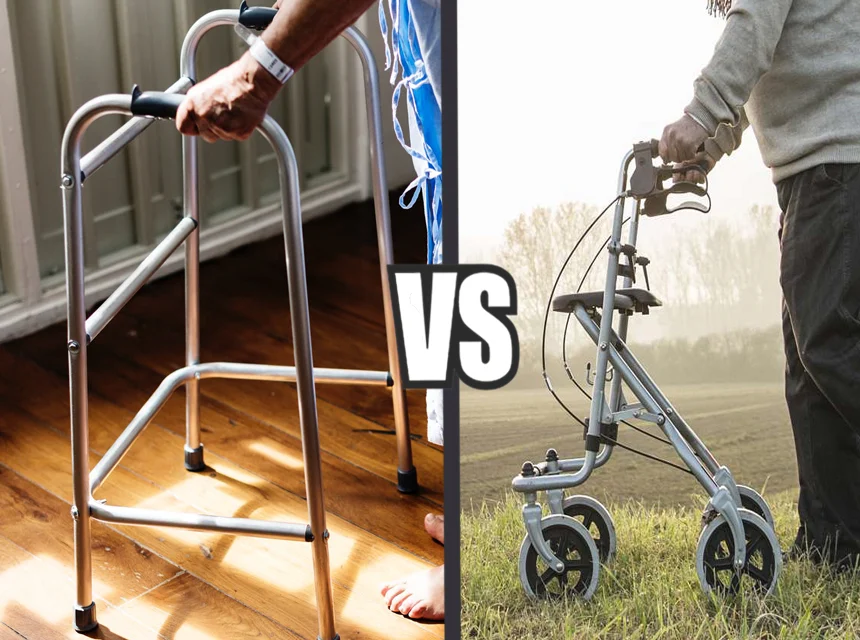
As we age, staying mobile can become increasingly challenging. Changes in strength, balance, joint comfort and endurance can make walking more difficult, while a mobility aid that does not fit properly may introduce problems of its own.
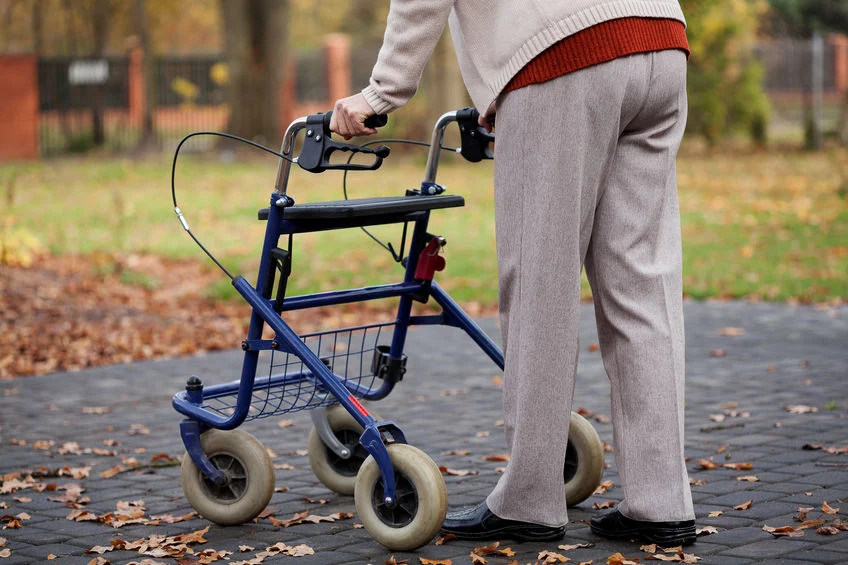
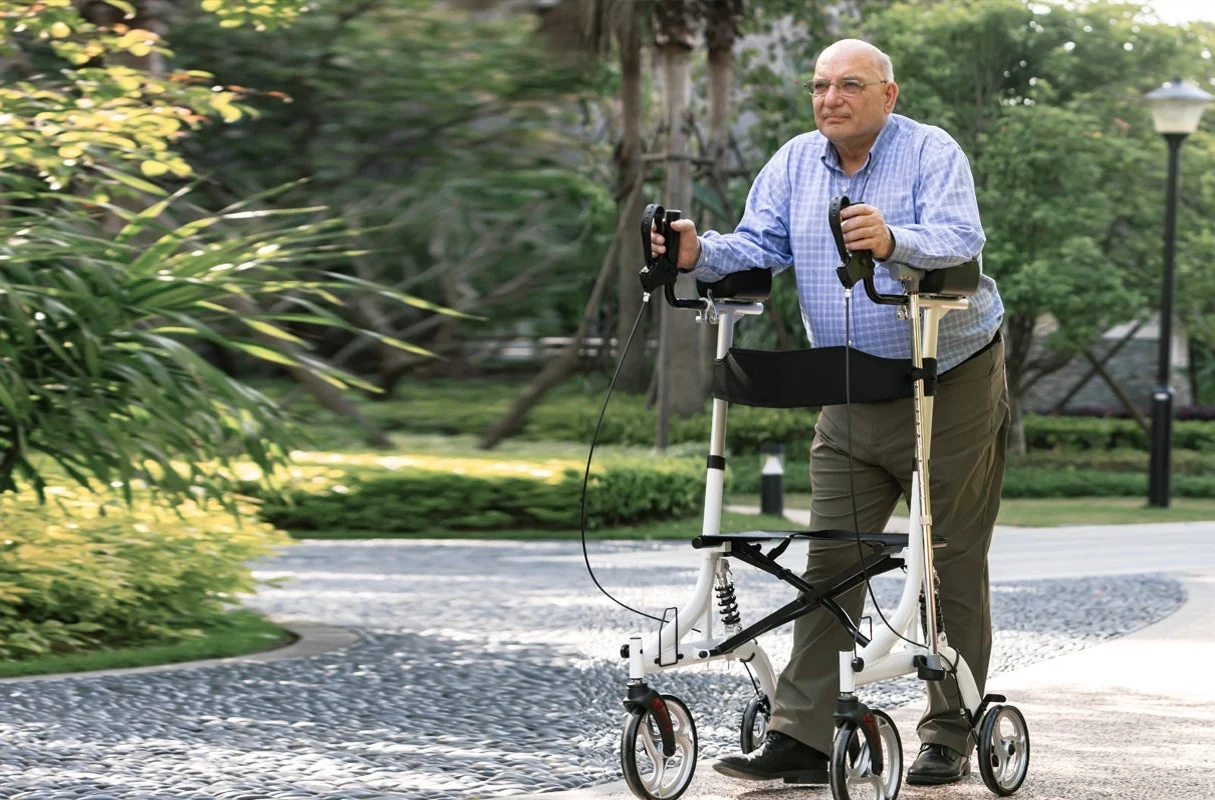
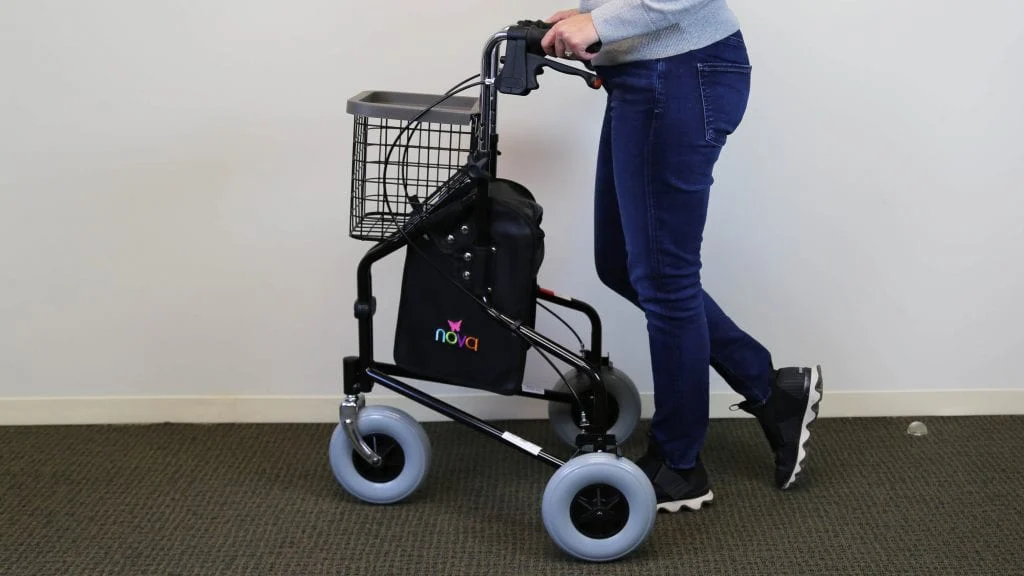
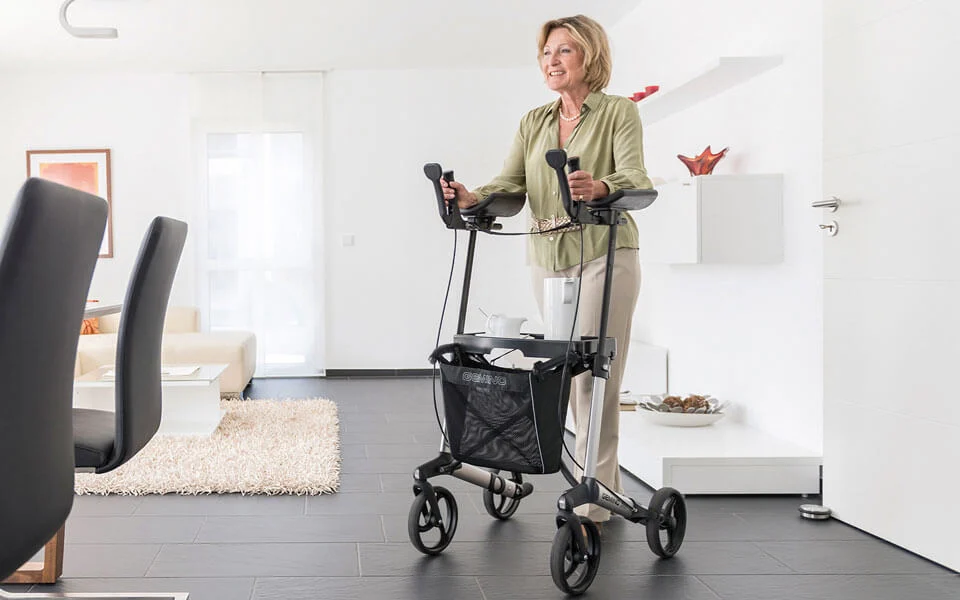
That is where an upright walker can be worth considering. Unlike a conventional rollator with handles positioned around waist height, an upright walker uses elevated hand grips and forearm supports to allow the user to walk in a more upright position while remaining supported inside the frame.
Upright walkers are one option within the broader range of walkers for seniors. They can be particularly appealing to people who find themselves bending excessively over a standard rollator or who prefer to distribute some of their support through the forearms rather than entirely through the hands and wrists.
We have selected seven of the best upright walkers for seniors in 2026, with the Vive Mobility Upright Walker taking our Editor’s Choice. The lineup includes lightweight models, all-terrain rollators, options for tall and larger users, and a bariatric walker supporting up to 500 pounds.
SeniorFitness is reader-supported. We may earn a commission through products purchased using links on this page. Learn more about our process here
TL;DR Summary
The Vive Mobility Upright Walker is our best overall choice because it provides a strong balance between adjustability, portability, seating comfort and everyday maneuverability. For people who spend more time outdoors, the Helavo H1160 All-Terrain Upright Walker adds larger 10-inch wheels designed to roll more easily across uneven everyday surfaces.
If lifting weight is the priority, the Goplus Lightweight Foldable Upright Walker is quite different from the others, weighing roughly 9 pounds because it uses a simple forearm-support walking-frame design rather than a full four-wheel rollator. The HOMLAND Upright Rollator Walker provides a more conventional seated rollator at the value end of the range.
For larger or taller users, the Vive Series T Bariatric Upright Walker extends the forearm supports higher and increases capacity to 400 pounds. The Helavo H1360 Bariatric Upright Walker goes further with a claimed 500-pound capacity, while the ELENKER All-Terrain Upright Rollator combines large wheels with a comfortable seat and backrest for longer outdoor outings.
Clinical research into forearm-support walkers is encouraging, but it is more specific than some marketing claims suggest. One small clinical study found that a forearm-support walker improved upright posture and gait efficiency compared with a standard rollator and participants’ usual devices, with participants transferring approximately 39–46% of their body weight through the elbow supports while walking.
Quick Summary
- Editor’s Choice – Best Overall Upright Walker: Vive Mobility Upright Walker — A versatile 20-pound upright rollator with adjustable padded forearm supports, 8-inch flat-free wheels, a seat and 300-pound capacity.
- Premium Pick – Best All-Terrain Upright Walker: Helavo H1160 All-Terrain Upright Walker — A more outdoor-focused upright walker with 10-inch flat-free rubber wheels, padded seating and an aluminum folding frame.
- Best Lightweight Upright Walker: Goplus Lightweight Foldable Upright Walker — A simple forearm-support walking frame weighing approximately 9 pounds, making it considerably easier to lift than a full rollator.
- Best Value Upright Walker: HOMLAND Upright Rollator Walker — Provides the main features of a conventional upright rollator, including padded forearm supports, four wheels, hand brakes and a seat, without moving into premium pricing.
- Best for Tall & Larger Seniors: Vive Series T Bariatric Upright Walker — Offers forearm-support adjustment up to approximately 50 inches, a wider frame and a 400-pound weight capacity.
- Best for Outdoor Comfort: ELENKER All-Terrain Upright Rollator Walker — Combines larger outdoor-oriented wheels with a padded seat and supportive backrest for users who expect to take longer outings.
- Best Heavy-Duty Upright Walker: Helavo H1360 Bariatric Upright Walker — A wider bariatric upright rollator with a claimed 500-pound capacity, approximately 20-inch seat and reinforced folding frame.
Top 7 Upright Walkers for Seniors Review 2026
1. Editor’s Choice for Upright Walkers for Seniors
Amazon
Vive Mobility Upright Walker
Features
- Armrest height range: 41″ – 46″
- User height range: approximately 5’2″ – 6’4″
- Weight capacity: 300 lbs
- Wheel size: 8″ flat-free
- Weight: approximately 20 lbs
- Seat width: 17.5″
- Folded width: approximately 10.8″
More features: aircraft-grade aluminum frame; padded forearm supports; locking hand brakes; padded seat and backrest; detachable shoulder bag; cane holder; folding design.
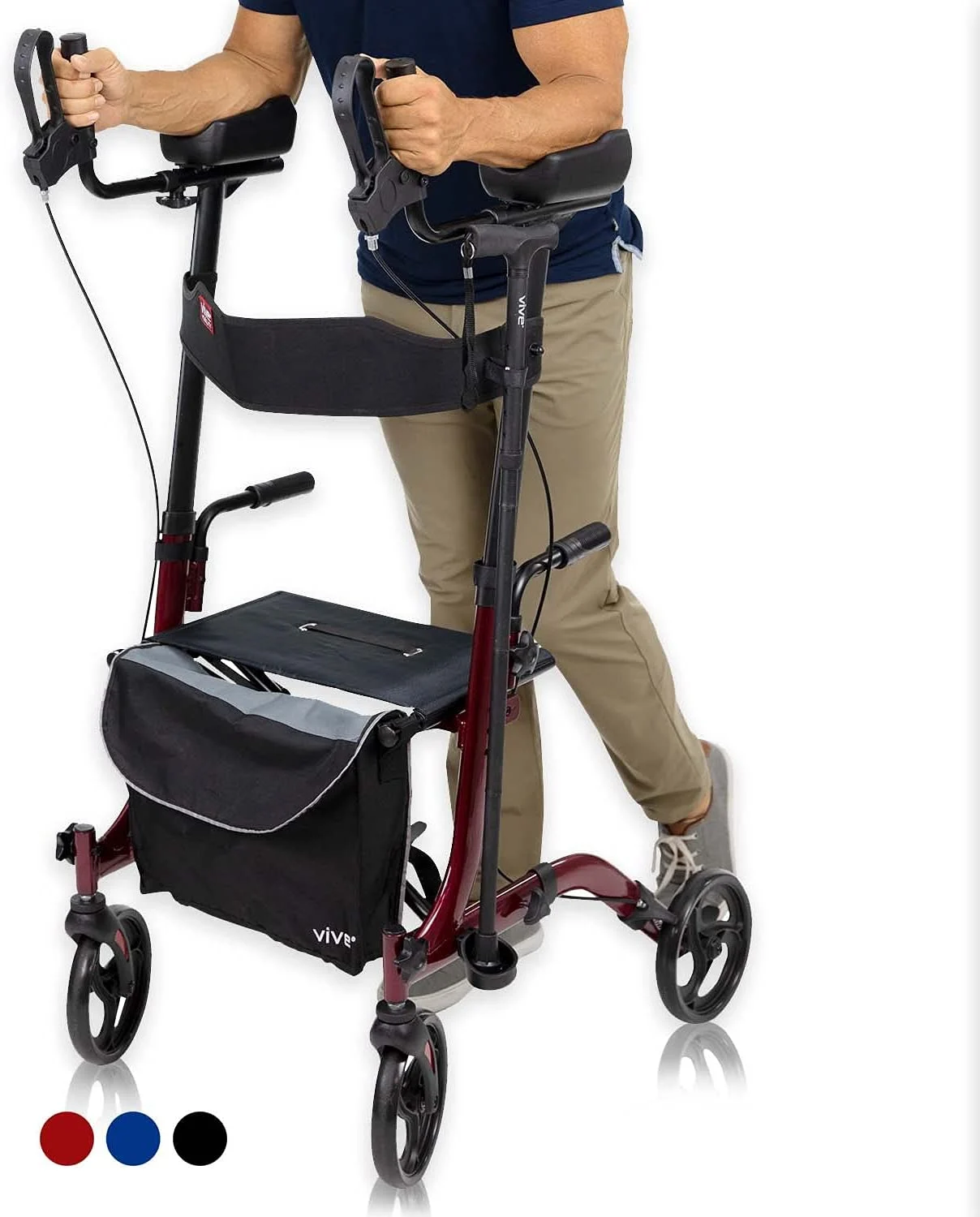
The Vive Mobility Upright Rollator strikes one of the best balances between comfort, adjustability, portability and everyday usability. At around 20 pounds, it is light enough for many caregivers to lift into a vehicle, yet its aluminum frame still supports users up to 300 pounds. Vive recommends it for users roughly 5’2″ to 6’4″, with forearm supports that adjust between 41 and 46 inches.
The 8-inch flat-free wheels are a good middle ground for indoor and outdoor use. They are large enough for sidewalks and maintained paths without making the walker feel excessively bulky indoors, while the padded 17.5-inch seat gives the user somewhere to rest when needed. The walker also folds to around 10.8 inches wide, which makes it relatively easy to store or fit into a vehicle.
What do we love it for?
The biggest strength is its all-round usability. It is not the lightest, widest or most rugged walker in this guide, but it handles each of those areas well enough that it should suit a broad range of seniors.
We also like that Vive publishes unusually clear specifications for height range, seat size, folding dimensions and weight. That makes it much easier to judge whether the walker is actually likely to fit before buying.
What could be better?
The standard Vive may feel narrow or restrictive for larger users, and its 300-pound capacity is lower than the bariatric models farther down this list. Very tall users may also be better served by the Series T version, which extends considerably higher.
Its 8-inch wheels are versatile rather than genuinely all-terrain. If your regular walking routes include gravel, rough paths or badly broken sidewalks, the Helavo or ELENKER options with larger wheels make more sense.
2. Premium Pick: Best All-Terrain Upright Walker
Amazon
Helavo H1160 All-Terrain Upright Walker
Features
- Type: upright rollator walker
- Wheel size: 10″ flat-free rubber wheels
- Weight capacity: approximately 300 lbs
- Weight: approximately 22–23 lbs
- Frame: aluminum
- Seat: padded
- Foldable: yes
More features: adjustable padded forearm supports; large solid-rubber wheels; locking hand brakes; storage bag; padded backrest; folding frame.
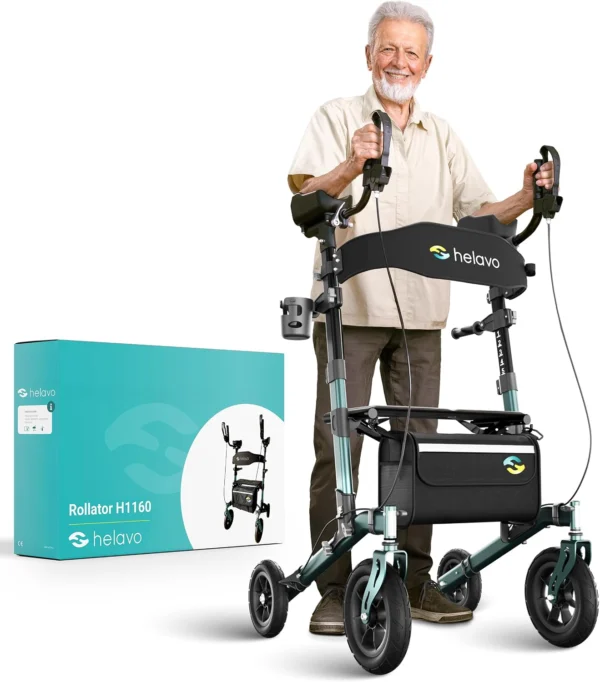
The Helavo H1160 is our premium all-terrain choice because its design is clearly aimed at people who expect to use their walker outside as well as around the home. The standout feature is the set of 10-inch flat-free rubber wheels, which should roll more easily over cracks, gravel and uneven paving than the smaller wheels found on many upright walkers.
At around 22–23 pounds, the Helavo is somewhat heavier than the Vive, but not excessively so given the larger wheels and more substantial frame. It still folds for storage and includes the padded seat and forearm supports expected from a premium upright rollator.
What do we love it for?
The large wheels are the main attraction. For someone who regularly walks on rough pavement, park paths or other imperfect surfaces, the extra diameter can make the walker less likely to catch abruptly on small obstacles.
We also like the use of flat-free tires rather than pneumatic ones. You still get the advantage of a larger outdoor wheel without having to monitor tire pressure or worry about punctures.
What could be better?
The trade-off for those large wheels is bulk. The H1160 is less convenient in very tight indoor spaces than a compact upright walker, and it takes up more room in a vehicle.
It also remains a rollator rather than a genuine off-road mobility device. “All terrain” should be understood as better suited to uneven everyday surfaces, not as permission to use it over steep, loose or unstable ground.
3. Best Lightweight Upright Walker
Amazon
Goplus Foldable Upright Walker
Features
- Type: forearm-support walking frame
- Weight: approximately 9 lbs
- Claimed weight capacity: up to 440 lbs
- Frame: lightweight aluminum
- Wheels: small front wheels
- Forearm supports: padded and adjustable
- Foldable: yes
More features: compact walking-frame design; height adjustment; padded arm platforms; lightweight frame; easy folding for storage.
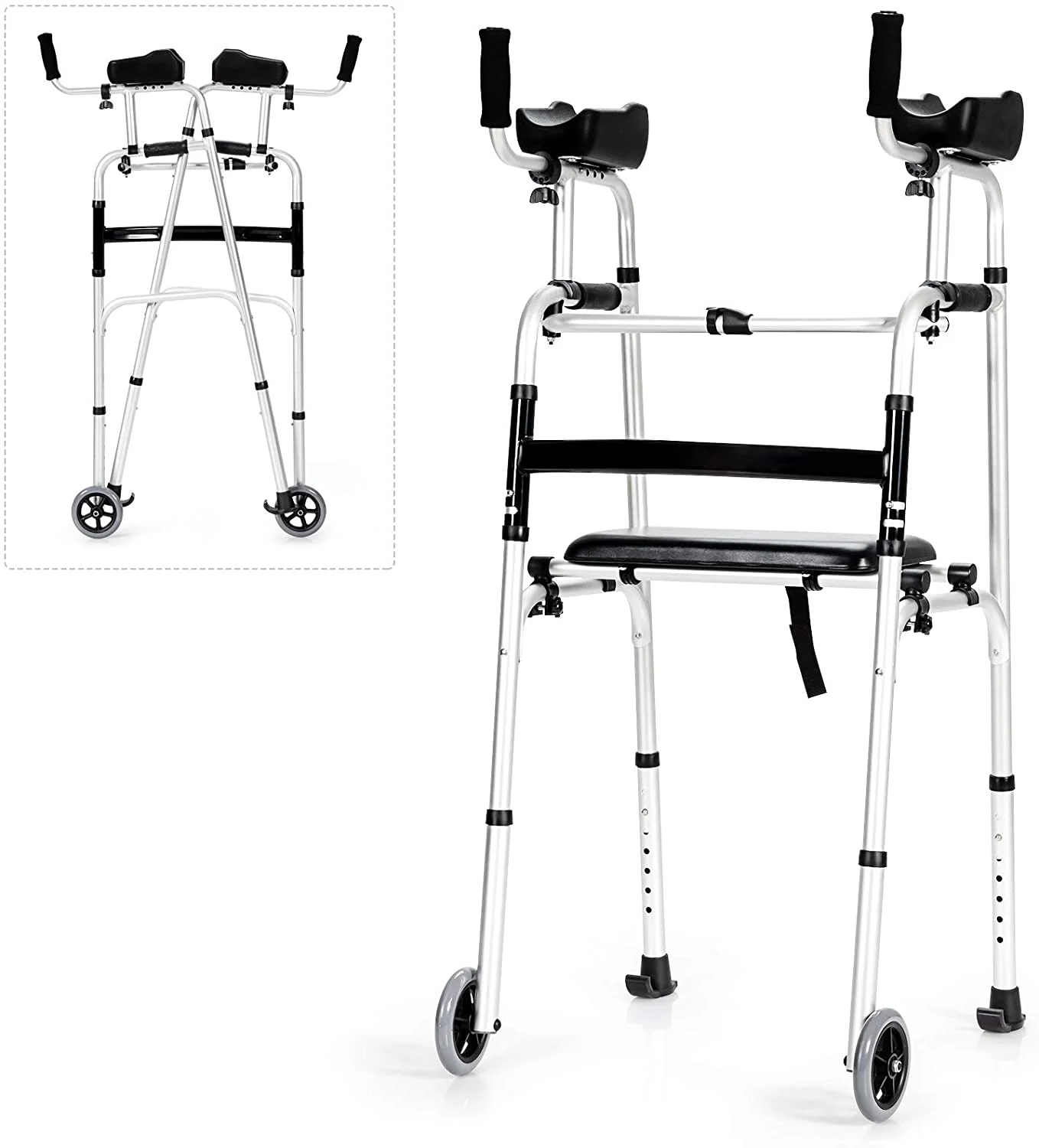
The Goplus Lightweight Foldable Upright Walker is quite different from most of the products in this guide, and that is exactly why we included it. Instead of a four-wheel rollator with a seat, it uses a much simpler upright walking-frame design with padded forearm supports and small front wheels.
That simplicity keeps the weight down to around 9 pounds, making it dramatically easier to lift and transport than most upright rollators. It can be a particularly useful option for someone who wants forearm support and an upright walking position but does not need a built-in seat, storage bag or large outdoor wheels.
What do we love it for?
Weight is the obvious advantage. At roughly 9 pounds, it is one of the easiest upright-support walkers in this guide to pick up, move around the house or load into a vehicle.
The simpler frame can also feel less intimidating for someone transitioning from a conventional walking frame. Rather than adding lots of rollator features, it focuses on the basic job of providing upright forearm-supported walking assistance.
What could be better?
This is not a conventional upright rollator, and buyers should understand that distinction. There is no built-in seat for rest breaks and the small front wheels make it more suitable to smooth indoor surfaces and maintained paths than rough outdoor terrain.
The very high advertised capacity also deserves some caution. Although the listing claims support for up to 440 pounds, buyers approaching that limit should pay particular attention to the manufacturer’s instructions and consider whether this lightweight walking-frame design provides the level of support they need for regular use.
4. Best Value Upright Walker
Amazon
Features
- Type: upright rollator
- Wheel size: approximately 8″
- Forearm supports: padded and adjustable
- Seat: built-in
- Foldable: yes
- Brakes: locking hand brakes
More Features: padded arm supports; adjustable upright handles; folding frame; storage space; seated rest function.
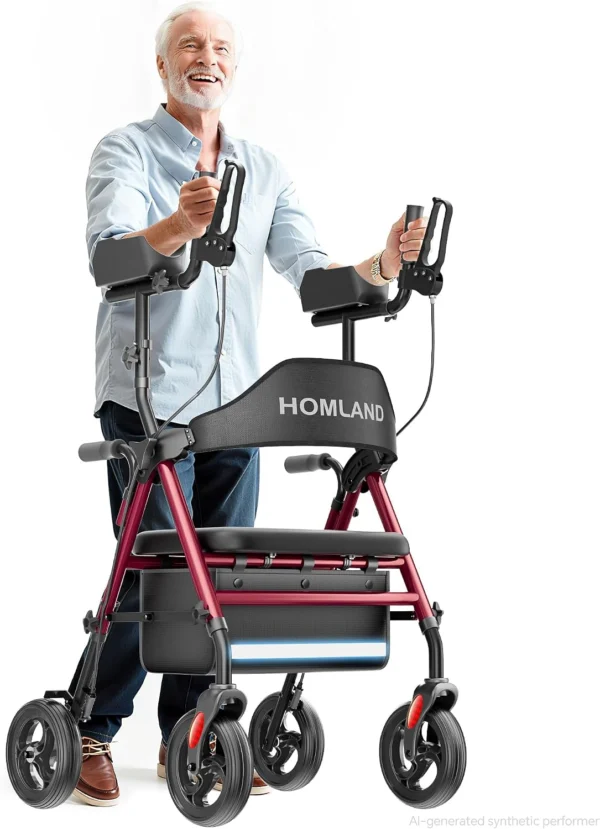
The HOMLAND Upright Rollator Walker fills the value position in our lineup. It gives you the main features most people expect from an upright rollator — adjustable forearm supports, four wheels, hand brakes, a folding frame and a built-in seat — without moving into the price range of some premium upright walkers.
Its 8-inch wheels place it firmly in the everyday-use category. They should handle indoor floors, sidewalks and normal paved surfaces comfortably while keeping the overall walker relatively manageable in tighter spaces.
What do we love it for?
The main appeal is getting the full upright-rollator format without paying premium-brand prices. Unlike the lightweight Goplus, you still have a seat for rest breaks and the familiar four-wheel rollator layout.
It also makes a sensible choice for a first upright walker where you want to find out whether the forearm-support design suits you before spending substantially more.
What could be better?
The biggest limitation is that this is a newer, less established model than products from Vive or Helavo. That means there is less long-term ownership history available when judging durability, replacement parts and support.
Published specifications also vary between current third-party listings, so I would avoid relying on one precise product-weight figure unless it is shown on the exact Amazon configuration you purchase.
5. Best Upright Walker for Tall & Larger Seniors
Amazon
Vive Series T Bariatric Upright Walker
Features
- Armrest height range: 41″ – 50″
- Weight capacity: 400 lbs
- Overall width: 28″
- Wheel size: 9.5″
- Weight: approximately 25 lbs
- Seat width: approximately 17″
- Foldable: yes
More features: extra-tall upright supports; reinforced frame; padded forearm rests; hand brakes; seat and backrest; storage; folding design.
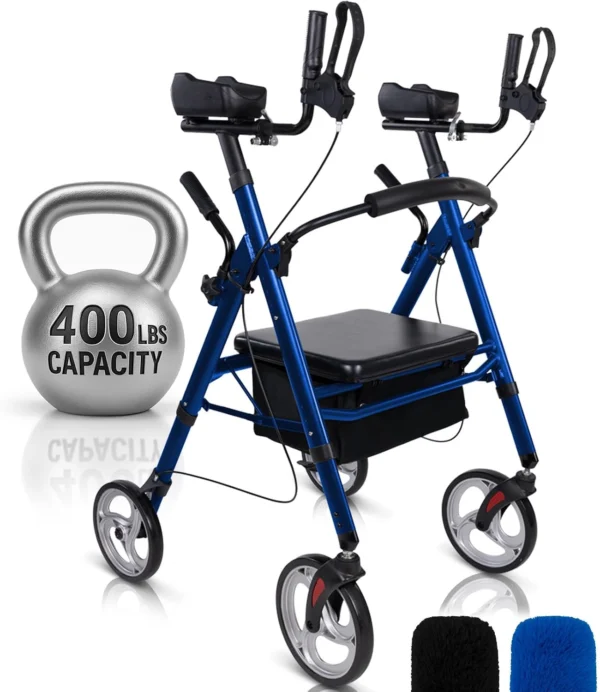
The Vive Series T Upright Walker is the most suitable choice in this lineup for users who find standard upright walkers either too short or too lightly built. Vive lists an armrest-height range of 41 to 50 inches, compared with 41 to 46 inches on the standard model, and the frame supports users up to 400 pounds.
It is also wider at approximately 28 inches, providing more room through the frame for larger users. The 9.5-inch wheels are slightly larger than those on the standard Vive, giving it a little more capability outdoors while still remaining manageable for everyday walking.
What do we love it for?
The biggest strength is the extra height adjustment. An upright walker only works as intended if the forearm supports can reach the correct position, so taller users should not have to crouch over a model simply because it is marketed as “upright.”
The 400-pound capacity also gives larger users more margin than the typical 300-pound rollator, while the overall weight remains around 25 pounds.
What could be better?
The 28-inch overall width is important to consider. It provides more room for the user, but it also means the Series T may be awkward through narrow doorways, bathrooms or cluttered indoor spaces.
At around 25 pounds, it is also noticeably heavier to lift than the standard Vive. Buyers should check both doorway widths and vehicle storage space before choosing it.
6. Best Upright Walker for Outdoor Comfort
Amazon
ELENKER All-Terrain Upright Rollator Walker
Features
- Type: upright rollator
- Wheel size: approximately 10″
- Weight capacity: approximately 300 lbs
- Seat: padded
- Backrest: padded
- Forearm supports: adjustable
- Foldable: yes
More features: large all-terrain wheels; padded seat; supportive backrest; locking brakes; storage bag; upright forearm supports.
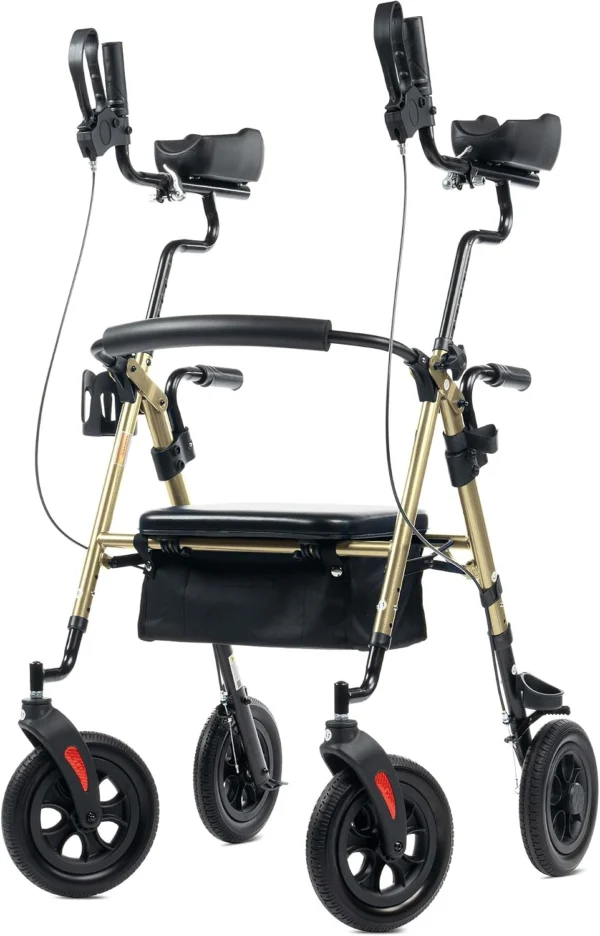
The ELENKER All-Terrain Upright Rollator is another outdoor-focused option, but we think its strongest appeal is comfort during longer outings rather than trying to beat the Helavo purely on terrain capability. The large wheels provide better clearance over uneven paving than small indoor rollators, while the padded seat and backrest give the user somewhere more comfortable to stop and rest.
That combination makes it especially attractive for shopping trips, parks, outdoor events or longer neighborhood walks where the user expects to alternate between walking and sitting.
What do we love it for?
The balance between large wheels and a comfortable resting setup is the main reason it makes our list. A walker designed for longer outings needs to do more than simply roll over bumps; the seat should also be comfortable enough that the user can take a meaningful break.
ELENKER also specializes heavily in rollators and upright walkers, so the layout feels more purpose-built than some generic alternatives.
What could be better?
The published product weight varies considerably across current listings, so this is one specification we would check directly on the exact Amazon variant before purchasing. Large-wheel walkers also tend to be more cumbersome to lift and store than compact indoor models.
And just like the Helavo, the phrase “all terrain” has limits. Larger wheels help with grass, gravel and uneven pavement, but this is still a walking aid that needs reasonably stable ground.
7. Best Heavy-Duty Upright Walker
Amazon
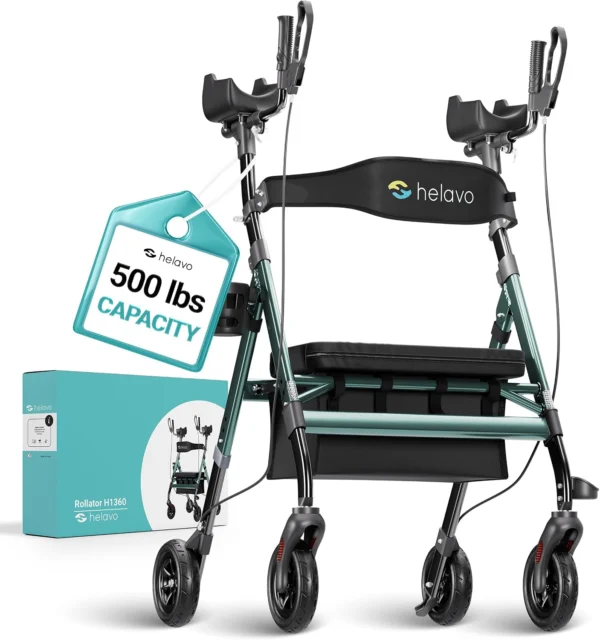
Helavo H1360 Bariatric Upright Walker
Features
- Type: bariatric upright rollator
- Weight capacity: up to 500 lbs
- Weight: approximately 25 lbs
- Overall width: approximately 28″
- Seat width: approximately 20″
- Wheel size: 8″ flat-free
- Foldable: yes
More features: reinforced wide frame; padded forearm supports; wide seat; locking hand brakes; flat-free wheels; storage bag; folding design.
The Helavo H1360 Bariatric Upright Walker is the strongest choice in this roundup for users who need significantly more capacity and room than a conventional upright walker provides. Its headline feature is the 500-pound maximum capacity, backed by a wider frame and substantially broader seating area than most standard rollators.
Despite that higher capacity, the walker weighs only around 25 pounds, which is quite reasonable for a bariatric upright model. Its 8-inch flat-free wheels keep maintenance simple and make it suitable for normal indoor and outdoor surfaces without adding the bulk of oversized all-terrain tires.
What do we love it for?
The combination of 500-pound capacity and a wide seat is what separates the H1360 from the rest of the field. Higher capacity is only genuinely useful if the walker also provides enough physical room for the user, and Helavo addresses both sides of that equation.
We also like that it remains foldable. Bariatric walking aids can become extremely cumbersome, so having a frame that can still be collapsed for storage or vehicle transport is valuable.
What could be better?
Width is the unavoidable trade-off. At roughly 28 inches overall, this walker may struggle with narrow interior doorways and can feel cumbersome inside smaller homes.
A 25-pound walker is also not particularly light to lift repeatedly. For a larger user who needs the extra strength this is a reasonable compromise, but buyers looking primarily for portability should consider a lower-capacity model.
Choosing The Best Upright Walkers for Seniors
An upright walker can be a useful alternative to a cane, conventional walker or standard rollator, but it is not automatically the best mobility aid for everyone. The correct choice depends on your balance, strength, walking ability, height and the amount of support you need.
Upright designs can also be considerably heavier and larger than basic walking frames, so the trade-off between support and portability matters. We look more closely at those differences in our guide to walker weight and balance.
Benefits of Using Upright Walkers
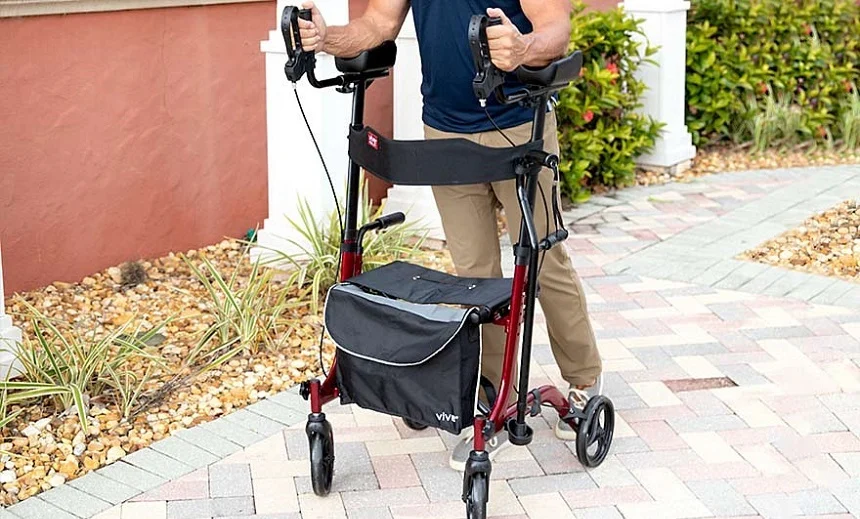
The main difference between an upright walker and a standard rollator is where the user receives support. Instead of reaching down toward handles near waist height, the user places their forearms on elevated supports while gripping handles positioned closer to elbow level.
That design changes posture and how some of the user’s weight is transferred through the walking aid. However, the benefit depends on the walker being correctly adjusted and suited to the individual.
A More Upright Walking Position
For someone who tends to bend excessively over a standard rollator, raised forearm supports may make it easier to maintain a more upright trunk position. This can also allow the user to look farther ahead rather than continually directing their gaze toward the ground immediately in front of them.
A clinical trial involving 30 people who already used rollators found reduced forward-backward trunk sway when using a forearm-support walker compared with a standard rollator and participants’ existing walking aids. The researchers concluded that the forearm-support design promoted more upright posture, although they also noted that further population-specific research was needed.
Support Through the Forearms
One attraction of an upright walker is that support is distributed across the forearms rather than concentrated solely through the hands. This can be useful for some people who find prolonged weight-bearing through conventional walker handles uncomfortable.
In the same forearm-support walker study, participants transferred approximately 39–46% of their body weight through the elbow-support armrests during walking. That does not mean an upright walker removes 39–46% of the load from the legs in every user, but it demonstrates that the forearm platforms can carry a meaningful portion of the user’s support.
Walking Efficiency
The researchers also found improved gait efficiency with the forearm-support walker compared with the standard rollator and participants’ existing devices. This suggests that the different posture and support arrangement may make walking more efficient for some users who are appropriate candidates for this type of aid.
It is better not to translate this into blanket promises that everyone will automatically walk farther, faster or without pain. Mobility limitations have many causes, and individual responses to different walker designs can vary substantially.
A Seat for Rest Breaks
Most of the upright rollators in this guide also provide a built-in seat, which can be extremely useful for someone whose walking endurance is limited. When fatigue sets in, the brakes can be locked and the user has somewhere to sit until they are ready to continue.
The main exception in our lineup is the Goplus Lightweight Foldable Upright Walker, which sacrifices the seat and four-wheel rollator arrangement in exchange for a much lower carrying weight. This is an important distinction because a lightweight walker and a seated upright rollator solve somewhat different problems.
Confidence and Independence
A properly fitted walking aid can give someone greater confidence to continue with everyday activities such as shopping, visiting friends or walking around the neighborhood. Having forearm support and, on most models, a readily available seat may also make longer outings feel more manageable.
Confidence should still be matched with safe walking ability. Someone with significant balance problems, repeated falls or difficulty controlling a wheeled walker may benefit from an assessment by a physical therapist or occupational therapist before changing mobility aids.
How to Choose the Best Upright Walker for Seniors
There are many different types of walkers, and an upright rollator is only one of them. Choosing correctly means looking beyond features such as cup holders and storage bags and first deciding whether the walker provides the right fit, support and stability.
The following factors make the biggest difference when comparing upright models.
Height and Fit
An upright walker needs sufficient height adjustment to place the forearm supports correctly without forcing the user to reach upward or lean down. As a general starting point, the forearms should rest comfortably on the pads with the shoulders relaxed and the elbows bent, although the manufacturer’s fitting instructions should always take priority.
This is particularly important for taller users because a walker that cannot extend high enough defeats much of the purpose of choosing an upright design. Our guide to walkers for tall seniors looks at this issue in more detail.
If extra height is the main concern, the Vive Series T Bariatric Upright Walker is the product in this roundup designed most clearly around that requirement. Its forearm supports extend to around 50 inches, compared with approximately 46 inches on the standard Vive.
Overall width matters as well. A wider frame may be more comfortable for a larger user, but it can create problems in narrow hallways, bathrooms and older homes, so measure the narrowest doorway the walker will regularly need to pass through.
Weight Capacity
Always check that the manufacturer’s weight rating comfortably accommodates the intended user. Most standard upright rollators in this guide support around 300 pounds, while larger bariatric designs raise that to 400 or 500 pounds.
Capacity and physical fit should be considered together. A walker may technically support a person’s weight but still have a seat or frame that is too narrow to use comfortably, which is why bariatric models generally increase both structural capacity and overall width.
It is also unwise to assume that a high advertised capacity automatically makes a walker more durable in every respect. Wheels, brakes, adjustment hardware and folding mechanisms still need to be appropriate for the way the walker will actually be used.
Adjustability
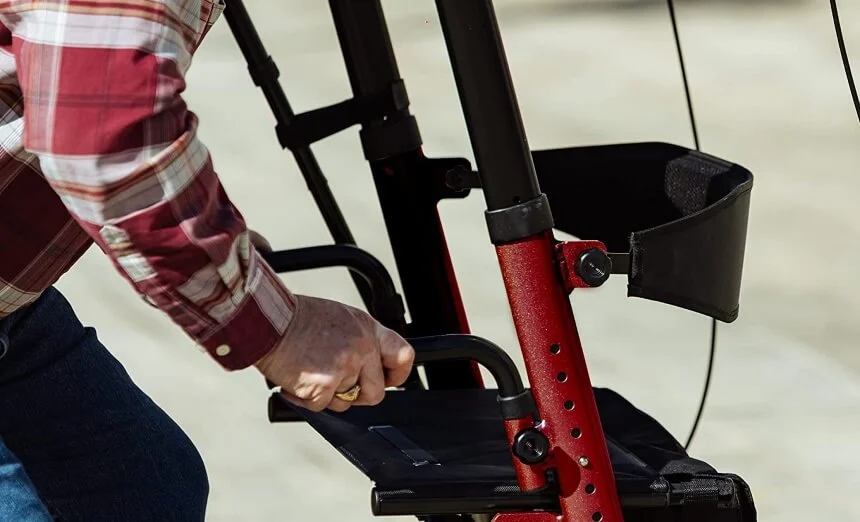
Height adjustment is particularly important on an upright walker because the forearm platforms determine much of the user’s posture. Some models allow only vertical adjustment, while others offer additional changes to forearm-pad or hand-grip position.
More adjustment can make it easier to achieve a comfortable fit, but only if it is set correctly. If you are unsure about the appropriate setup, having a physical therapist or other mobility professional check your walking position can be more useful than simply selecting the walker with the widest adjustment range.
Walker Weight and Foldability
A walker may feel perfectly manageable while rolling but become much more difficult when it needs to be lifted into a car. Full upright rollators commonly weigh around 20–25 pounds because they include four wheels, brakes, a seat, backrest and taller support structure.
This is where the Goplus Lightweight Foldable Upright Walker is unusual, weighing approximately 9 pounds because it is fundamentally a forearm-support walking frame rather than a complete seated rollator. If portability matters but you still want a conventional rollator, also consider our guide to the best narrow walkers for seniors.
Check how the walker folds as well as its weight. Some frames collapse narrowly enough for straightforward vehicle storage, while taller upright supports may still leave a folded walker bulky even when its width has been reduced.
Wheels

Wheel size can dramatically change how a walker feels outdoors. Small wheels perform well on smooth flooring but are more easily interrupted by cracks, stones and uneven pavement, while larger wheels generally roll over small obstacles more easily.
For users who regularly walk outdoors, the Helavo H1160 All-Terrain Upright Walker is the most obvious decision-point option in this roundup. Its 10-inch flat-free wheels are the defining feature that separates it from the more general-purpose upright walkers.
Even so, terms such as “all terrain” need some perspective. A large-wheel walker may cope better with grass, gravel and uneven paths, but it remains a walking aid rather than an off-road vehicle and should still be used on surfaces where the user can maintain safe control.
Brakes and Safety
Most upright rollators use bicycle-style brake levers that allow the user to slow the rear wheels while walking and lock them when parked. The user needs enough hand strength and coordination to operate those controls reliably, particularly when walking downhill.
Always lock the brakes before using a rollator seat and follow the manufacturer’s instructions when standing up again. A walker should not roll away while the user is transferring their weight on or off the seat.
It is also important not to assume that an upright walker is inherently safer than every other mobility aid. The safest device is one that matches the user’s balance, strength, environment and walking ability and has been adjusted correctly.
Seat Size and Comfort
If you expect to use the built-in seat regularly, check its width, depth and height rather than simply confirming that a seat exists. A user should be able to sit securely within the frame without feeling squeezed between the arm supports or backrest.
Seat height matters too because the user must be able to sit down and stand up safely. Larger or bariatric models usually provide more width, but their overall dimensions can make them less convenient around the home.
Frame Width
One of the easiest specifications to overlook is the walker’s total outside width. A wide bariatric walker may be extremely comfortable in an open shopping center but frustrating if it cannot pass easily through a bathroom doorway at home.
Measure doorways before ordering, particularly if the walker is wider than about 26 inches. Do the same for the available space in the car if it will regularly travel with you.
Storage and Accessories
Storage bags, cane holders and cup holders are useful because they allow the user to keep both hands where they belong: controlling the walker. A bag positioned beneath or close to the seat is generally preferable to hanging heavy shopping bags from the handles, which can alter the way the walker balances.
Accessories should still remain secondary to fit and safety. A perfectly positioned cup holder cannot compensate for a walker that is the wrong height, too wide for the home or difficult for the user to brake.
Warranty and Manufacturer Support
Warranty coverage can provide some reassurance, but the practical availability of replacement parts and customer support may be just as important. Wheels, brake cables, hand grips and adjustment hardware are all components that can wear with regular use.
Established mobility brands often make specifications, manuals and replacement-part information easier to find. For lesser-known models, check what support is available before buying rather than assuming an Amazon listing will remain unchanged indefinitely.
Price
Upright walkers cover a broad price range, from relatively inexpensive forearm-support frames to premium rollators costing several hundred dollars. Prices also fluctuate enough online that fixed bands can become outdated quickly, so it makes more sense to compare the features you actually need than to define quality by a particular dollar amount.
Pay first for the correct fit, braking system, capacity and wheel configuration. Features such as premium upholstery, accessories and styling can then help separate otherwise similar models.
Medicare Coverage for Upright Walkers
Medicare Part B can cover medically necessary walkers and rollators as durable medical equipment when the eligibility requirements are met and a provider prescribes the equipment for use in the home. Medicare also requires the relevant provider and DME supplier to meet its participation requirements.
After the Part B deductible is met, the beneficiary generally pays 20% of the Medicare-approved amount when the supplier accepts assignment. Coverage can involve purchase or rental depending on the equipment and circumstances.
That does not necessarily mean Medicare will reimburse a particular upright walker purchased directly from Amazon. If Medicare coverage is important, speak with your provider and a Medicare-enrolled DME supplier before purchasing so you can establish whether the particular walker and supplier qualify.
Upright Walkers for Seniors FAQ
1. Who Should Use an Upright Walker?
An upright walker may suit someone who can still walk but needs more support than they get from unaided walking or a cane. It can be particularly worth considering when a conventional rollator encourages excessive forward bending or when forearm support is preferable to relying entirely on the hands.
It will not suit everyone with mobility difficulties. People with significant balance problems, poor brake control or complex gait limitations should consider having their mobility aid assessed by a physical therapist, occupational therapist or other qualified health professional.
2. How Do I Properly Fit an Upright Walker?
Start by adjusting the forearm supports so you can stand comfortably inside the walker with your shoulders relaxed. Your elbows should remain comfortably bent while your forearms are supported, rather than forcing you to reach upward or collapse forward.
You should also have enough room to step naturally within the frame without contacting the wheels or supports. If the walker includes a seat, check that you can sit securely and place your feet appropriately when resting.
Correct adjustment varies with the walker and the user, so follow the manufacturer’s fitting instructions. A clinician familiar with mobility aids can also help if posture, balance or gait problems make fitting more complicated.
3. Are Upright Walkers Safer Than Regular Walkers or Rollators?
There isn’t enough evidence to say that upright walkers are universally safer than conventional walkers. A forearm-support design can change posture and weight distribution, and one clinical study found reduced trunk sway and improved walking efficiency compared with a standard rollator, but that is not the same as proving fewer falls across all older adults.
Safety depends on the user, the environment, correct adjustment and the ability to control the device. Someone who is stable with a standard walker should not automatically change equipment simply because an upright model is newer or appears more comfortable.
4. What’s the Difference Between an Upright Walker and an Upright Rollator?
The terminology is used fairly loosely. Most products sold as upright walkers are actually four-wheel rollators with raised forearm platforms, hand brakes and usually a seat, whereas products such as the Goplus in this guide more closely resemble a conventional walking frame with forearm supports.
A rollator rolls continuously on its wheels and requires the user to control it using brakes. A walking frame may provide a different level and style of support, which is why it is worth looking at the actual wheel and frame configuration rather than relying on the product name alone.
5. Can I Use an Upright Walker as a Wheelchair?
No, unless the manufacturer specifically states that the product converts into an approved transport chair. The seats fitted to ordinary upright rollators are intended for resting while the walker is stationary and the brakes are locked.
Having another person push the walker while someone remains seated can change its center of gravity and create a tipping hazard. If you need both walking assistance and occasional seated transport, choose a purpose-designed rollator/transport-chair combination rather than improvising with a standard rollator.
6. How Much Do Upright Walkers Cost?
Prices vary substantially depending on the brand, materials, wheel design, capacity and seating features. Basic upright-support walkers can be relatively inexpensive, while premium all-terrain or bariatric upright rollators may cost several hundred dollars.
Online prices also change frequently, so today’s exact price is less useful than deciding which features you actually require. If Medicare reimbursement matters, remember that eligibility depends on Medicare’s DME rules and the supplier used rather than simply whether the product is described online as a walker.
7. Are Upright Walkers Good for Tall Seniors?
They can be, but only when the forearm supports extend high enough for the individual user. An upright walker set too low simply recreates the forward-bending problem that the design is supposed to address.
Tall users should compare the manufacturer’s height range and maximum forearm-support height rather than relying on the word “upright.” Overall frame width and seat height should also be checked because taller people do not necessarily require a wider walker.
8. Are Bigger Wheels Better on an Upright Walker?
Larger wheels generally roll more easily over small cracks, pavement joints, grass and gravel, which is why outdoor-oriented walkers often use 10-inch or larger wheels. They can make a noticeable difference if most of your walking is done away from perfectly smooth indoor floors.
The trade-off is additional size and sometimes weight. An 8-inch-wheel rollator can therefore be a better choice for someone primarily navigating a home, medical clinic or shopping center, while larger wheels make more sense for regular outdoor walking.
Our Verdict
The best upright walker is not simply the tallest model or the one with the largest wheels. It needs to match the user’s height, body size, walking environment, ability to operate the brakes and need for a resting seat, while still being manageable enough to store and transport.
Our Editor’s Choice remains the Vive Mobility Upright Walker because it provides the best overall balance for a broad range of users. Its approximately 20-pound frame, 8-inch wheels, adjustable forearm supports and built-in seat give it enough versatility for both indoor use and normal paved outdoor walking without making it excessively bulky.
For more demanding outdoor use, the Helavo H1160 is the stronger option because its 10-inch flat-free wheels should cope better with uneven everyday surfaces. At the opposite end of the spectrum, the Goplus Lightweight Foldable Upright Walker is worth considering when carrying weight matters more than having a built-in seat or four-wheel rollator arrangement.
The HOMLAND Upright Rollator provides the more budget-focused conventional rollator choice, while the ELENKER All-Terrain Upright Rollator makes sense for someone who values both outdoor capability and a comfortable place to rest. Taller and larger users should look particularly closely at the Vive Series T, while the Helavo H1360 provides the highest claimed capacity in this roundup at 500 pounds.
Whichever model you choose, fit matters more than the category badge we give it. A walker that looks perfect on paper will be frustrating if it is too low, too wide for the house, too heavy for the car or difficult for the user to control safely.
Upright walkers represent a specialised category among the many walker types, and they will not be the right answer for every senior. You can also compare them with our broader best walkers for seniors guide if you’re still deciding whether an upright design is the best approach.
References
- Jayaraman C, et al. – Postural and Metabolic Benefits of Using a Forearm Support Walker in Older Adults With Impairments.Archives of Physical Medicine and Rehabilitation. 2019;100(4):638–647.
- The study found improved upright posture, reduced anterior-posterior trunk sway and improved gait efficiency with a forearm-support walker. Participants transferred approximately 39–46% of body weight through the elbow supports during walking.
- PubMedMedicare – Walkers
- Medicare Part B covers medically necessary walkers, including rollators, when prescribed for home use and Medicare’s eligibility and supplier requirements are met.
- Medicare.govMedicare – Durable Medical Equipment Coverage
- Medicare’s guidance covering eligibility and supply of durable medical equipment, including walkers.
- Medicare.gov SeniorFitness.net – 7 Best Walkers for Seniors SeniorFitness.net – Walkers for Tall People: Top Picks SeniorFitness.net – 7 Best Types of Walkers for Seniors SeniorFitness.net – Best Narrow Walkers for Seniors