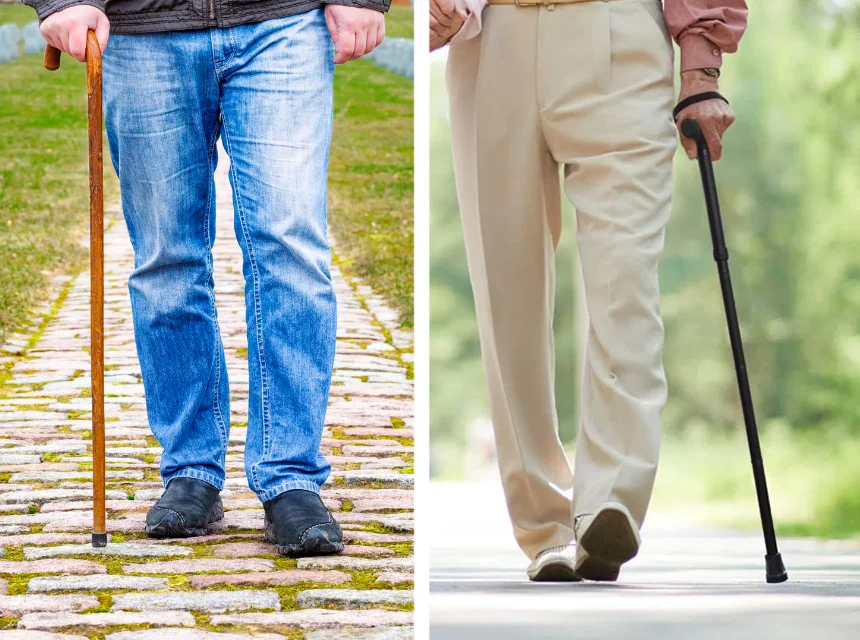
A cane is usually the better choice when you need dependable support for balance, weakness, pain, or everyday mobility. A walking stick is more commonly used for light support, hiking, uneven ground, or simply as a traditional walking aid. However, the terms overlap in everyday language, so the name matters less than whether the device is designed, fitted, and sturdy enough for the support you actually need.
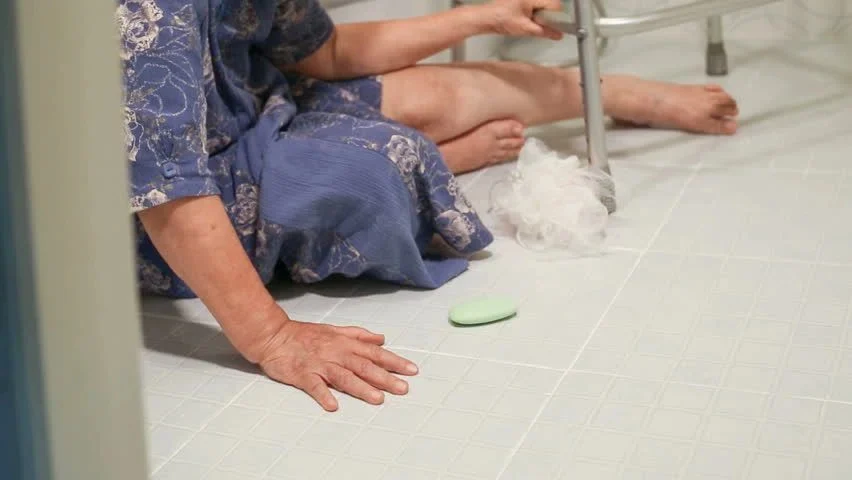
If you are choosing a mobility aid because of a recent fall, surgery, significant weakness, or worsening balance, it is worth getting individual advice from a physical therapist, occupational therapist, or other qualified healthcare professional. A cane may not provide enough support in every situation.
By Nan J. Corbo | ✅ Reviewed by Ray Butcher |
SeniorFitness is reader-supported. We may earn a commission through products purchased using links on this page. Learn more about our process here
Cane vs Walking Stick: The Quick Difference
The simplest way to compare a cane vs walking stick is by purpose. A properly fitted cane is a mobility aid intended to provide regular balance or partial weight-bearing support. What people call a walking stick is often a simpler stick used for light support, outdoor walking, hiking, or uneven terrain.
There is no universal naming rule, though. Some retailers and countries use “walking stick” for devices that would also be called canes. Instead of relying on the label alone, look at the handle, tip or base, height adjustment, weight rating where applicable, and the amount of support the device is intended to provide.
| Feature | Cane | Walking stick |
|---|---|---|
| Main purpose | Balance, weakness, pain relief and everyday mobility support | Light support, hiking, uneven terrain or recreational walking |
| Fit | Should be sized carefully to the user | Depends on design and intended use |
| Support | Designed to provide predictable mobility support | Varies widely by design |
| Common designs | Single-point, offset, quad, folding and adjustable canes | Traditional sticks, hiking staffs and trekking-style poles |
| Best choice when | You need regular support with walking or balance | You mainly want light assistance or outdoor stability |
Walking Canes: Designed for Mobility Support
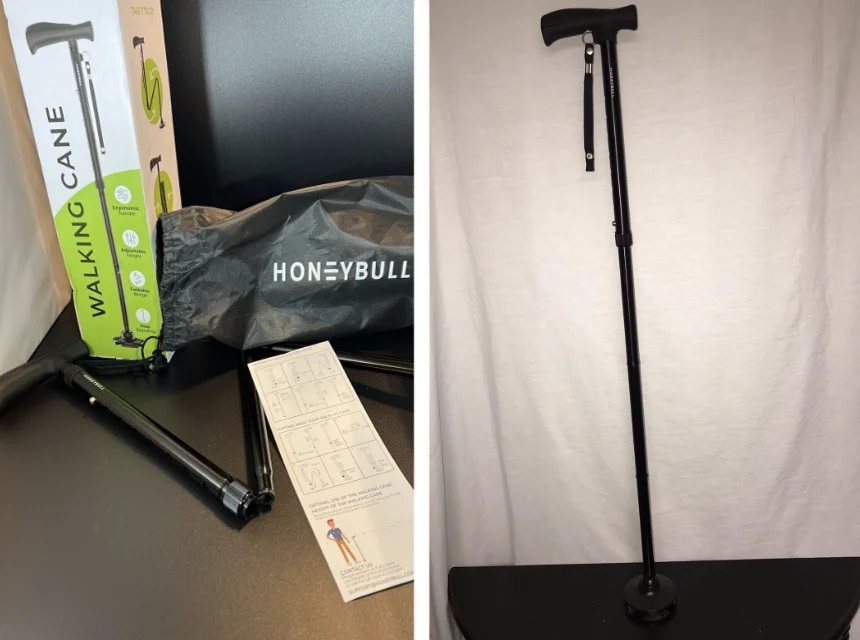
Walking canes come in several designs because different people need different levels of balance, grip comfort, and stability. Our guide to the types of walking canes goes into the options in more detail.
One existing example is the HONEYBULL Walking Cane. A particular model should not be chosen on appearance alone; fit and the amount of support you need matter more.
Standard or Single-Point Canes
A standard cane has one tip contacting the ground. It is relatively simple to position and can work well for people who need modest help with balance or to unload a small amount of weight from a weaker or painful leg. Because it has a smaller base than a quad cane, it generally provides less standing stability.
Offset Canes
An offset cane has a shaft that bends so the handle sits more directly over the cane tip. This design can make it easier to place weight through the handle while keeping the load centred over the shaft. Handle shape and grip comfort still matter, particularly if you have hand or wrist pain.
Quad Canes
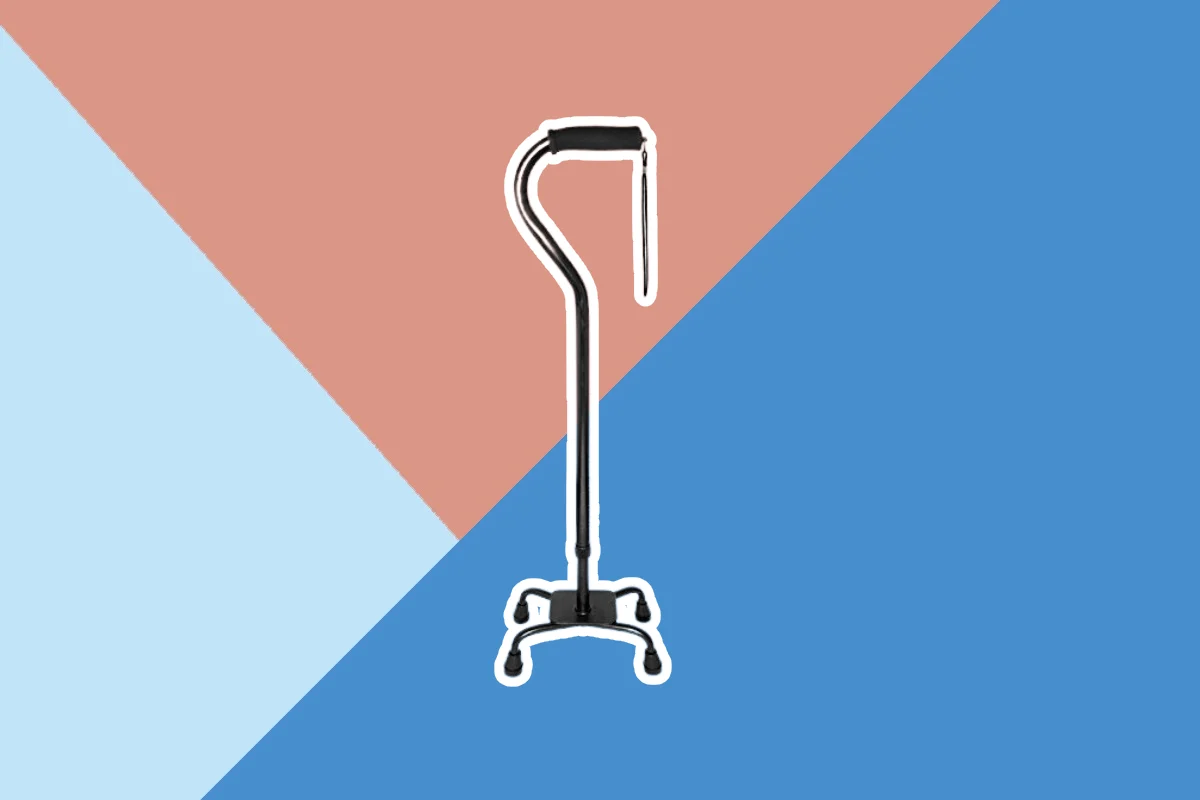
Quad canes use a four-point base rather than a single tip. The wider base can provide more standing support, although it also makes the cane bulkier and changes how it moves through tight spaces or on stairs. Large-base models tend to feel more planted, while smaller-base quad canes are easier to manoeuvre.
If extra stability is your priority, see our guide to walking canes for balance and our comparison of quad canes.
Folding and Adjustable Canes
Adjustable canes make it easier to set the handle at an appropriate height, while folding models are convenient to store or carry when the cane is not continuously required. Convenience should not come at the expense of stability: check that adjustment points lock securely and that the tip is in good condition before use.
Walking Sticks: Often for Light or Outdoor Support

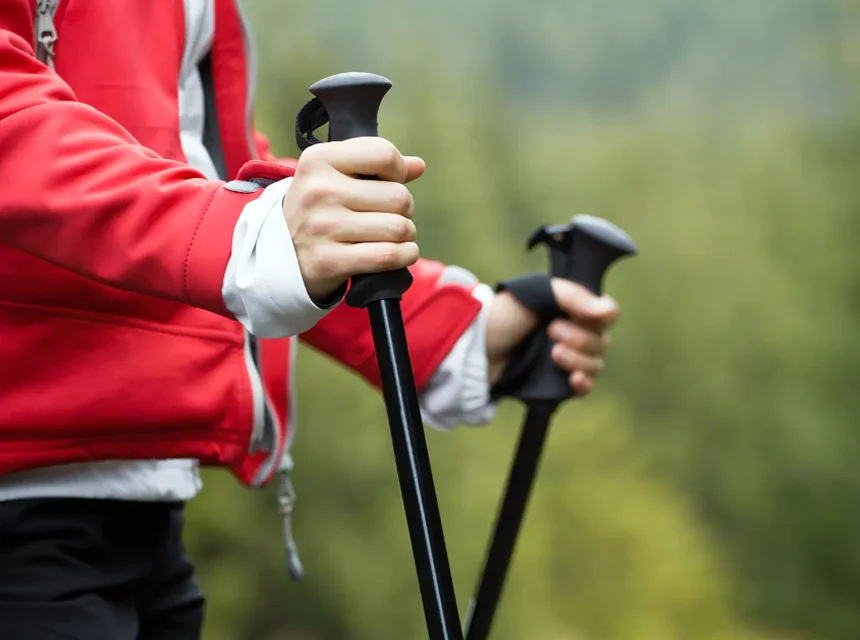
Walking sticks cover a broad range of designs. A traditional wooden stick may offer a little extra steadiness, while a hiking staff or trekking pole can help with rhythm and footing on outdoor terrain. Some are also chosen for style rather than as medical mobility aids.
That does not mean a device called a “walking stick” is automatically unsuitable for an older adult. The important question is whether it is intended to provide the level of support you require. If you need regular help because of weakness, pain, balance loss, or recovery from injury, a properly fitted mobility aid is safer than assuming any stick will do the same job.
Key Differences That Matter Most
Balance and Support
A cane is intended to provide predictable support during everyday walking. MedlinePlus notes that a cane may be appropriate when someone needs a little help with balance and stability or has mild weakness or pain in one leg. If pain, weakness, or balance problems are more substantial, crutches or a walker may provide a more appropriate level of support.
If you are reaching the point where a cane no longer feels stable enough, compare the additional support available from walkers for seniors rather than simply moving to a heavier stick.
Terrain
For smooth indoor floors, shops, footpaths, and routine daily movement, a cane designed for mobility support is usually the more relevant category. For hiking trails and uneven outdoor ground, a hiking stick or trekking pole may be useful because it is designed around terrain rather than medical support.
Handle and Grip
Cane handles are available in several shapes, including crook, offset and ergonomic styles. Comfort is important, but the handle also affects how securely you can grip the cane and apply pressure through it. Decorative walking sticks may place more emphasis on appearance, so check function rather than assuming an attractive handle will be comfortable for everyday support.
Some canes, such as the Handmade Ergonomic Walking Cane, combine a more traditional appearance with a shaped handle. Suitability still depends on fit, grip and the level of support required.
How Often You Need It
Frequency of use is helpful, but it should not be the deciding factor. Someone may use a cane every day, only outside the home, or temporarily during recovery. Likewise, a walking stick may be used regularly for recreational walking. Choose according to the support required and the environment rather than assuming one device is only for long-term use and the other only for short-term use.
How to Choose the Right Cane
If you decide that a cane is the better option, fit matters. MedlinePlus advises that the handle should sit around wrist level when you are standing upright, with the elbow slightly bent while holding it. The cane is generally held in the hand opposite the weaker or affected leg.
When walking, the cane and weaker leg normally move forward together before the stronger leg steps through. The cane tip should make full contact with the ground, and worn tips should be replaced. Our step-by-step guide on how to use a cane safely covers everyday technique in more detail.
For individual fitting or after surgery, a fall, a neurological condition, or a significant change in balance, a physical therapist, occupational therapist, or other qualified healthcare professional can help determine whether a cane provides enough support.
For further general guidance, see MedlinePlus guidance on using a cane.
Cane vs Walking Stick FAQ
Can I use a walking stick instead of a cane?
Sometimes, but do not assume they provide the same support. The words can overlap, yet many recreational or decorative walking sticks are not designed or fitted as mobility aids. If you depend on the device for balance, weakness, pain, or recovery, choose one intended for that level of support and have the fit checked if needed.
Is a cane better for balance than a walking stick?
A properly fitted cane is generally the more appropriate choice when the main goal is routine balance support. A walking or hiking stick may improve steadiness on uneven ground, but its design and support level vary considerably. For more significant balance problems, a walker may be more appropriate than either.
Which side should I hold a cane on?
A cane is generally held in the hand opposite the weaker, painful, or affected leg. As that leg moves forward, the cane moves with it to provide support. Individual circumstances can differ, particularly after surgery or with neurological conditions, so follow any instructions given by your clinician or therapist.
How high should a cane be?
With you standing upright and your arms relaxed, the cane handle should generally be around the level of your wrist crease. When you grip the handle, your elbow should remain slightly bent. A cane that is much too high or too low can make walking less comfortable and may reduce how effectively you use it.
When is a walker better than a cane?
A walker may be more suitable when you need more support than one hand and one cane can provide, particularly with substantial weakness, pain, or balance problems. The safest choice depends on your mobility and health, so significant or changing difficulties are worth discussing with a qualified healthcare or rehabilitation professional.
Final Thoughts
The cane vs walking stick decision is less about the name on the product and more about what you need it to do. If you need regular balance or mobility support, start with a properly fitted cane or another purpose-designed mobility aid. If you mainly want light assistance on walks, trails, or uneven ground, a walking or hiking stick may be enough.
Most importantly, do not force a cane to do the job of a more supportive mobility aid. If your balance is worsening, you have fallen recently, or you are recovering from an injury or surgery, getting the right level of support matters more than choosing between two labels.