Mobility scooter batteries commonly need replacement after roughly 12 to 18 months, although well-matched batteries can last longer with lighter use and careful charging. Battery chemistry, scooter load, discharge depth, temperature and storage all affect service life, so age alone cannot tell you whether a battery is healthy.
“Battery life” can also mean the distance available from one charge. That figure varies by scooter and is usually measured under controlled conditions; hills, soft ground, stop-start driving, cold weather, rider and luggage weight, tire pressure and battery age can reduce the distance achieved. Start with the specification for your exact model rather than a generic mileage figure. Our mobility scooter guide for seniors explains how battery capacity fits into the wider choice of scooter type and size.
By Ray Butcher Senior Fitness Editor
SeniorFitness is reader-supported. We may earn a commission through products purchased using links on this page. Learn more in our affiliate disclosure.
Mobility Scooter Battery Life at a Glance
| What the reader means by “battery life” | Practical answer |
|---|---|
| Time before replacement | About 12–18 months is a useful planning range for many mobility-scooter batteries, but some last longer. Battery type, use and care matter more than the calendar alone. |
| Distance from one charge | Use the range published for the exact scooter and battery configuration, then allow a margin for real-world conditions. |
| Hours of continuous use | Usually less useful than distance because speed, stops, terrain and load change energy consumption throughout a trip. |
A battery gradually loses usable capacity as it ages. The scooter may still charge and drive, but the safe distance available can shrink. Plan replacement around observed performance, a dealer load test and the demands of the journeys that matter—not simply the number of months since purchase.
The Main Mobility Scooter Battery Types
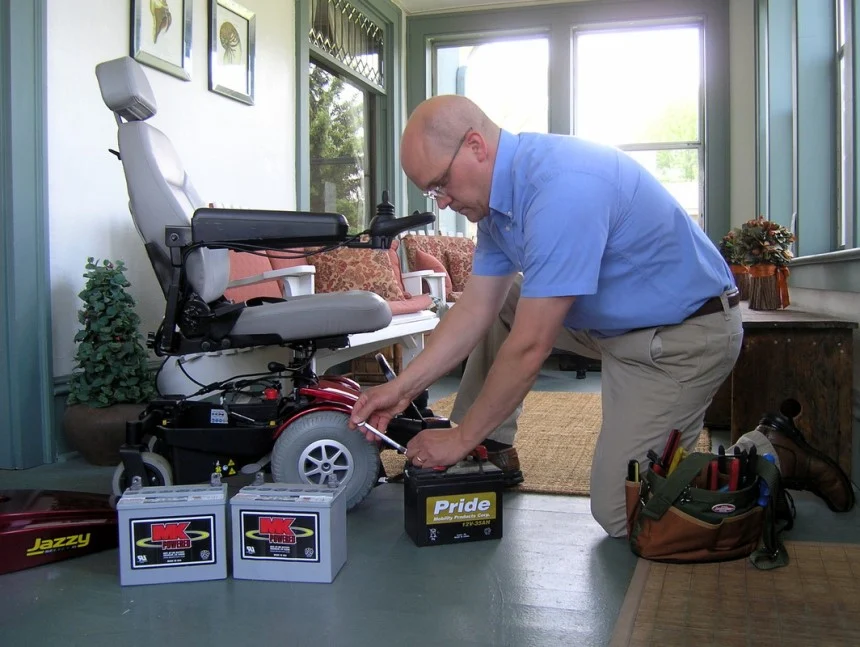
Many mobility scooters use sealed deep-cycle batteries. Pride’s mid-size scooter guidance specifies two 12-volt, sealed, maintenance-free deep-cycle batteries and identifies AGM and gel-cell as suitable types for that product family. Other scooters use a manufacturer-designed lithium-ion battery pack.
AGM batteries
Absorbent glass mat batteries are a form of valve-regulated lead-acid battery. The electrolyte is held in a glass-fibre mat, so they do not require the water top-ups associated with traditional flooded batteries. AGM batteries are widely used in mobility equipment, but the correct voltage, amp-hour capacity, dimensions, terminals and charger compatibility still need to match the scooter.
Gel batteries
Gel batteries are also sealed lead-acid batteries, but the electrolyte is immobilised in a gel. They may suit frequent deep-cycle use in models designed for them. AGM and gel are not automatically interchangeable: use the chemistry specified by the scooter manufacturer and the charger intended for that chemistry.
Lithium-ion batteries
Lithium packs can reduce weight and may offer a different cycle life and charging profile, but they require the correct battery-management system and charger. Do not replace a lead-acid setup with lithium—or substitute a third-party lithium pack—unless the scooter manufacturer explicitly approves the complete configuration.
What Shortens Battery Service Life?
Battery age is only one part of the picture. These operating and storage conditions can accelerate capacity loss or make a healthy battery appear weaker:
- Repeated deep discharge: routinely running the scooter close to empty places greater stress on deep-cycle batteries.
- Infrequent charging: leaving a lead-acid battery partly discharged for extended periods can permanently reduce performance.
- Heat or cold: temperature affects both available power and long-term battery condition. Storage in temperature extremes can shorten service life.
- Heavy loads and hills: more motor effort means more energy drawn from the battery during the journey.
- Soft or damaged surfaces: grass, gravel, broken pavement and inclines increase rolling resistance.
- Low pneumatic-tire pressure: greater rolling resistance can reduce range. Use the pressure marked for the tire or specified in the manual.
- Stop-start operation: repeated acceleration generally consumes more energy than a steady pace on level ground.
- An incorrect charger or battery: voltage, capacity and chemistry must suit the scooter and charging system.
How to Charge a Mobility Scooter Battery Properly
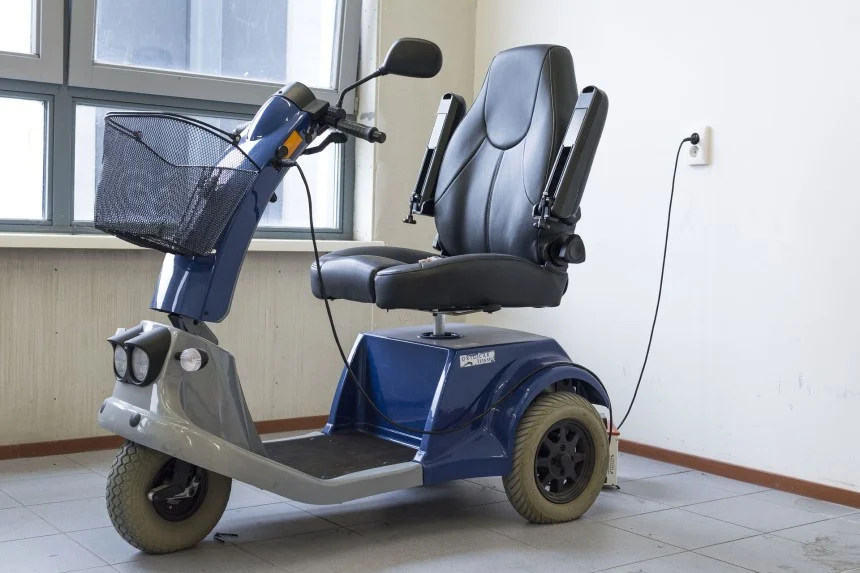
Follow the scooter and charger manuals because charging sequences and storage schedules vary. Use the charger supplied with the scooter or a manufacturer-approved replacement matched to the battery chemistry and capacity. An automotive battery charger is not an appropriate substitute.
Turn the scooter off, park it in a dry, ventilated place away from flames or sparks, and connect the charger in the sequence stated in the manual. Do not cover the charger or place it on a surface that may be damaged by heat. Pride also advises against using an extension cord for the charging connection.
For its mid-size scooter series, Pride recommends charging for 8–14 hours after daily use and giving infrequently used batteries a regular weekly charge. That timing is an example, not a universal rule. A model with a removable lithium pack may have substantially different instructions, so use the schedule for the battery actually fitted.
A compatible automatic charger reduces its current as the battery reaches full charge. That does not mean every scooter should remain connected indefinitely. Follow the manufacturer’s storage guidance, especially during weeks when the scooter is unused. If the charger does not indicate completion within the period described in the manual, disconnect it as instructed and seek service rather than continuing to charge without investigation.
If the batteries will not charge, the indicated level drops suddenly or the charger behaves unexpectedly, see our guide to common mobility scooter charging problems.
How Far Will a Mobility Scooter Go on One Charge?
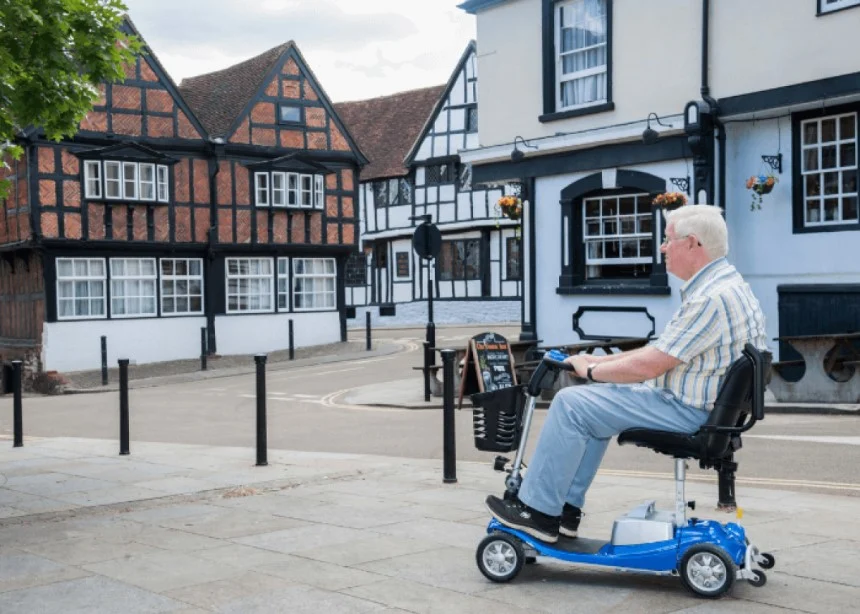
Compact travel scooters usually carry smaller batteries to keep transport weight manageable, while larger outdoor scooters can accommodate higher-capacity packs. These are tendencies rather than dependable mileage bands. A travel scooter with an optional upgraded battery may out-range another scooter in the same category.
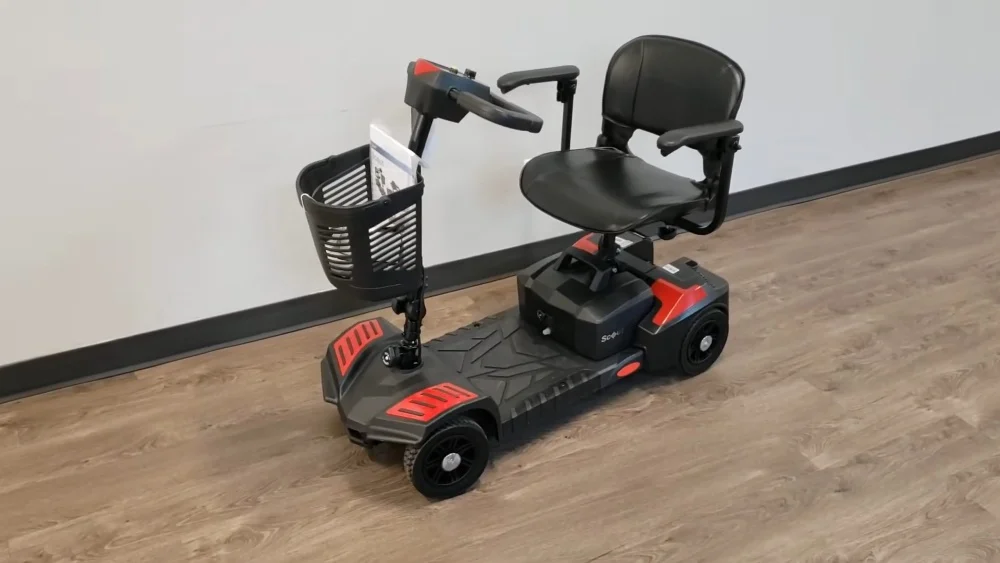
The Drive Medical Scout Compact Travel Power Scooter is one example of a transportable scooter for which the exact model and battery configuration matter. Check the current manufacturer specification rather than assuming that every Scout version, marketplace listing or replacement pack provides the same range.
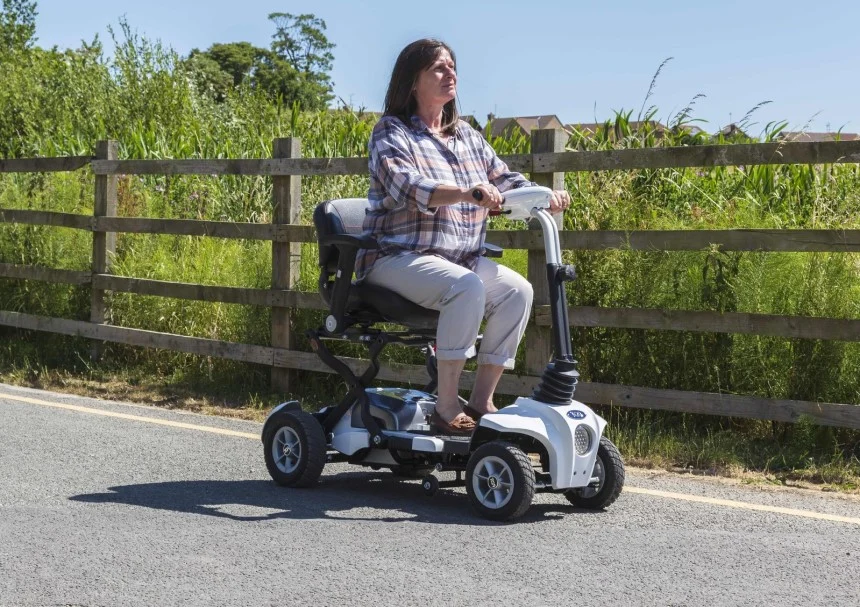
Published range is generally achieved under defined test conditions. A realistic trip plan should account for the outward and return journey, hills, surface condition, temperature, rider and cargo weight, and the battery’s age. Leave a reserve rather than planning to arrive with the indicator at empty. For longer and more demanding routes, compare the battery capacity, ground clearance, stability and support arrangements in our guide to mobility scooters for outdoor use.
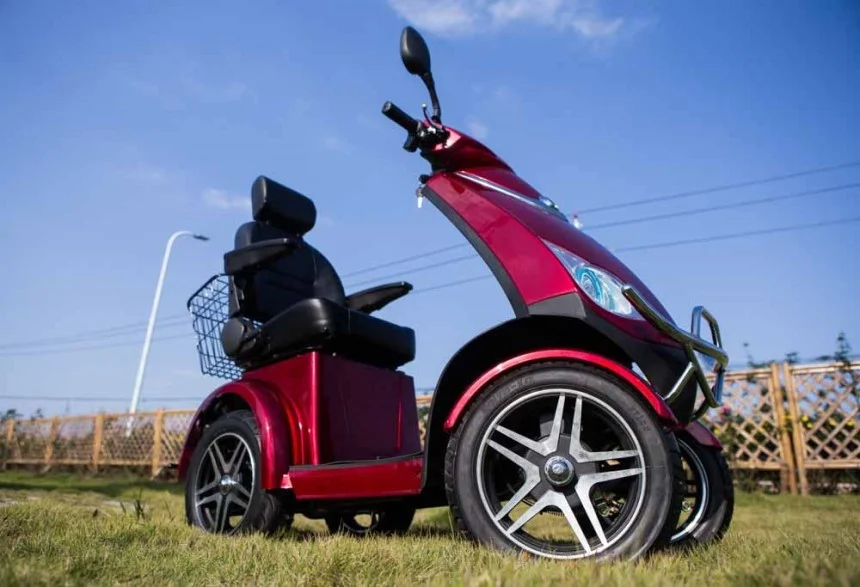
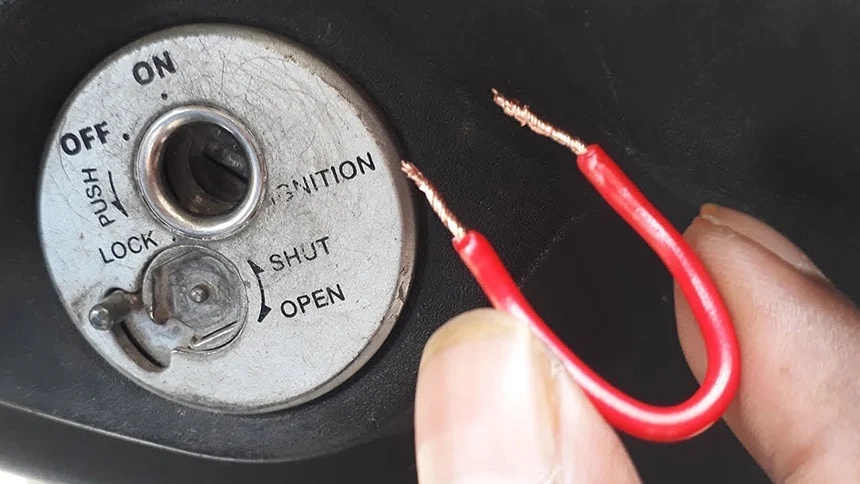
If a scooter now travels much less distance than it did on the same route, do not try to compensate by modifying its speed controls or electrical system. The checks in our article on restoring normal mobility scooter performance can help separate battery, tire, load, terrain and service issues.
Signs the Batteries May Need Replacement
- The usable range has fallen noticeably on familiar trips under similar conditions.
- The battery indicator drops sharply during acceleration or on a modest incline.
- A full charge no longer lasts through the journeys it previously completed.
- The charger reports a fault or never reaches its normal completion indication.
- The scooter becomes unusually sluggish despite correct tire pressure, load and drive settings.
- The battery case is swollen, cracked, leaking, unusually hot or producing an unusual odour.
Stop using and charging a visibly damaged, leaking, swollen or abnormally hot battery, keep it away from ignition sources, and contact an authorised provider for safe handling. For ordinary capacity loss, a dealer can perform a load test and check the charger, connections and scooter before parts are ordered.
Choosing Replacement Batteries
Match the manufacturer’s specified voltage, chemistry and amp-hour capacity. Dimensions, terminal type, connector arrangement and battery orientation must also be correct. If the scooter uses a pair, replace both batteries together with the same type and capacity; combining an old battery with a new one can produce uneven performance.
An 18 Ah battery pack listed for Drive Medical Scout scooters may suit certain Scout configurations. Confirm the exact scooter model, part number, voltage, chemistry, connector and charger compatibility before ordering. A model name in a marketplace title is not enough to establish a safe fit.
Batteries are heavy and can deliver high current through a short circuit. Keep tools away from exposed terminals and use an authorised provider or qualified technician if the owner’s manual does not provide a user-replacement procedure.
Mobility Scooter Battery FAQs
Should I charge my mobility scooter after every use?
For regularly used sealed lead-acid batteries, manufacturers commonly recommend charging after the day’s use rather than waiting for the battery to run flat. Follow the schedule in the scooter and charger manuals because lithium systems and infrequently used scooters may require different routines.
Can I leave my mobility scooter charging overnight?
Many matched automatic chargers are designed for an overnight charging period, and some manufacturer schedules specify several hours beyond the point when charging first appears complete. Use only the approved charger, provide ventilation and follow the model-specific timing rather than applying one rule to every scooter.
Should both mobility scooter batteries be replaced together?
Yes, when the scooter uses a matched pair, replace both with batteries of the same type, chemistry and amp-hour capacity. Pride’s guidance specifically warns against mixing an old battery with a new one.
Why does my scooter have less range in cold weather?
Cold conditions can reduce the power immediately available from the battery and increase charging time. Tire pressure can also fall as temperature changes. Store and charge the scooter within the temperature limits in its manual and allow extra range margin in cold conditions.
The Bottom Line
Use 12–18 months as a planning prompt rather than an expiry date. Monitor how far the scooter travels on familiar routes, charge it with the correct equipment, avoid deep discharge and extreme storage temperatures, and arrange a load test when performance changes. The exact model specification and owner’s manual remain the best references for expected range, charging time and compatible replacements.