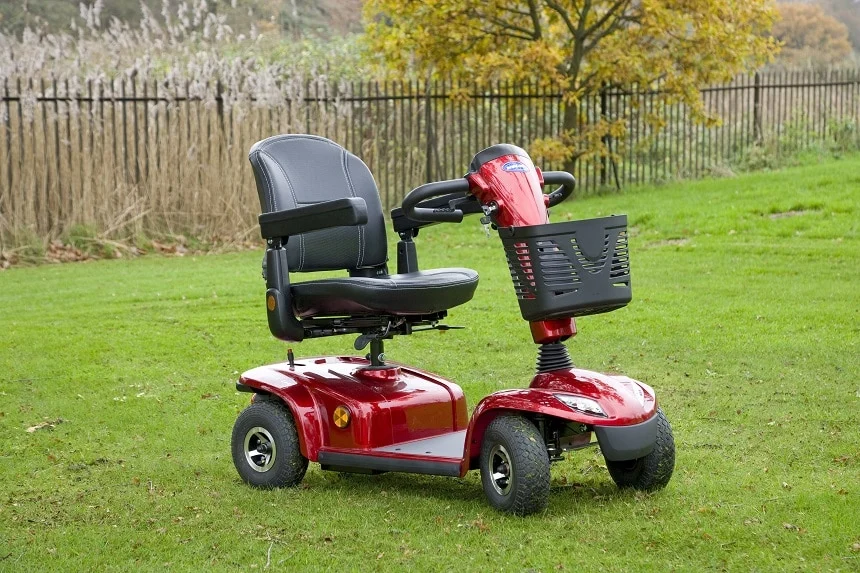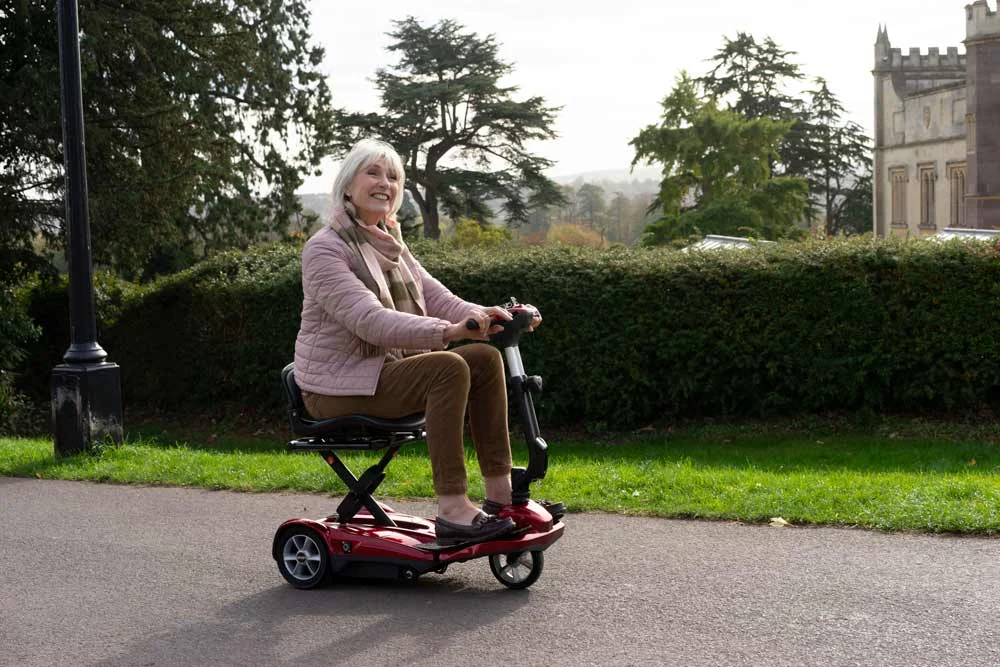

A lightweight mobility scooter can make getting around much easier without creating another problem when it is time to transport or store the scooter. But choosing the right model involves more than simply finding the lowest weight. Some lightweight mobility scooters fold into a single compact unit. Others disassemble into several smaller pieces that may be easier to lift individually. There are also important differences in battery range, seat size, turning radius, weight capacity and whether a scooter is better suited to indoor use, paved outdoor surfaces or regular travel.
We have focused on five lightweight mobility scooters that offer different advantages for seniors and other adults with limited walking endurance. Our selections include compact folding scooters, models that disassemble for transport, three- and four-wheel designs, and options suited to different budgets and travel requirements. There are dozens of mobility scooters available today, and what works perfectly for your neighbor might not suit your needs. Some offer longer battery range, others prioritize ultra-compact folding. Some have three wheels for tight indoor turns, while others feature four wheels for outdoor stability.
Our Editor’s Choice is the Vive 3-Wheel Mobility Scooter, which combines everyday manoeuvrability with a design that separates into smaller pieces for transport. However, buyers who need the lowest possible overall weight or a scooter that folds rather than disassembles may be better served by one of our other recommendations.
By Nan J.Corbo | ✅ Reviewed by Ray Butcher |
SeniorFitness is reader-supported. We may earn a commission through products purchased using links on this page. Learn more about our process here
TL;DR: The best lightweight mobility scooter depends on what you actually need to do with it. If you want an everyday scooter that can be separated into smaller pieces for transport, the Vive 3-Wheel Mobility Scooter is our Editor’s Choice. If low overall weight and compact folding are the priority, the iLiving V8 Foldable Electric Mobility Scooter is the standout option among our selections. The EV Rider Transport AF+ is worth considering if convenient automatic folding is particularly important, while the Malisa Powered Mobility Scooter offers the longest stated driving range of our five selections. Buyers who prefer the additional stability of four wheels can consider the Metro 4-Wheel Travel Mobility Scooter.
Our Top Picks for Lightweight Mobility Scooters
- Editor’s Choice/Best Everyday Value: Vive 3-Wheel Mobility Scooter “The Vive 3-wheeler is a lightweight, foldable mobility scooter with amazing features that make it perfect for senior citizens with limited mobility.”
- Best Lightweight Folding Scooter: iLiving V8 Foldable Electric Mobility Scooter “The iLiving V8 is a lightweight electric mobility scooter that has amazed users with its long-lasting battery and high maximum weight capacity.”
- Best Automatic Folding Scooter: EV Rider Transport AF+ “This is the best option for you if you’re looking for an affordable, comfortable, and lightweight mobility scooter that can be easily taken anywhere without much effort.”
- Longest Stated Driving Range: Malisa Powered Mobility Scooter “If you’re searching for a lightweight mobility scooter that can accommodate larger users and travel up to 16 miles on a single charge, the Malisa is your best choice.”
- Best 4-Wheel Option: Metro 4-Wheel Travel Mobility Scooter “The IDFURLF 4-Wheel Travel Mobility Scooter offers a great combination of performance, durability, and comfort for those looking for an easy-to-use, lightweight mobility scooter.”
Lightweight Mobility Scooters Compared
| Scooter | Total Weight | Weight Capacity | Range | Speed | Folding / Disassembly | Best For |
|---|---|---|---|---|---|---|
| Vive 3-Wheel | 77 lb | 265 lb | 12.4 mi | 3.7 mph | Disassembles | Everyday value |
| iLiving V8 | 40 lb | 275 lb | 15 mi | 3.7 mph | Folds | Lightweight travel |
| EV Rider Transport AF+ | 49 lb | 250 lb | 15 mi | 4 mph | Auto-folding | Easy folding |
| Malisa | 63 lb | 265 lb | 16 mi | 12 mph | — | Longer range |
| Metro 4-Wheel | 84 lb | 265 lb | 10 mi | 4.97 mph | Disassembles | Four-wheel stability |
*Specifications should always be confirmed against the current manufacturer’s information before purchase. Range figures are manufacturer/listing maximums and actual range can vary with load, terrain, battery condition, temperature and driving conditions.
Top 5 Lightweight Mobility Scooter Reviews
1. Editor’s Choice for Lightweight Mobility Scooter for Seniors
Amazon
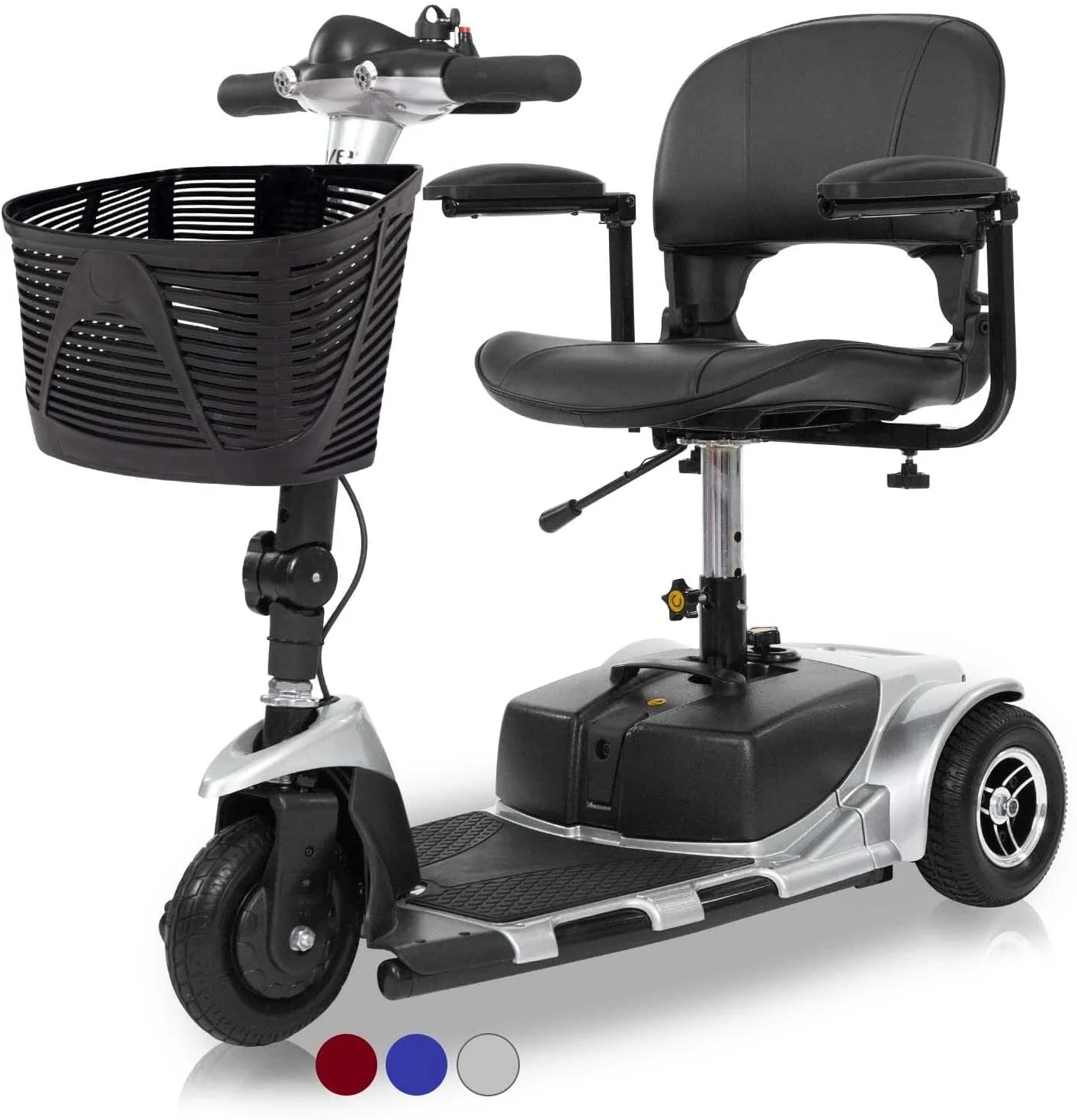
Vive 3-Wheel Mobility Scooter
Features
- Top speed: 3.7 mph
- Weight capacity: 265 lbs
- Motor: 350 W
- Battery: 12 ah
- Weight: 77 lbs
- Warranty: 5 years on frame, 6 months on electric components, 30 days on parts
More features: 12.4 miles max drive range, 7.5 in front wheel, 31.2 in turning radius, 17×14.5 in seat, color variation. Comes in Blue, Red, Grey and Black Colours
The Vive 3 Wheel Mobility Scooter is all about comfort. The machine’s lightly padded seat and backrest provide you with comfortable cushioning. Even better, the seat is height-adjustable, meaning you can get a customizable fit. The scooter also disassembles quickly into 4 separate pieces for seamless transportation.
When it comes to the safest and most comfortable 3 Wheel mobility scooter for the elderly, this Vive scooter has arguably the strongest shout in the market. The scooter easily maneuvers over smooth surfaces such as pavement, tile, concrete, etc. Plus, it boasts a tight turning radius that easily navigates through hallways and doorways.
Why is it special?
- The Vive 3 Wheel Mobility Scooter is exactly what the elderly need. With easy maneuverability and a tight turning radius, this scooter offers smooth mobility. Enhancing the comfort of the elderly are the wide, padded seat and flip-back armrests. Furthermore, the scooter boasts a maximum range of up to 12.4 miles per charge. Additionally, there’s an intuitive control panel that helps the elderly to use this scooter easily.
What are the flaws?
- Like other top products, the Vive 3 Wheel Mobility Scooter is not perfect. The scooter’s back support is pretty low, making it uncomfortable for some people. For a product that boasts great comfort, we couldn’t help but notice that irony. Of course, the machine is largely comfortable but we couldn’t overlook the uncomfortable back support. In our opinion, it could be higher to enable comfortable seating.
2. Best Folding Lightweight Mobility Scooter for Seniors
Amazon
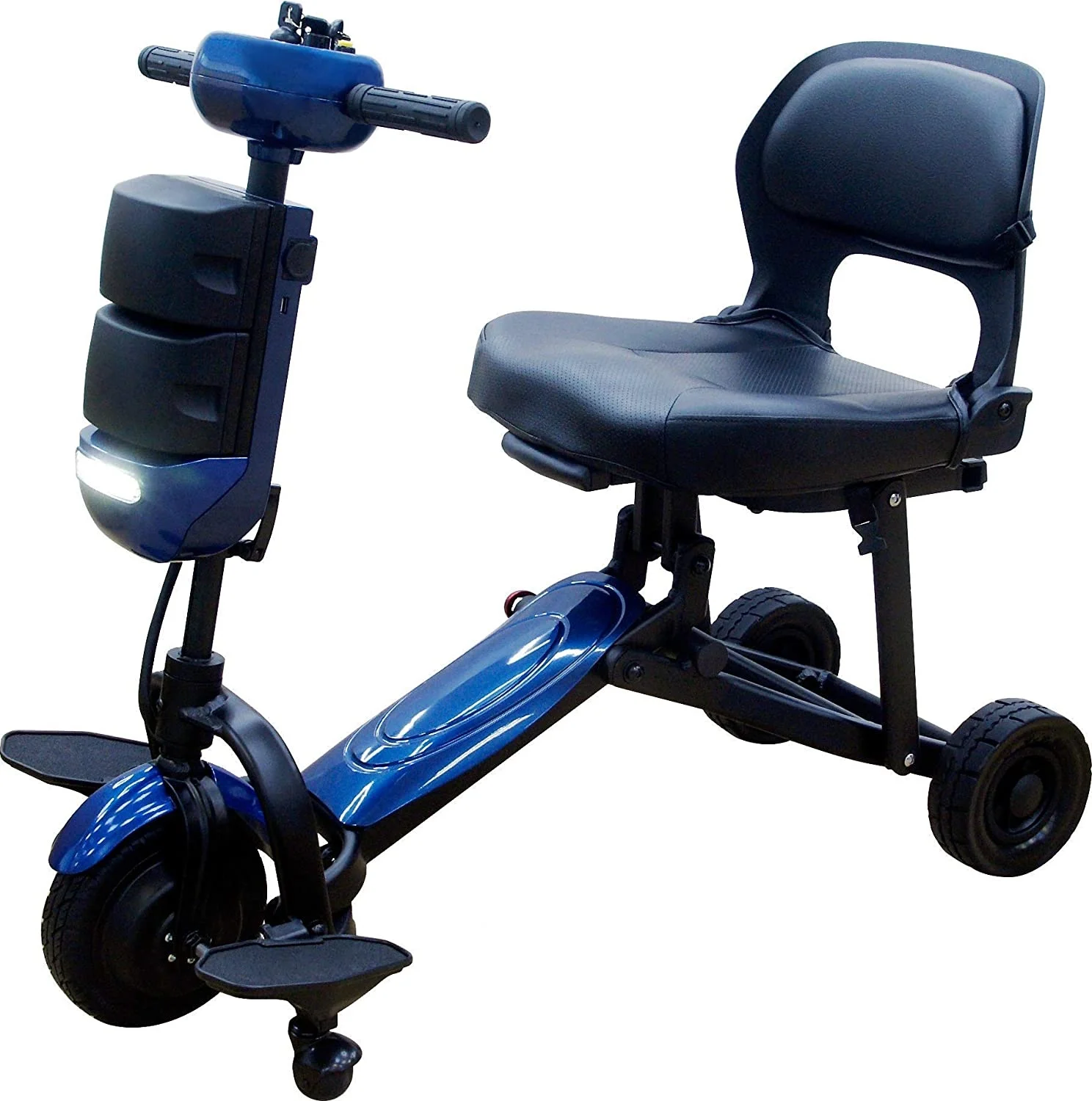
iLiving V8 Foldable Electric Mobility Scooter
Features
- Floor to seat height: 19.7 in
- Weight limit: 275 lbs
- Speed: 3.7 mph
- Max distance: 15 miles
- Weight: 40 lbs
More features: 52.7 in turning radius, 9 in ground clearance, USB charging, LED lights, 140W motor, 8-in front wheel, 7-in rear wheels, 8° max incline
Mobility scooters have different uses and you may want one just for going between your room and a friend’s. However, if you plant on using your scooter to head to the shops or get outdoors, then you will need a device meant for more rugged use. The iLiving V8 is our pick for an outdoor mobility scooter because of its construction. With three wheels that have nice, deep tread, you can travel on the bumpiest of sidewalks and not have to worry about tipping over. Then, once you reach your destination, you can easily fold the iLiving V8 up. It maneuvers easily and won’t take up much space once you fold the front up. And, to help you with moving it around, the whole scooter only weighs pounds.
The iLiving V8 works on a 140W motor and can be charged via a USB cable. It is easy to operate and there are no extra fancy buttons that might confuse some people. While you can’t go too fast on it, with a top speed of 3.7 mph, you can travel up to 15 miles on a single charge, which is a decent distance. When the iLiving V8 arrives, it is already fully assembled, which is perfect if you aren’t the best at following instructions. Simply unfold the scooter and start moving!
What makes it special?
- Folds up very compact and very easily
- Comes fully assembled
- Only weighs 40 pounds so is easy to store
What cons did we find?
- Incredibly expensive so might be out of most people’s budgets
- Top speed is pretty slow at just 3.7 mph
3. Best Automatic Folding Mobility Scooter for Seniors
Amazon
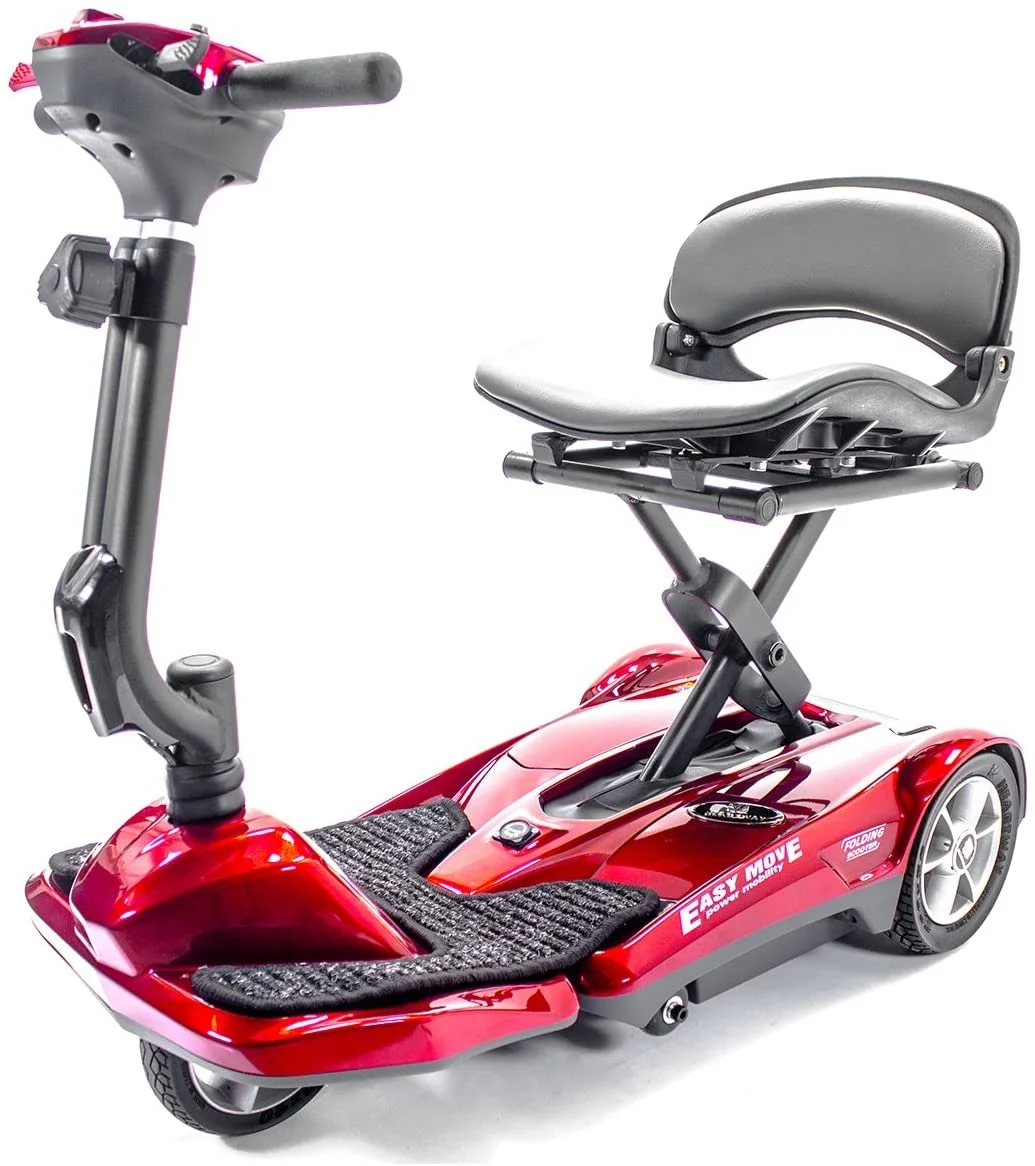
EV Rider Transport AF+
Features
- Item Weight: 49 lbs.
- Weight limit: 250 lbs.
- Speed: 4 mph
- Distance: 15 miles per charge
- Tires: 8-10″
More features: 4-pole motor, height-adjustable tiller, auto-folding/unfolding
If you’re looking for a lightweight scooter with a smaller footprint, this is the best mobility scooter for your needs. This lightweight mobility scooter can be transported with ease with high-quality folded size dimensions. This scooter has a 250 lbs. weight limit and a 4 mph maximum speed made by Golden Technologies. With features like the 95 lbs. item weight and the large 24″ x 17″ flat-free tires, users can ride with a sense of comfort and safety.
It’s worth mentioning that EV Rider produces reliable and durable mobility scooters at any taste and need. Still, the EV Rider Transport AF+ is the best among the list of lightweight options. It has an alternative, the EV Rider Folding Travel Transport Mobility Scooter, which is in the same color and construction. But the EV AF+ offers a more compact design and longer driving distance. That’s why our guide includes this particular model.
Why is it special?
- Automatic folding and unfolding with one touch on a remote panel
- Perfect for both indoor and outdoor usage
- Powerful 4-pole motor
What are the flaws?
- The seat may be too small for obese people
- The battery has poor quality
4. Longest Driving Range Lightweight Mobility Scooter for Seniors
Amazon
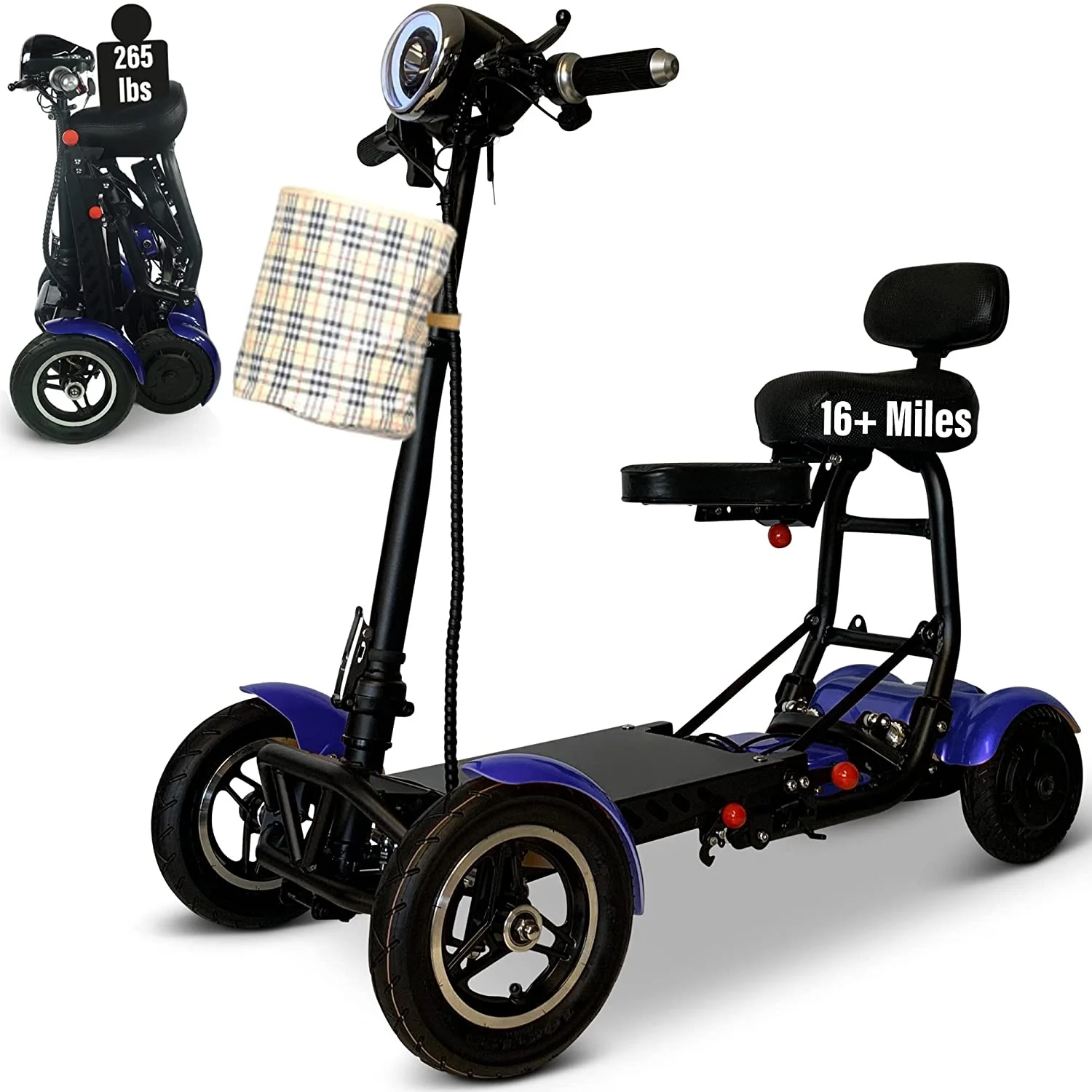
Malisa Powered Mobility Scooter
Features
- Item Weight: 63 lbs.
- Weight limit: 265 lbs.
- Speed: 12 mph
- Distance: 16 miles per charge
- Tires: 7.5″ flat-free
More features: 30-day return, height-adjustable directional rod, front storage basket
The Malisa is a lightweight mobility scooter that can hold up to 265 lbs. This makes it ideal for many different users, including those who are large in size, if their weight does not go over the limit. It also features two 12 Ah batteries which allow you to drive up to 16 miles before having to charge again. This means you can go on errands or travel without needing to charge it first. The Malisa also has a minimum turning radius of only 1 meter, so it’s very maneuverable within tight spaces. You’ll experience an ultra-quiet ride with this mobility scooter, so you won’t disturb others while out on errands or visiting friends.
This product can be compared to the IDFURLF 4-Wheel Travel Mobility Scooter, our Best Braking System. Both models have a convenient and adjustable design, sturdy bar frame, comfortable seat, and fold easily. But if you are looking for a model for outdoor activities, the Malisa wins this round. Its maximum distance of 16 miles per one charge allows traveling more hours.
Why are we impressed?
- It is equipped with wide back support that makes it easy for you to enter and exit the scooter
- The alloy wheels are rust-resistant, so they will not corrode
- Helpful front storage basket
What negatives must you be aware of?
- It can be difficult to brake the scooter
- The seat may be not large enough to get more stability
5. Best 4-Wheel Lightweight Mobility Scooter for Seniors
Amazon
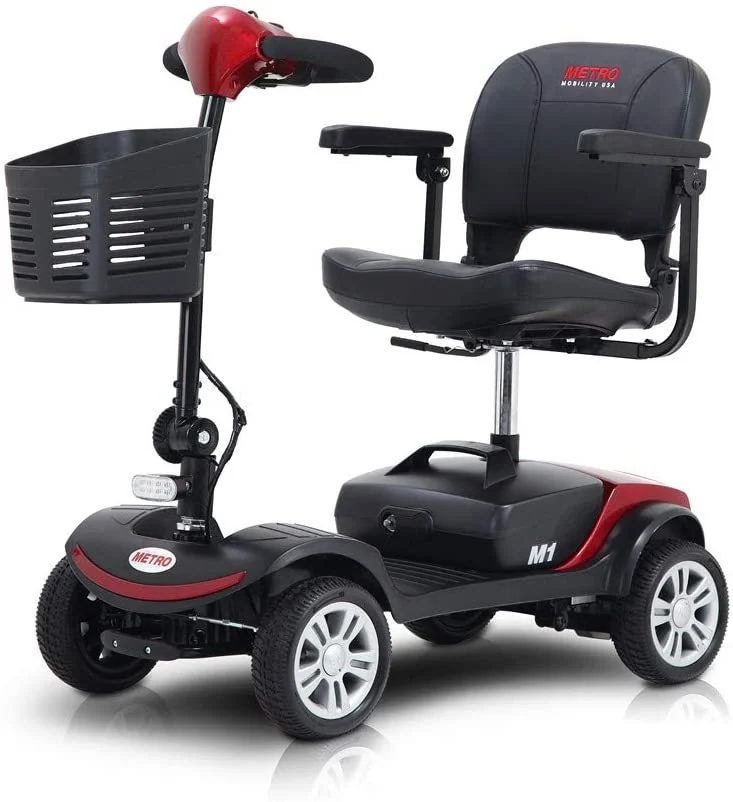
Metro 4-Wheel Travel Mobility Scooter
Features
- Item Weight: 84 lbs.
- Weight limit: 265 lbs.
- Speed: 4.97 mph
- Distance: 10 miles per charge
- Tires: 7″ flat-free
More features: non-slip tire, easy-to-disassemble
It is designed with an adjustable tiller up to 40 inches tall for convenience purposes. The scooter also features simple trigger steering, which makes it ideal for people who are not able to turn the wheel forcefully, like those suffering from arthritis or other hand mobility issues. The scooter’s battery is a 12V 28AH type, and it offers a maximum speed of 4.97 mph which can cover up to 15 miles on one charge. This lightweight travel mobility scooter weighs only 84 lbs. Its performance features make it strong enough for individuals weighing as much as 265 lbs.
This model is very similar to the Metro Folding 4-Wheel Mobility Scooter. They have the same dual rear brakes, height adjustment, and wheels size. Besides the color, you can see some differences between them. While the Metro Travel Mobility Scooter is only 84 lbs., the Metro Folding model is 101 lbs. So, our pick is much better for easy transporting.
Why is it special?
- Non-slip and rear anti-tip tires make the scooter ideal both for home and out of the town trips
- It’s powerful enough to extend traveling range
- The tiller is adjustable up to 40 inches that offer maximum comfort
- It can be quickly disassembled into 4 easy-to-store pieces
What are the flaws?
- It shouldn’t be used on wet or slippery surfaces
- All the mechanical parts are not waterproof, which can easily rust with exposure to water
How to Choose a Lightweight Mobility Scooter
The best lightweight mobility scooter is not necessarily the scooter with the smallest number beside its weight specification. What matters is how easily the scooter fits into your everyday life.
Someone who leaves their scooter assembled in a garage may care more about comfort and battery range. Someone who loads a scooter into a car several times each week may care much more about component weight and folded dimensions.
Start by asking three questions:
- Where will I use the scooter?
- How will I transport or store it?
- Who will have to lift it?
Those answers make the remaining specifications much easier to evaluate.
What Makes a Mobility Scooter Lightweight?
There is no single weight at which every mobility scooter suddenly becomes “lightweight.”
Lightweight and travel mobility scooters are generally designed to reduce the size and weight associated with larger mobility scooters, but manufacturers achieve this in different ways. Some use lighter frames and compact folding mechanisms. Others use a conventional scooter design that separates into several smaller components.
That distinction matters.
A folding mobility scooter weighing 40 pounds may require you to lift most of those 40 pounds at once. A heavier scooter that disassembles may allow the battery, seat and other components to be removed before the largest section is lifted.
For that reason, compare:
- total scooter weight;
- battery weight;
- weight of the heaviest component;
- whether the seat or battery can be removed;
- folded or disassembled dimensions; and
- how high the scooter needs to be lifted.
If portability is your main reason for buying a lightweight scooter, these measurements can be more useful than total weight by itself.
Folding vs Disassembling Lightweight Mobility Scooters
Lightweight scooters generally use one of two approaches to portability: folding or disassembly.
Folding Mobility Scooters
A folding scooter collapses into a smaller shape while remaining largely in one piece.
The main advantage is convenience. There are fewer components to keep track of, and a folding scooter can often be prepared for storage relatively quickly. Some models, including the EV Rider Transport AF+, provide powered or automatic folding.
The disadvantage is lifting weight. Even an impressively light folding scooter can still require one person to lift much of the scooter at once.
Folding scooters therefore make the most sense when compact storage and quick setup are priorities and the person handling the scooter can manage its folded weight.
Disassembling Mobility Scooters
A disassembling scooter separates into several pieces. Depending on the model, this can include the seat, battery, basket and sections of the frame.
It takes longer to separate and reassemble the scooter, but each individual piece can be considerably easier to handle than the complete machine.
This can make a disassembling scooter the better choice for someone who cannot safely lift a complete folding scooter.
The Vive 3-Wheel Mobility Scooter and Metro 4-Wheel Travel Mobility Scooter use this general approach.
Lightest Mobility Scooter vs Easiest Scooter to Transport
People understandably search for the lightest mobility scooter, but the lightest model on paper isn’t necessarily the easiest one to own.
Imagine two scooters:
- Scooter A weighs 45 pounds and folds in one piece.
- Scooter B weighs 75 pounds but separates into several components, with no single component approaching the complete weight of Scooter A.
Scooter A is technically lighter, but Scooter B may be easier for some people to load into a vehicle.
The same principle applies to size. A scooter can be light but awkwardly shaped, while another may fold into a form that is easier to grip and position.
So when comparing lightweight mobility scooters for seniors, consider liftability, not merely weight.
Getting a Lightweight Mobility Scooter Into a Car
If your scooter will regularly travel in a car, take some measurements before you buy it.
Start with the vehicle itself. Measure the width and height of the boot or trunk opening as well as the usable floor space inside. A scooter’s folded dimensions are only useful if the folded scooter can actually pass through the opening.
Then consider the lifting process.
Ask:
- Does the scooter need to be lifted in one piece?
- Can the battery be removed first?
- Can the seat be removed?
- What is the heaviest remaining component?
- Are there practical places to grip the scooter?
- How far off the ground is the vehicle’s cargo floor?
- Can the person who will normally load it manage that safely?
Don’t assume that because a scooter is advertised as portable, every senior will be able to lift it independently.
If the scooter is too heavy to load safely, alternatives can include a ramp, vehicle lift or assistance from another person.
3-Wheel vs 4-Wheel Lightweight Mobility Scooters
The number of wheels affects how a mobility scooter behaves.
3-Wheel Scooters
Three-wheel mobility scooters generally provide a tighter turning circle. That can make them useful in:
- shops;
- apartments;
- hallways;
- lifts;
- indoor public spaces; and
- other areas where manoeuvrability matters.
The Vive and iLiving V8 are examples of three-wheel designs in this guide.
4-Wheel Scooters
Four-wheel scooters generally provide a broader platform and may feel more stable, particularly outdoors.
The Metro is the four-wheel option among our five selections.
That doesn’t mean every four-wheel scooter is automatically safer than every three-wheel scooter. Wheelbase, centre of gravity, user weight, speed, slope and terrain also influence stability.
Choose based on where you will actually ride rather than assuming one configuration is universally better.
Weight Capacity
Scooter weight and weight capacity are completely different specifications.
Weight capacity tells you the maximum user/load weight the scooter is designed to support. Most of the lightweight models in our selection are rated around the 250–275-pound range.
Don’t deliberately choose a scooter whose maximum capacity closely matches your body weight. Clothing, shopping and anything carried on the scooter add to the load.
Operating conditions and load can also affect battery range.
If the required capacity exceeds that available from lightweight models, a larger heavy-duty mobility scooter may be more appropriate than compromising on capacity simply to save weight.
Lightweight Mobility Scooter Battery Range
Battery range tells you approximately how far a scooter may travel between charges, but advertised maximum range should not be treated as a guarantee.
Actual range can be influenced by:
- user and cargo weight;
- hills and gradients;
- surface conditions;
- speed;
- frequent starting and stopping;
- battery age and condition;
- temperature; and
- tyre condition.
The models in this guide advertise ranges from roughly 10 miles into the mid-teens.
Instead of automatically buying the scooter with the longest stated range, think about your normal journey.
If the scooter is primarily used inside a shopping centre after being transported there by car, extreme range may offer little practical benefit. If you regularly travel several miles from home, battery capacity becomes much more important.
Allow a sensible reserve rather than planning trips that rely on achieving the manufacturer’s maximum range.
Comfort and Seat Size
Reducing scooter weight can involve compromises, and comfort is one area worth examining carefully.
Compact travel scooters often use smaller seats and less substantial padding than larger mobility scooters. That may be perfectly adequate for short trips but less comfortable if you spend several hours on the scooter.
Check:
- seat width and depth;
- seat height;
- backrest height;
- padding;
- armrest position;
- whether armrests flip up;
- tiller adjustment; and
- available legroom.
Getting on and off also matters. A comfortable scooter isn’t much use if the seat height or armrests make transfers difficult.
If possible, compare your existing comfortable chair dimensions with the scooter’s published seat measurements.
Wheels, Ground Clearance and Outdoor Use
Lightweight mobility scooters are primarily designed around portability, so they shouldn’t automatically be treated as off-road scooters.
Small solid tyres work well on smooth indoor floors, shopping centres, pavements and other firm surfaces. Larger wheels and additional ground clearance can make uneven pavement and small obstacles easier to negotiate.
Three-wheel models can offer excellent manoeuvrability, while four-wheel models may provide a more reassuring platform outdoors.
For regular travel over grass, loose gravel, badly broken paths or other difficult surfaces, portability may need to become a secondary priority. A larger scooter designed specifically for outdoor terrain may be more suitable.
Also check the manufacturer’s limits for gradients and ground clearance rather than assuming a lightweight scooter can safely negotiate every slope or kerb.
Speed
For most lightweight mobility scooter buyers, maximum speed should be well down the priority list.
Travel scooters are primarily designed for controlled movement through places such as shops, footpaths, public venues and residential areas. Manoeuvrability, braking, comfort and range are usually more important than outright speed.
A faster advertised specification doesn’t automatically make one scooter better.
When comparing models, consider how easily speed can be controlled at low settings, particularly if the scooter will frequently be used indoors or around other pedestrians.
Controls and Dexterity
Before choosing a scooter, consider how comfortably the intended user can operate the controls.
Look at:
- throttle design;
- steering effort;
- brake operation;
- speed adjustment;
- key placement; and
- whether controls can be read easily.
Someone with arthritis or reduced hand strength may have very different requirements from someone whose primary limitation is walking endurance.
The best mobility scooter should be easy for its actual user to operate confidently, not merely impressive on a specification sheet.
Storage and Everyday Practicality
Consider what happens to the scooter when you aren’t riding it.
A lightweight folding scooter may fit into a closet or corner more easily than a full-size model. A disassembling scooter may occupy several smaller spaces instead.
Also consider where you will charge the battery. Repeatedly moving a scooter solely to reach a power outlet quickly becomes inconvenient.
Storage baskets can be useful for shopping and personal items, but they also affect overall dimensions. Removable baskets can make transport easier.
Try to imagine the complete daily routine:
store → charge → set up → ride → pack away → transport → repeat.
A scooter that fits that routine is more useful than one that simply has the best headline specifications.
Warranty, Parts and After-Sales Support
Mobility scooters contain batteries, motors, controllers, tyres and other components that may eventually require servicing or replacement.
Before purchasing, check:
- frame warranty;
- electrical-component warranty;
- battery warranty;
- availability of replacement batteries;
- replacement tyres;
- replacement chargers;
- local or manufacturer servicing options; and
- how warranty claims are handled.
A slightly more expensive scooter with established parts and support can offer better long-term value than an inexpensive model that becomes difficult to repair.
Travelling With a Lightweight Mobility Scooter
Travel is one of the strongest reasons to choose a lightweight scooter in the first place.
Whether you’re travelling by car, cruise ship or aircraft, portability involves more than simply folding the scooter.
Can You Take a Lightweight Mobility Scooter on an Airplane?
Mobility scooters can often be transported by airlines, but don’t assume that every scooter and battery can be handled in exactly the same way.
Requirements can depend on:
- battery chemistry;
- battery energy rating;
- whether the battery is removable;
- how the battery terminals are protected;
- scooter dimensions and weight; and
- the airline’s procedures.
If you plan to fly, identify the exact battery installed in your scooter and contact the airline before travelling.
Provide the airline with the scooter make/model and battery information and follow its instructions for mobility equipment. Don’t rely solely on a retailer describing a battery or scooter as “airline approved.”
Lightweight Scooters for Cruises and Holidays
Cruises and holidays create slightly different requirements.
Compact folded dimensions can be especially useful in hotel rooms and cruise cabins, while low overall weight may matter when transferring between vehicles.
Before travelling, consider:
- doorway and cabin dimensions;
- charging arrangements;
- accessible transport at the destination;
- whether the battery can be removed;
- expected daily distance;
- scooter storage; and
- availability of assistance if the scooter must be lifted.
If you’re hiring a vehicle, make sure the scooter will fit before collecting the car.
Lightweight Mobility Scooter FAQ
What Is the Lightest Mobility Scooter for Seniors?
There isn’t one permanently “lightest” mobility scooter because models change and manufacturers use different ways of reporting weight. Among the five models compared in this guide, the iLiving V8 has the lowest stated total weight at approximately 40 pounds. However, don’t choose solely on that figure. A heavier scooter that disassembles into lighter individual components may be easier for some seniors or caregivers to transport.
How Much Does a Lightweight Mobility Scooter Weigh?
There is no formal universal weight limit defining a lightweight mobility scooter. Compact travel scooters can weigh around 40 pounds at the particularly light end, while other scooters marketed as lightweight or portable can weigh 70–90 pounds or more. The more useful figures are often weight without the battery and weight of the heaviest component, particularly if the scooter needs to be loaded into a car.
Can One Person Lift a Mobility Scooter Into a Car?
Sometimes, but it depends on both the scooter and the person doing the lifting. A very light folding scooter may be manageable for someone with sufficient strength and mobility. A heavier scooter may need to be disassembled before loading. Don’t attempt to lift a scooter simply because it is marketed as lightweight. Check its actual weight and component weights and consider the height and shape of your vehicle’s cargo opening. If it cannot be lifted comfortably and safely, use assistance or suitable loading equipment.
Is a Folding Scooter Better Than a Disassembling Scooter?
Neither design is universally better. A folding scooter is generally quicker to prepare and has fewer separate components. The disadvantage is that much of its total weight may still need to be lifted at once. A disassembling scooter takes more time to separate and rebuild, but the individual components may be easier to lift. Choose based on your transport routine and lifting ability.
Can I Take a Lightweight Mobility Scooter on an Airplane?
Many mobility scooters can be transported by air, but acceptance and battery-handling requirements vary. Contact your airline before travelling and provide the exact scooter and battery details. Pay particular attention to battery chemistry, energy rating and whether it can be removed from the scooter.
Are Lightweight Mobility Scooters Suitable for Outdoor Use?
Yes, many lightweight mobility scooters work well on pavements, shopping areas and other firm outdoor surfaces. Their smaller wheels, reduced ground clearance and portability-focused construction can make them less suitable for difficult terrain than larger outdoor mobility scooters. If outdoor use is your priority, pay particular attention to wheel size, stability, ground clearance, gradient limits and suspension rather than simply choosing the lightest model.
Is a 3-Wheel or 4-Wheel Mobility Scooter Better for Seniors?
Three-wheel scooters generally offer tighter turning and can be particularly convenient indoors. Four-wheel scooters generally provide a wider base and may appeal to users who prioritise stability outdoors. Neither configuration is automatically best for every senior. Consider the user’s balance, the places the scooter will be used and the manufacturer’s operating limits.
How Far Can a Lightweight Mobility Scooter Travel on One Charge?
The five scooters in this guide have stated maximum ranges from around 10 miles into the mid-teens. Real-world range can be lower because of hills, user weight, battery condition, temperature, surface and driving style. Choose a scooter whose expected range comfortably exceeds your normal journey rather than planning to use its advertised maximum every time.
What Weight Capacity Do Lightweight Mobility Scooters Have?
The five scooters reviewed here have stated capacities around 250–275 pounds. Lightweight construction doesn’t necessarily mean a very low user capacity, but people requiring substantially greater capacity may need to consider a heavier-duty scooter instead. Always use the manufacturer’s current maximum load specification and remember that anything carried on the scooter contributes to the load.
Our Verdict
The best lightweight mobility scooter isn’t necessarily the one with the lowest number on the scales. The right scooter is the one that you can use, transport and store comfortably in your everyday life. The Vive 3-Wheel Mobility Scooter remains our Editor’s Choice for buyers wanting a practical everyday scooter that can be disassembled for transportation. Its three-wheel configuration also makes it useful where manoeuvrability in relatively tight spaces is important.
The iLiving V8 is the stronger choice when low overall weight and folding portability are priorities, while the EV Rider Transport AF+ is particularly interesting for buyers who value automatic folding. For users who expect to cover longer distances, the Malisa Powered Mobility Scooter offers the longest stated range among our selections, while the Metro 4-Wheel Travel Mobility Scooter provides an alternative for buyers who prefer a four-wheel platform.
Before choosing, look beyond total scooter weight. Compare the way the scooter folds or disassembles, what you actually need to lift, folded dimensions, weight capacity, seat dimensions, battery range and the surfaces you expect to travel over. Those practical details are what determine whether a lightweight mobility scooter genuinely makes everyday mobility easier.
References
- Mobility scooter – Wikipedia
Mobility scooters differ from power wheelchairs in that they are usually cheaper, easier to transport, and are more customizable.
en.wikipedia.org - The trouble with mobility scooters | Disability | The Guardian
Mobility scooters are big business – and they can transform the lives of people with disabilities. But their rising popularity in the UK is creating hostility, not least when able-bodied people use them as a cheap alternative to a car.
www.theguardian.com - How Much Does a Mobility Scooter Cost? (2024). AssistedLiving.org. Retrieved from https://assistedliving.org
Note: This article is for informational purposes only. Consult with healthcare professionals before purchasing mobility equipment.