There are several realistic ways to get a wheelchair at little or no out-of-pocket cost in the United States, but the best route depends on your eligibility and the type of chair you medically need. Start with Medicare, Medicaid or VA benefits if you qualify; if those do not cover the chair or you need something sooner, U.S. charitable programs and used-equipment networks can also help. These options apply across many wheelchair types and mobility needs.
One important distinction: “covered” does not always mean “free.” Original Medicare usually leaves a deductible and 20% coinsurance, while Medicaid rules vary by state. The quickest way through insurance is usually to document the mobility problem with your clinician first, then work with an approved equipment supplier rather than buying a chair independently and expecting reimbursement later.
By Nan J. Corbo, Senior Health & Mobility Writer | Reviewed by Ray Butcher, Senior Fitness & Mobility Contributor
SeniorFitness is reader-supported. We may earn a commission through qualifying purchases. Read our affiliate disclosure.
5 Places to Start for a Free or Low-Cost Wheelchair
| Route | Who it can help | What to expect |
|---|---|---|
| Medicare Part B | People with Medicare who meet the medical-necessity rules | Usually 80% of the Medicare-approved amount after the Part B deductible; some power chairs require prior authorization |
| Medicaid | Eligible Medicaid beneficiaries | Wheelchair and DME rules, suppliers, authorization and cost-sharing vary by state |
| VA Prosthetic & Sensory Aids Service | Eligible veterans enrolled in VA health care with a medical need | VA clinicians can refer veterans for wheelchairs and other mobility equipment |
| Wheelchair Foundation | Qualifying U.S. applicants needing a lifelong manual wheelchair | Current U.S. program has financial-need, location and weight-capacity requirements |
| LifeNets / local equipment networks | People looking for donated or reused equipment | Availability depends on local donations; pickup or shipping may be required |
If you are insured, begin with your doctor, therapist, case manager or discharge planner before contacting charities. If you do not have coverage, or the insurance route will not meet the need, move straight to local equipment-reuse programs, the Wheelchair Foundation application route, LifeNets and community lending closets.
1. Medicare Part B: Coverage, but Usually Not Completely Free

Medicare Part B covers medically necessary wheelchairs and scooters as durable medical equipment (DME) when its coverage requirements are met. For a wheelchair or scooter used in the home, the treating provider must document the medical need and the equipment must come through an appropriate Medicare-enrolled supplier. Power wheelchairs and scooters require a face-to-face examination and written order, and certain power wheelchairs require prior authorization.
For Original Medicare in 2026, the annual Part B deductible is $283. After that deductible is met, the beneficiary generally pays 20% of the Medicare-approved amount when the supplier accepts assignment. That means Medicare can make a medically necessary wheelchair much more affordable, though it rarely covers the full cost outright
- Start with the mobility problem inside the home. Medicare’s wheelchair coverage is tied to medically necessary DME for home use.
- Get the clinical documentation before shopping. Ask the treating provider what mobility device is appropriate and what documentation is required.
- Use an enrolled supplier. Ask whether the supplier participates in Medicare and accepts assignment so you understand your potential costs.
- Expect extra requirements for some power chairs. The supplier normally submits required prior-authorization paperwork to Medicare.
If you have Medicare Advantage rather than Original Medicare, contact the plan before ordering equipment. Medicare Advantage must cover at least the Medicare-covered benefit, but network, authorization and cost-sharing rules can differ by plan.
2. Medicaid: A Strong Route, but State Rules Matter

Medicaid also covers medical equipment through its benefit structure, but the details differ by state and what you pay, if anything, depends on where you live. States administer their own Medicaid programs within federal rules and can set documentation, prior-authorization, supplier and cost-sharing requirements.
If you already have Medicaid, call the member-services number on your card and ask specifically about wheelchair or durable medical equipment coverage. Your doctor, occupational therapist, physical therapist, hospital discharge planner or case manager may also be able to help document the need and identify an enrolled supplier. If you have both Medicare and Medicaid, tell the supplier about both coverages so they can determine how the claim should be coordinated.
Medicaid can be one of the strongest routes to a medically necessary wheelchair for someone with limited income but just confirm the exact benefit with your state Medicaid program first, since coverage isn’t uniform nationwide.
3. VA Wheelchair Benefits for Eligible Veterans
The Department of Veterans Affairs’ Prosthetic and Sensory Aids Service provides durable medical equipment and mobility aids, including wheelchairs, to eligible veterans. General eligibility is for veterans enrolled in VA health care who have a medical need for the equipment, although additional rules can apply to particular programs or items.
If you are already receiving VA health care, the practical first step is to speak with your VA care team about the mobility limitation. VA clinicians can refer veterans for evaluation and the Prosthetic and Sensory Aids Service can provide clinically appropriate mobility equipment, fitting, repairs and related services where eligible.
The VA route is particularly important for people who need more than a generic chair. A clinical evaluation can address fit, seating, propulsion, home access and whether a manual or powered mobility device is appropriate instead of treating the problem as simply finding the cheapest available wheelchair.
4. Wheelchair Foundation: Current U.S. Applications
The Wheelchair Foundation currently accepts applications from individuals in the United States for standard manual wheelchairs. Its published requirements say the applicant must lack the financial means to purchase a chair, require one for lifelong use, live in the 48 contiguous United States and be within the chair’s 300-pound maximum weight capacity.
This makes the Wheelchair Foundation a genuine option for some U.S. readers, but it is not a source for every wheelchair type. If you need a power wheelchair, complex seating or a chair above the published capacity, Medicare, Medicaid, the VA or a specialist local program may be more appropriate.
Visit the Wheelchair Foundation’s current application information to confirm eligibility and contact details before applying.
5. LifeNets and Local Equipment-Reuse Programs
LifeNets’ Wheelchair Project is an active U.S. matching service that connects donated wheelchairs with people who need them. Availability depends entirely on what other people donate, so it’s not something you can count on for an immediate need — the recipient may also need to arrange pickup or pay shipping for a manual chair. Power chairs are especially difficult to ship, so local pickup may be necessary.
You can review the LifeNets Wheelchair Project and also ask local hospitals, rehabilitation clinics, Area Agencies on Aging, Centers for Independent Living, churches and medical-equipment reuse programs whether they maintain a lending closet or donated-equipment list. Local inventory changes constantly, so these are routes to check rather than guaranteed sources.
What Types of Wheelchairs Can These Programs Provide?
The answer depends on the funding source and clinical need. A charity may have only standard manual chairs available, while Medicare, Medicaid or the VA may cover a more specialized chair when the documentation supports it. Our guide to the different types of wheelchairs explains the main categories in more detail.
Transport Wheelchairs
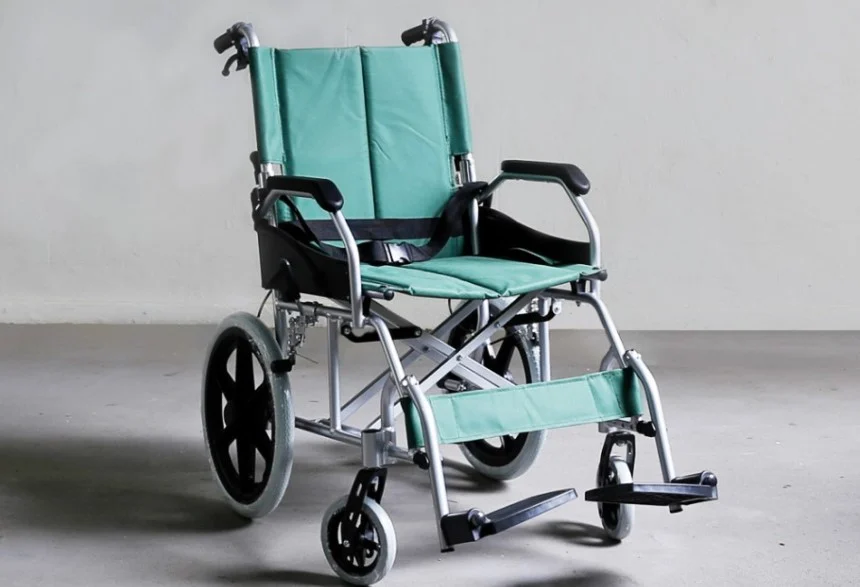
A transport chair has small rear wheels and is intended to be pushed by another person. These can be useful for outings or temporary mobility when a caregiver is available. The Drive Medical Lightweight Steel Transport Wheelchair is one example of this general chair type — which specific retail model Medicare, Medicaid or a charity actually provides will depend on your supplier and documentation, not on this product listing.
If portability is important, our lightweight wheelchair guide explains the trade-offs between weight, frame design and everyday use.
Manual Wheelchairs
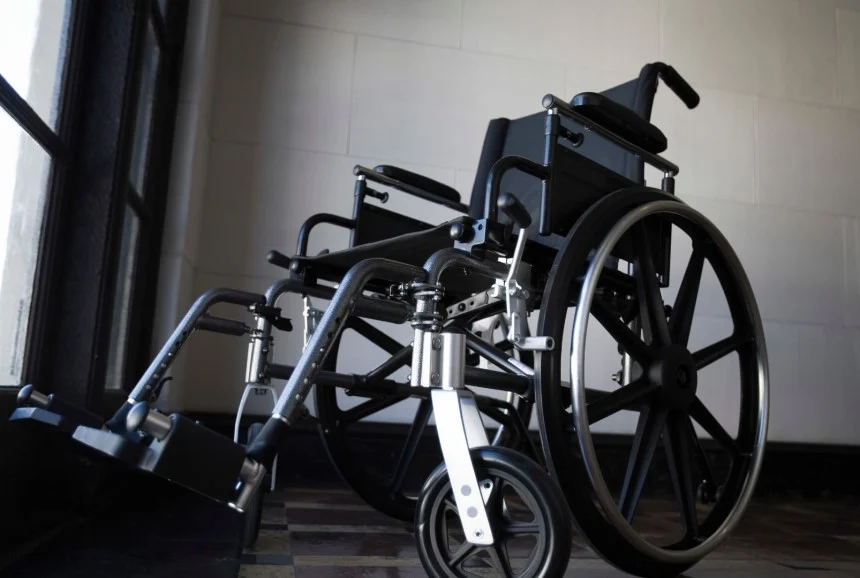
Manual wheelchairs range from basic attendant-pushed or self-propelled chairs through lighter and more configurable models. Standard manual wheelchairs are often the easiest category to find through equipment-reuse programs because they are simpler to transport and refurbish. For product-selection context, see our manual wheelchair guide and our explanation of wheelchair weights.
Power Wheelchairs
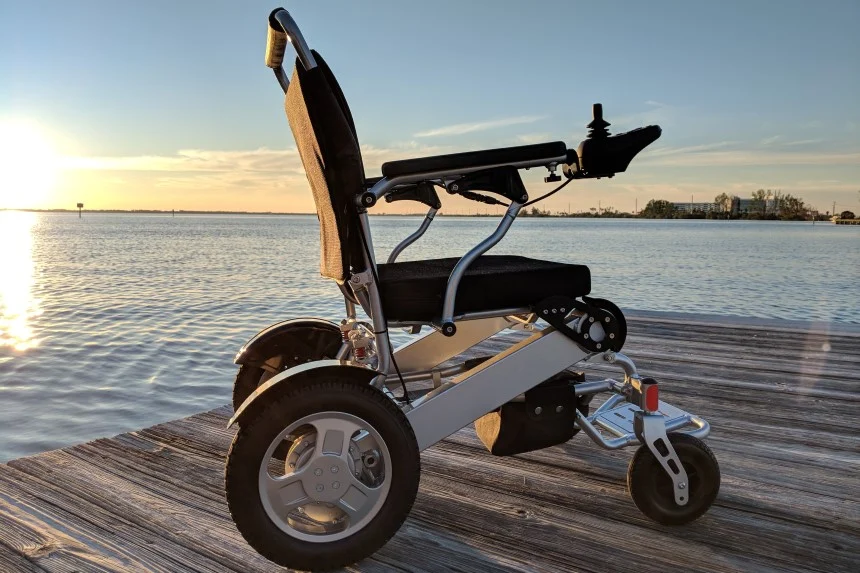
Power wheelchairs are more expensive and usually require stronger documentation when insurance is paying because the provider must establish why powered mobility is medically necessary. Medicare specifically requires a face-to-face examination and written prescription for power wheelchairs and scooters, and some models are subject to prior authorization.
The existing Porto Mobility Ranger D09 is one example of a foldable power wheelchair. Whether Medicare, Medicaid or the VA covers a specific model like this comes down to the prescribed equipment, your supplier and the applicable program rules For broader comparisons, see our electric wheelchair guide.
Mobility Scooters

A mobility scooter is not the same as a power wheelchair, but Medicare Part B also lists power-operated scooters within its mobility-equipment coverage when the eligibility rules are met. If a scooter is the better fit, our separate guide explains ways to get help paying for a mobility scooter.
What About Free Wheelchair Mission?
Free Wheelchair Mission is a legitimate and active charity, but its stated mission is to provide wheelchairs to people living with disabilities in developing nations. That makes it a poor option for most to obtain an individual wheelchair. It remains an important international mobility charity, but U.S. applicants are better served by the domestic routes above.
Be Careful With Used Wheelchairs
A donated wheelchair can solve an immediate problem, but “free” is not enough if the chair is the wrong size or unsafe. Check the frame, brakes, wheels, tires, footrests, armrests, upholstery or cushion, folding mechanism and any missing fasteners. With a power chair, battery condition, charger compatibility, controls and service history also matter.
For a wheelchair that will be used every day, especially when pressure management, posture, weakness or complex mobility limitations are involved, an occupational therapist, physical therapist or wheelchair/seating specialist can help determine whether the donated chair is actually suitable.
A Practical Order to Try
- Document the mobility need. Ask the treating clinician or therapist what type of wheelchair is appropriate and why.
- Check the benefits you already have. Medicare, Medicaid, Medicare Advantage and VA health care each have their own process.
- Work through an approved supplier where insurance is involved. Do this before buying a chair independently.
- If coverage leaves a gap, check charities and equipment-reuse programs. Wheelchair Foundation and LifeNets are current national examples, while local lending closets can sometimes solve an immediate need.
- Appeal a coverage denial when appropriate. Ask what documentation is missing rather than assuming an initial denial is the end of the process.
Frequently Asked Questions
Can Medicare give me a wheelchair for free?
Medicare Part B can cover a medically necessary wheelchair, but Original Medicare usually does not make it completely free. In 2026, the Part B deductible is $283, and after the deductible the beneficiary generally pays 20% of the Medicare-approved amount when the supplier accepts assignment. Other coverage, such as Medicaid or some supplemental insurance, may reduce the remaining cost.
Can Medicaid pay for a wheelchair?
Yes, Medicaid can cover medically necessary equipment, including wheelchairs, but the exact authorization, supplier and cost-sharing rules vary by state. Contact your state Medicaid program or member-services line for the rules that apply to you.
Can veterans get a wheelchair through the VA?
Eligible veterans enrolled in VA health care can receive mobility aids such as wheelchairs when there is a medical need and the VA care team makes the appropriate referral. Additional eligibility rules may apply to particular items or programs.
Where can I find a donated wheelchair in the United States?
The Wheelchair Foundation currently has a U.S. application route for qualifying people who need a lifelong standard manual wheelchair. LifeNets also operates a U.S. exchange that matches donated wheelchairs with people who need them. Local equipment-reuse programs and lending closets are worth checking because availability is location-dependent.