
Amazon
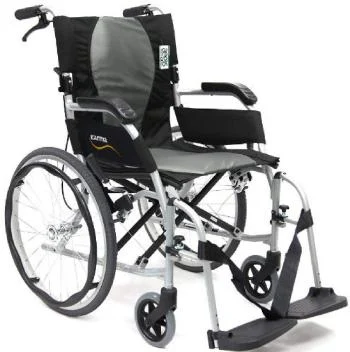
Karman Ergo Flight Ultra Lightweight Wheelchair
Features
- Type: manual self-propelled wheelchair
- Seat width: 16″, 18″ or 20″, depending on configuration
- Wheelchair weight: approximately 19.8 lbs without footrests on 16″ and 18″ models
- Weight limit: 220 lbs on 16″ and 18″ models; 250 lbs on 20″ model
- Frame: 6061 T-6 aircraft-grade aluminum
- Folded width: approximately 13″
Other features: ergonomic S-style seat frame; AEGIS padded upholstery; fixed desk-length armrests; removable swing-away footrests; companion brakes; folding backrest and seat; storage pocket.
The Karman Ergo Flight remains our Editor’s Choice because it achieves something relatively few manual wheelchairs manage: it is genuinely light enough to make a noticeable difference when loading it into a car, while still retaining the large rear wheels needed for self-propulsion. Karman lists the 16- and 18-inch versions at about 19.8 pounds without the footrests, with the frame itself dropping to around 14.5 pounds when the quick-release rear wheels and footrests are removed.
The frame uses 6061 T-6 aircraft-grade aluminum, but what makes the chair more distinctive is Karman’s patented ergonomic seat geometry. Instead of a completely flat sling-style seating position, the S-shaped frame is intended to provide a more natural seated posture. The chair also folds through both the seat and backrest, and the removable footrests help reduce its transport bulk even further.
What do we love it for?
The biggest advantage is the weight-to-function ratio. Plenty of transport chairs weigh less, but they normally require someone else to push them. The Ergo Flight gives you a genuinely lightweight chair with full-size rear wheels, so it retains much more independence for a user who has sufficient upper-body strength to self-propel.
We also like how much of the weight can be removed before lifting. Taking off the footrests and quick-release rear wheels makes the frame substantially easier to load into a vehicle, which can matter as much to a caregiver as the total assembled weight.
What could be better?
The main limitation is its relatively modest 220-pound capacity on the 16- and 18-inch versions. Larger users may need the 20-inch configuration, which raises capacity to 250 pounds but also increases the chair weight.
The fixed armrests also offer less transfer flexibility than flip-back arms, and the chair is better suited to relatively smooth everyday surfaces than rough outdoor terrain. If your main priority is caregiver-assisted travel rather than self-propulsion, a dedicated transport chair may be simpler and cheaper.