

Wheelchairs and transport chairs look similar at first glance. However, they differ significantly in features, functionality, and purpose. Understanding these differences helps you choose the right mobility aid for your needs. Approximately one in four American seniors uses some form of mobility device. This makes choosing the right option crucial for maintaining independence and quality of life.
This comparison fits into the broader wheelchair comparison overview covering different mobility roles. We’ll examine their key differences to help you select the mobility device that best serves your individual needs.
By Nan J.Corbo | ✅ Reviewed by Ray Butcher |
SeniorFitness is reader-supported. We may earn a commission through products purchased using links on this page. Learn more about our process here
TL;DR: Quick Comparison Summary
Wheelchairs feature large rear wheels that users can self-propel independently. Transport chairs have four small wheels and require a caregiver to push them. Wheelchairs suit long-term daily use with maximum independence, while transport chairs excel at short-term assisted travel and portability. When full-time wheelchair use isn’t necessary, there are several wheelchair alternatives worth considering. Read on to discover which option fits your specific situation.
What is a Wheelchair?
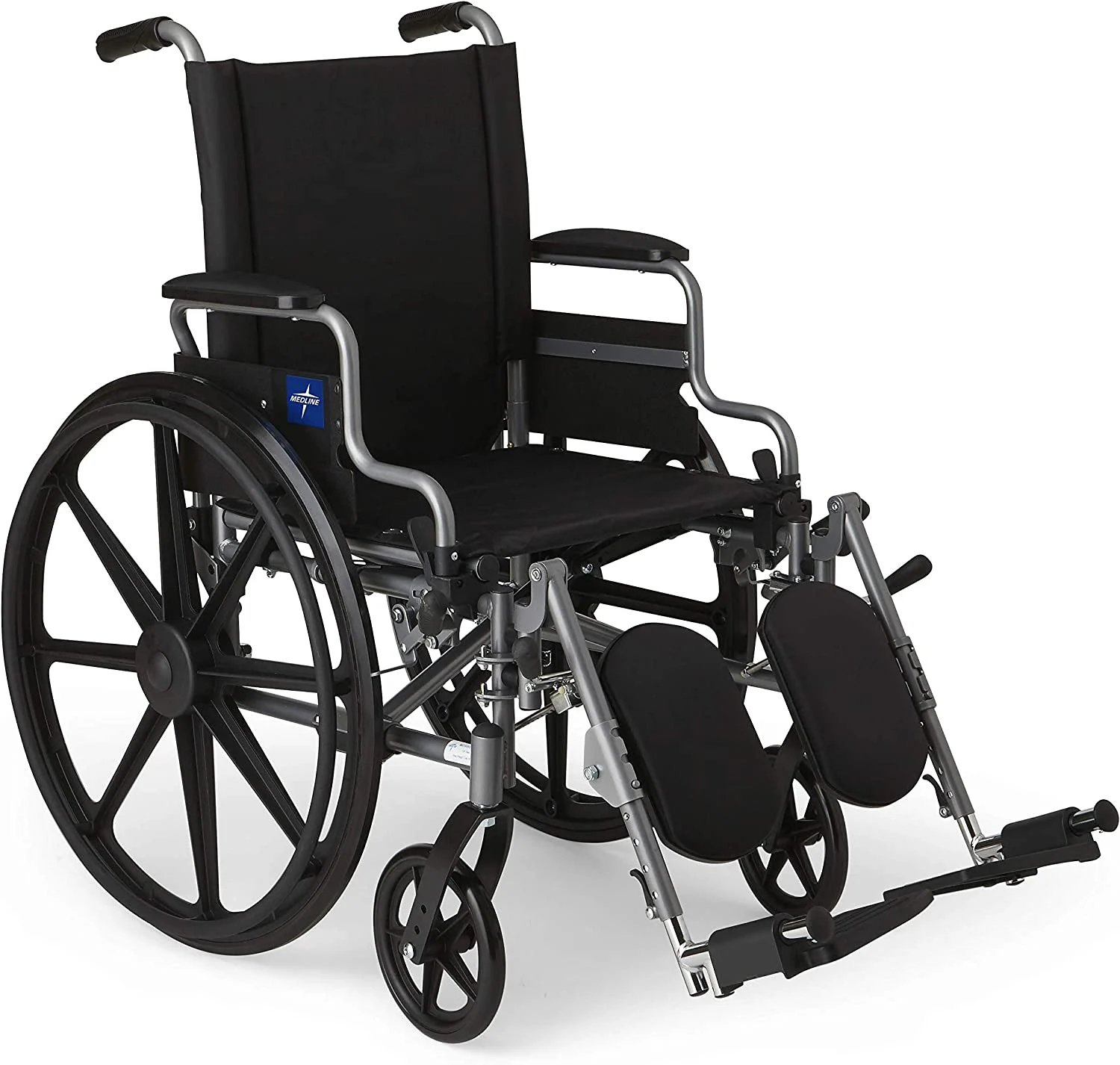
A wheelchair is a mobility chair with large rear wheels that users can propel by hand. The design supports long-term use and independent movement throughout the day.
Key Features:
Push handles allowing caregiver assistance when needed
Rotating hand-rims on big rear wheels for self-propulsion
Small front caster wheels for steering
Robust construction for daily mobility
Types
There are several types of wheelchairs.
- Manual wheelchairs – Including foldable lightweight models
- lightweight wheelchairs – For ease of transport in vehicles
- All-terrain wheelchairs – Built for outdoor surfaces
- Pediatric wheelchairs – Sized for children
- Powered/electric wheelchairs – Battery-operated for independent mobility
- Reclining wheelchairs – Offering comfort and pressure relief
- Sports wheelchairs – Designed for athletics
- Specialized wheelchairs – Including wheelchairs for amputees
This article focuses primarily on manual wheelchairs. We’ll briefly discuss powered options later for context.
What is a Transport Chair?
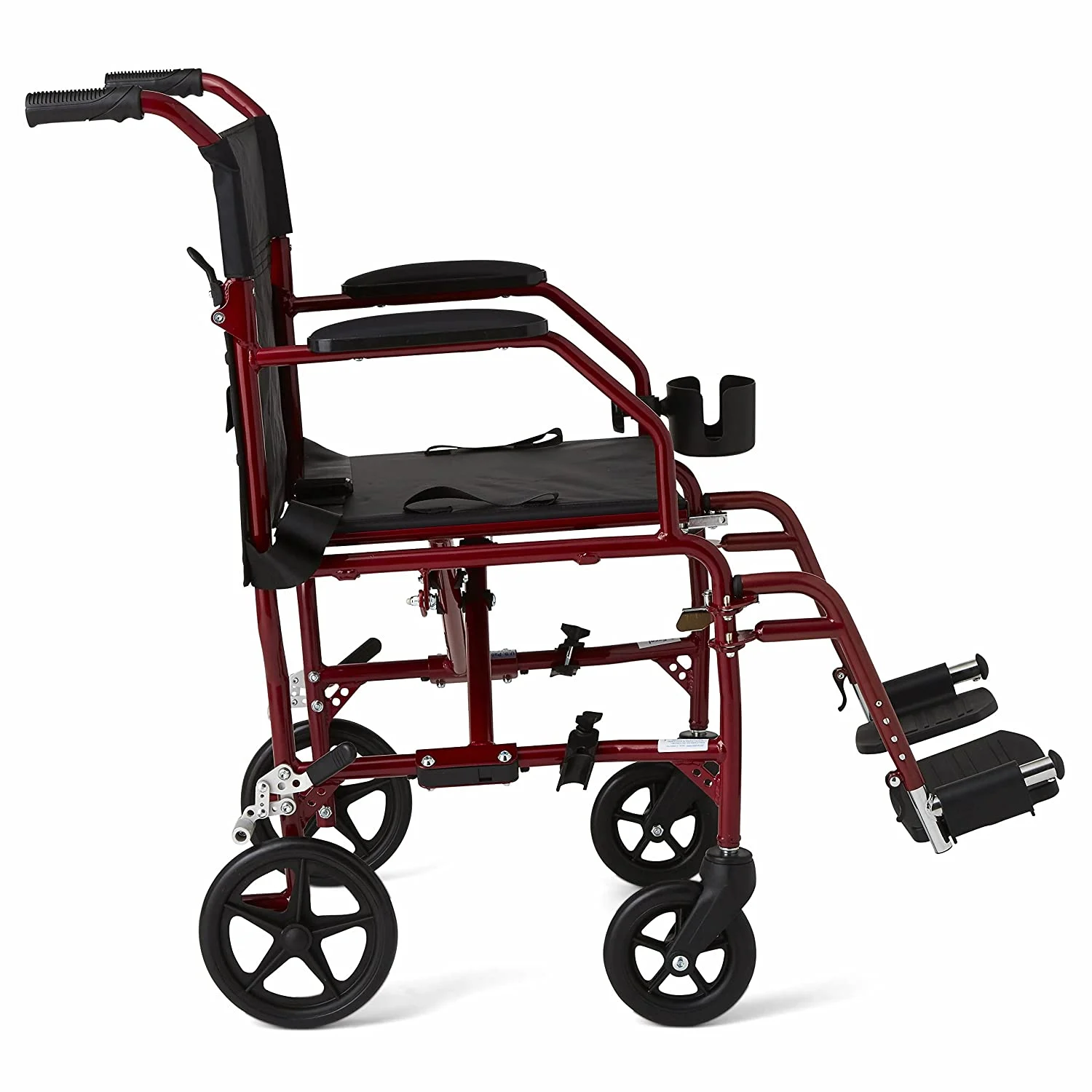
A transport chair is a lightweight, compact mobility chair with four small wheels. Unlike wheelchairs, transport chairs are designed to be pushed by a caregiver rather than self-propelled.
Key Characteristics:
- Compact design for travel and tight spaces
- Four uniformly small wheels (8-12 inches)
- Easy to fold and lift into vehicles
- Narrow enough for doorways and clinic hallways
Types of Transport Chairs
Transport chairs are also called “transport wheelchairs” or “companion chairs.” Most share the same push-only design. However, some hybrid models exist:
- Rollator-transport chair combos – Convert from wheeled walker to transport chair
- Convertible manual wheelchairs – Large rear wheels remove to create transport-style chair
- Standard transport chairs – Traditional lightweight, caregiver-propelled design
Despite these variations, all transport chairs share core features: lightweight construction, portability, and caregiver propulsion.
Difference Between Wheelchair and Transport Chair
The table below summarizes the differences between wheelchairs vs transport chairs.
| Wheelchair | Transport chair | |
| Control | Self-propelling or with help, features brakes in handles and wSelf-propelled by user (large rear wheels with hand rims) or pushed by caregiver; user has braking ability | Caregiver-propelled only – user cannot reach wheels; attendant controls hand brakes |
| Comfort | Designed for extended use with padded seat/back, adjustable armrests and footrests | Designed for short-term sitting with basic seat/back sling, limited cushioning |
| Size | Bulkier frame (18-20″ seat width); heavier (35-50 lbs); requires ~30×48″ space to maneuver | Compact & lighter (15-25 lbs) with narrower width (~16″ seat); folds easily for car trunks |
| Wheels | Two small front casters + two large rear wheels (18-24″ diameter) for independent movement | Four small wheels (8-12″); all caster-style, too small for user propulsion |
| Accessories | Many available: cushions, trays, cup holders, bags, oxygen holders, customizable | Limited options due to simple design; may include seat belt and storage pouch |
| Outdoor use | Built for indoor and outdoor use; larger wheels handle uneven terrain | Best for indoor or flat terrain; small wheels struggle on grass or gravel |
Wheels & Propulsion: The Fundamental Difference
The wheel difference represents the most fundamental distinction between these mobility aids.
Wheelchair Wheels: Wheelchairs feature large rear wheels, approximately 24 inches in diameter, with hand rims. These rims enable users to self-propel by gripping and rotating the wheels. Front caster wheels provide stability and steering capability.
Transport Chair Wheels: Transport chairs have four uniformly small wheels, typically 8-12 inches in diameter. The seated person cannot reach these wheels to move themselves. Therefore, transport chairs require a caregiver to push from behind.
In other words, wheelchairs offer independent mobility if users have sufficient strength. Transport chairs are strictly two-person devices.
Hybrid Options: Some modern wheelchair designs offer quick-release rear wheels. You can remove the big wheels to convert the chair for caregiver-push only. Additionally, a few transport models transform into rollators (walkers with wheels), giving users flexibility when not seated.
Despite these innovations, the general rule remains: wheelchairs equal self-propelling capability, while transport chairs require attendant propulsion.
Comfort & Seating: Long-Term vs Short-Term Use
Comfort levels differ significantly between wheelchairs and transport chairs.
Wheelchair Comfort: Wheelchairs are built for longer-term sitting and daily use, so they typically offer more comfort features. They often have padded seats and backrests, or at least sling seats that can accommodate separate seat cushions. Many have adjustable armrests and footrests, which help fit the chair to the user’s body.
Wheelchair users can also purchase aftermarket cushions (gel or memory foam) for pressure relief during extended sitting. Backrest height and angle might be adjustable or higher for more support. Some models are reclining or tilt to prevent pressure sores.
Transport Chair Comfort: In contrast, transport chairs prioritize light weight and foldability over plush comfort. They usually have thin fabric seats and backs—comfortable enough for short trips, but not ideal for all-day sitting.
They often have fixed or basic footrests (sometimes removable or flip-up, but not always with elevation options) and smaller armrests. Seat width options are limited. Many transport chairs come in standard narrow width (16-19 inches), which could be a tight fit for larger individuals.
Some higher-end transport chairs have wider seats or minor padding. For example, you might find models with 19-inch wide seats and adjustable footrests. Still, as a rule, wheelchairs provide more ergonomic seating and support.
Since a transport chair is designed for travel, it has features that focus more on compactness and a lighter weight rather than comfort. This is to fold them so they can easily fit in your car’s trunk. They also have limited seat width options, and a simple fabric for the backrest and seat. However, you can find advanced transport chairs with more adjustable features than a basic wheelchair. They include Medline Steel Transport Wheelchair with a wide 19-inch seat and adjustable footrest.
Control & Maneuverability: Independence vs Assistance

Building on wheel differences, user control varies significantly between these devices.
Wheelchair Control: Wheelchairs allow users to grab wheels and maneuver independently. This independence is crucial for those wanting autonomy. Wheelchairs also include push handles behind the seat, so caregivers can assist when needed. Many have brakes the user can lock for safety.
Transport Chair Control: Transport chairs put all control in the caregiver’s hands. They typically feature hand brakes on push handles, allowing caregivers to slow down or lock wheels for parking. For example, when going down ramps, bicycle-style hand brakes help caregivers maintain control.
The user cannot engage brakes themselves on transport chairs. In wheelchairs, users can engage wheel locks or use friction from their hands on the rims to slow down.
Indoor Maneuverability: Both devices maneuver well indoors. However, wheelchairs might need more space to turn due to larger wheels and longer wheelbase. Transport chairs can turn in tighter spaces.
Outdoor Maneuverability: Outside or on uneven terrain, standard wheelchairs are much easier to propel and more stable than transport chairs with tiny wheels. Both devices are highly maneuverable on smooth, flat surfaces. However, wheelchairs give users direct control over direction and speed—a significant independence factor.
This kind of flexibility for wheelchairs as well as their multiple options for customization makes them a superior option for versatile environments although the foldability of a transport chair makes it a better choice for travelling or for navigating narrow aisles. However, you can find a motorized wheelchair like Rubicon Premium Lightweight Electric Wheelchair which is also foldable.

Brakes and Safety: User Control vs Caregiver Control
Braking systems differ notably between these mobility aids.
Wheelchair Brakes: Most manual wheelchairs have push-to-lock wheel brakes (lever locks) that users can engage on large rear wheels. This locks wheels in place, which is important for safety during transfers. Many wheelchairs also have built-in wheel stoppers or attendant brakes so caregivers can lock the chair from behind.
Transport Chair Brakes: Transport chairs usually rely on hand brakes mounted on push handles, similar to bicycle brakes. Caregivers use these to slow or park the chair. Because seated people can’t reach the wheels, they typically cannot brake the chair themselves.
Caregivers must be attentive and engage brakes when needed—for example, before users stand up or when on inclines. This difference means wheelchair users have more personal control for safety. Transport chair users rely on assistants for safe stops.
Both devices often feature seat belts for added security.
Size, Weight, and Portability: Comfort vs Convenience
Physical dimensions and weight differ significantly, affecting daily use.
Wheelchair Dimensions: Standard wheelchairs are built for stability and comfort. They usually have wider seats (commonly 18-20 inches standard width) and sturdier frames. Basic manual wheelchair weight is often around 35-40 lbs, though lightweight models can be 25-30 lbs and heavy-duty models may exceed 50 lbs.
Wheelchairs tend to be bulkier even when folded. Transporting one in a car may require more space or strength to lift. To accommodate a wheelchair user, experts recommend clear floor space of about 30 by 48 inches for the wheelchair to fit and maneuver.
Transport Chair Dimensions: Transport chairs are deliberately compact and light. Many weigh 15-20 lbs, making them roughly 10-20 lbs lighter than comparable wheelchairs. They also feature folding frames and often have drop-down or removable footrests, so they collapse into very small packages.
Overall width is typically narrower, sliding through standard doorways with ease. This makes transport chairs much easier to lift into car trunks or closets. This is a big plus for caregivers who travel frequently with patients.
The Trade-Off: However, smaller size also means less seating space and possibly less comfort for larger individuals. If someone needs daily home mobility, a wheelchair’s size might actually offer more comfort and stability. Conversely, if portability is the top concern for doctor’s appointments and mall trips, the transport chair’s slim profile is ideal.
Weight Capacity: Supporting Different Body Types
Weight limits vary between these devices.
Wheelchair Capacity: Generally, standard wheelchairs have higher weight capacity in base models. A typical adult wheelchair often supports about 250-300 lbs safely. Many bariatric (heavy-duty) wheelchair models can support 400 lbs or more for larger users.
Transport Chair Capacity: Transport chairs usually have lower to mid-range capacity. Many are rated around 250 lbs, with some heavy-duty transport chairs up to 300+ lbs. Lighter ultra-compact transport chairs might only support around 200 lbs or less due to minimalist design.
Important Note: Always check the weight capacity on any model to ensure it can safely support the user. If higher weight capacity is needed, wheelchairs provide more options. Exceeding recommended weight limits can be unsafe in both categories.
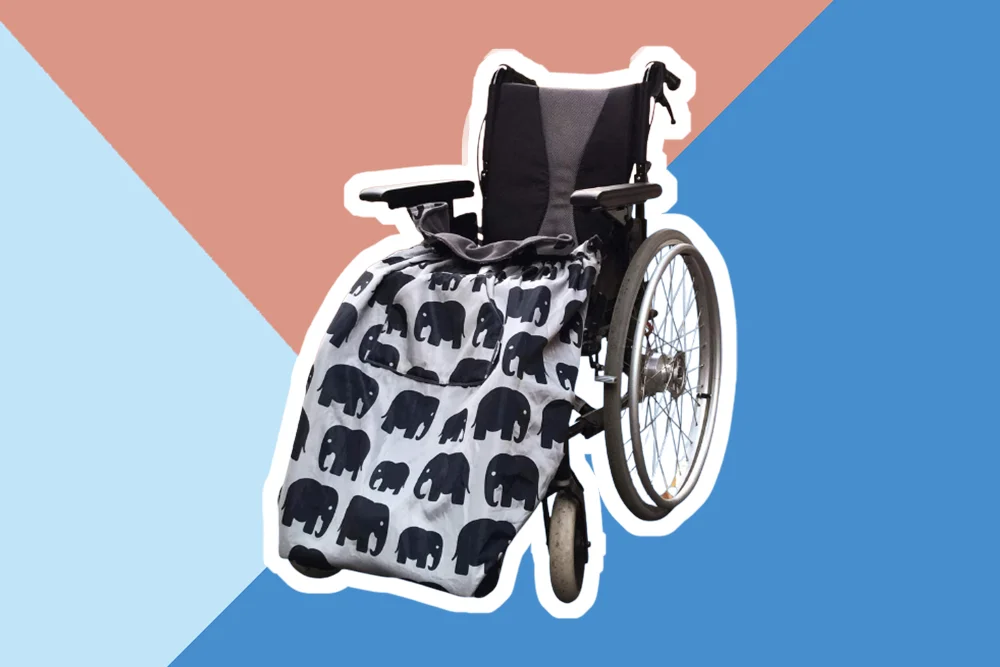
Click for: Best Wheelchair Accessories
Accessories and Customization: Versatility vs Simplicity
Accessory options differ dramatically between these devices.
Wheelchair Accessories: Because wheelchairs are often used long-term by independent users, they offer a wide array of accessories and customization options:
- Lap trays (tables) for eating or reading
- Wheelchair bags or pouches for personal items
- Cup holders and smartphone mounts
- Oxygen tank holders for portable oxygen
- Umbrellas or canopies
- Anti-tip wheels or power assist attachments
Users can also customize wheelchairs with different tire types, cushions, or backrests.
Transport Chair Accessories: Transport chairs, being simple in design, have fewer accessory options. They may include:
- Basic seat belt for safety during transport
- Small back pocket for carrying wallet or documents
- Lightweight travel cushions
- Carry bags for storage
Generally, transport chairs don’t have the same level of customization. They’re not meant for independent use or long durations where one might need those conveniences. They’re designed for getting from point A to B with assistance.
Cost Comparison: Budget Considerations
Price differences between wheelchairs and transport chairs are significant.
Transport Chair Costs: Transport chairs are usually significantly cheaper than wheelchairs. They’re simpler devices with fewer parts. Basic transport chair prices typically range from $100 to $200 for most models. Some bare-bones transport chairs cost as little as $75-$100, while deluxe models with extra features might reach $300.
Wheelchair Costs: Wheelchairs have a much broader price range. Basic manual wheelchairs can start around a couple hundred dollars. On average, standard manual wheelchairs cost about $300-$500 for good quality models.
Lightweight materials (aluminum or titanium frames) or special features increase prices. High-end ultralight sport wheelchairs or custom wheelchairs can run into thousands of dollars. Additionally, powered electric wheelchairs often start around $1,000 and can easily cost several thousand dollars for advanced models.
Additional Costs: Accessories add cost. Wheelchairs might not include all cushions or trays by default. Transport chairs, being basic, don’t typically rack up accessory costs.
For someone on a tight budget looking for a mobility solution, a transport chair is an attractive low-cost option. However, it’s only suitable if you have a caregiver to push you and don’t need all the capabilities of a wheelchair.
Wheelchairs require a larger investment but offer more versatility for long-term use and independence. Insurance or Medicare may cover part of wheelchair costs if medically necessary. Transport chairs might also be covered for short-term needs, though policies vary.
What About Electric Wheelchairs and Mobility Scooters?
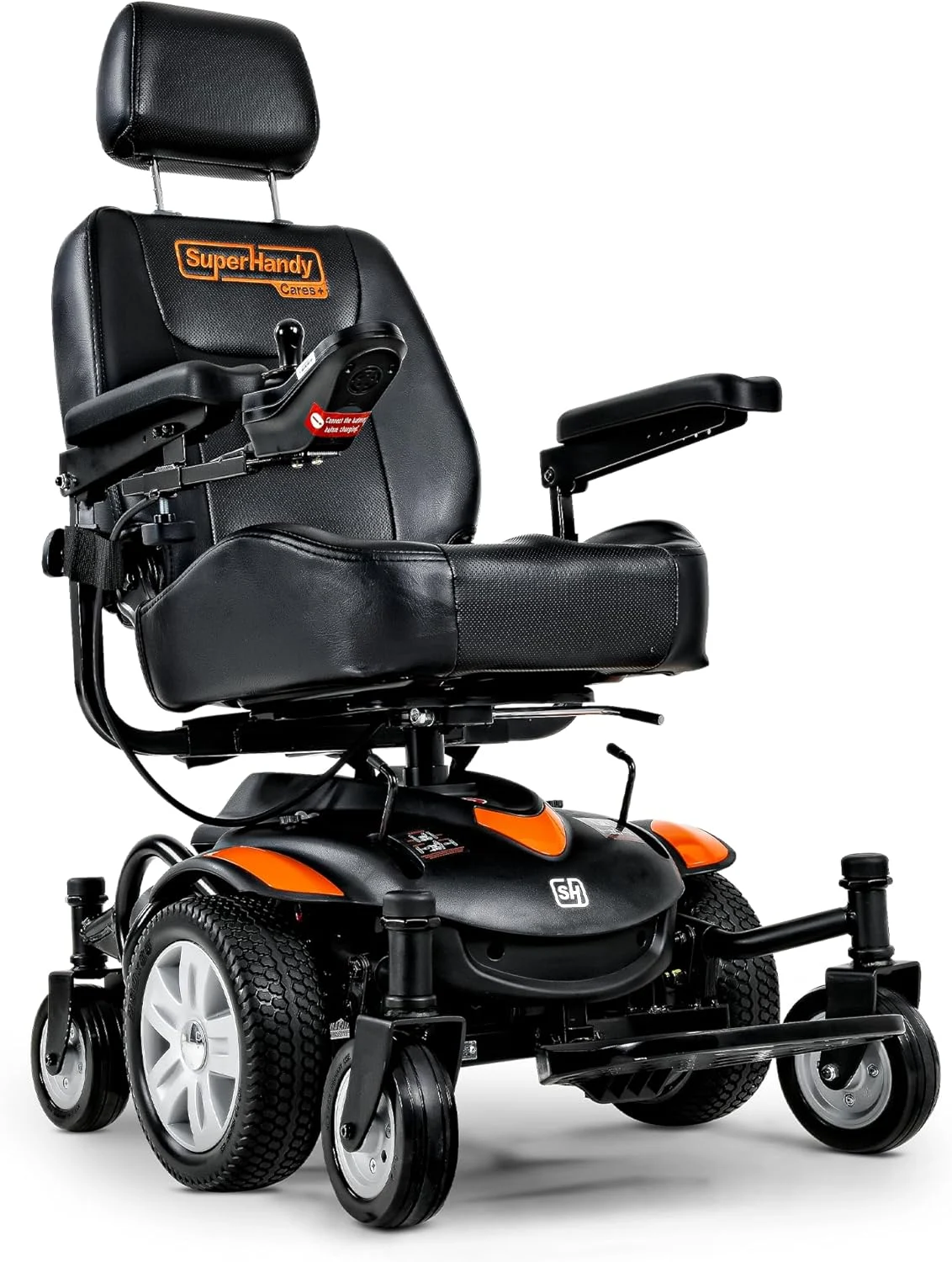
This article focuses on manual wheelchairs versus transport chairs. However, it’s helpful to mention other mobility aids for context.
Powered Wheelchairs: Electric wheelchairs provide motorized propulsion via battery and joystick control. Users don’t need to physically push the wheels. These are ideal for individuals lacking upper body strength to use manual wheelchairs but still wanting independence.
However, powered wheelchairs are much heavier (often 50-150 lbs) and more expensive than both manual wheelchairs and transport chairs. They also require battery charging and maintenance.
If self-propelling a manual wheelchair isn’t feasible, powered wheelchairs offer an alternative to transport chairs for those without constant caregiver availability—albeit a costly one.
Mobility Scooters: Another related device is the mobility scooter, a three- or four-wheel electric scooter that some seniors use for longer distances. Scooters are great for those who can do short walks but need help over longer stretches—for example, outdoors or at shopping malls.
They’re not wheelchairs, but they meet similar goals for aiding mobility, especially for individuals who don’t need wheelchairs inside the home but want something for outings.
Manual wheelchairs and transport chairs are just two tools in the spectrum of mobility aids. If users can’t self-propel and caregivers aren’t always available, powered wheelchairs might be the solution instead of transport chairs.
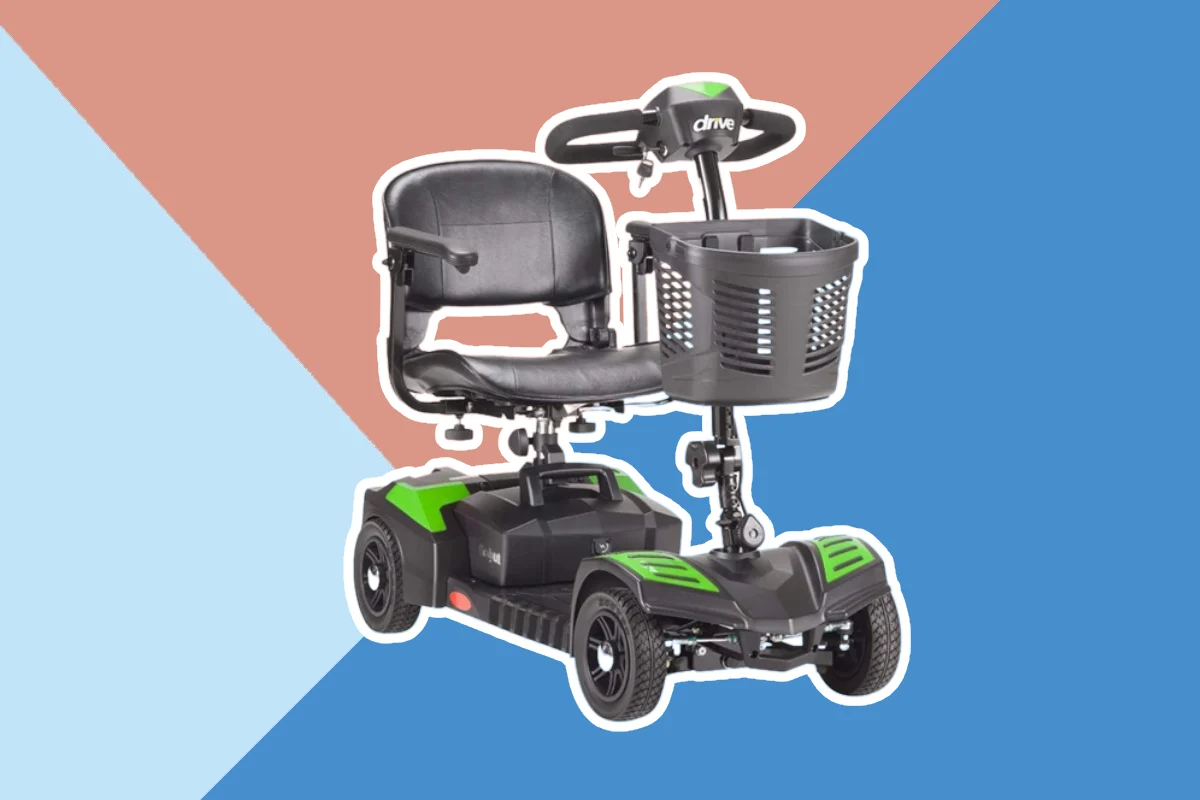
Click for: Best Mobility Scooter Reviews
Which One Should You Choose? Transport Chair or Wheelchair?
The best choice depends on individual needs and circumstances. Consider these key factors:
Level of Independence
If the person using the chair is capable of and desires moving themselves around, a wheelchair offers independence. They can propel it on their own and don’t have to rely on someone for every movement.
If the person cannot self-propel—for example, due to very limited upper body strength or arm paralysis—a manual wheelchair’s self-drive feature won’t be usable. In that case, a transport chair could be more practical for caregiver-assisted mobility. Alternatively, consider a power wheelchair for independent mobility.
Frequency and Duration of Use
For daily, long-term use—someone needing a mobility device most of the day—a wheelchair is generally more comfortable and adaptable. It’s better for continuous sitting, can be fitted to the person, and allows freedom of movement around the house or outdoors.
A transport chair is meant for short-term use. Think of it as a travel wheelchair. If you only need a chair occasionally—trips to the doctor or weekend outings with family—a transport chair might suffice and is easier to store when not in use.
Some individuals actually have both. For example, a senior might use a regular wheelchair at home to get around independently but keep a transport chair in the car for outings with their caregiver—because it’s lighter to lift and fits in the trunk easily.
Physical Environment
Consider where the mobility aid will be used. Tight spaces—small apartments, narrow doorways, crowded public areas—can be navigated more easily with a transport chair’s compact frame.
If the environment includes outdoor areas, rough or uneven terrain, or longer distances, a wheelchair will perform much better. For travel, if you frequently take car trips or flights, a lightweight transport chair is very convenient to fold and carry.
Wheelchairs can also travel—many are foldable and some are designed for portability—but they tend to be bulkier.
User’s Strength and Caregiver Support
If the user has enough strength and skill to use a wheelchair, that’s a big plus for choosing a wheelchair. If not, and if a caregiver is always present to assist, the transport chair can be a simple solution.
However, remember that pushing someone’s full weight in a transport chair can be physically demanding over long periods or up hills. Wheelchairs can also be pushed by caregivers when needed. Some caregivers find pushing a wheelchair with larger wheels can actually be smoother over bumps compared to a transport chair.
Storage and Portability Needs
If you have limited storage at home—maybe you live in a small condo or need to frequently put the device in a vehicle—transport chairs have the edge. They fold up smaller and weigh less, meaning less strain on the person lifting it (often the caregiver).
A wheelchair typically needs more trunk space and strength to lift. However, there are lightweight wheelchairs made from aluminum or even carbon fiber that minimize this gap.
Budget
As discussed, transport chairs tend to be more affordable. If cost is a major concern and the use-case fits (occasional use with assistance), a transport chair could be the economical choice.
However, if the individual truly needs a wheelchair for daily life, this is an investment in their quality of life and well-being. The higher cost of a good wheelchair might be justified. Keep in mind there are programs and insurance options that might offset wheelchair costs if prescribed by a doctor.
Transport Chair vs Wheelchairs
Both wheelchairs and transport chairs are valuable tools helping people with mobility challenges move around safely. They each have ideal uses:
Choose a Wheelchair for:
- Full-time mobility solutions
- Maximum independence and comfort
- Daily use around home and outdoors
- Users who can self-propel
Choose a Transport Chair for:
- Short-term assisted transportation
- Travel and portability needs
- Users who already have a primary mobility aid
- Budget-conscious solutions for occasional use
In some cases, the decision is clear. A very active senior who still travels alone or moves around the house will likely prefer a wheelchair. A frail elder mostly assisted by others might do fine with just a transport chair when out and about.
Often, consulting with a medical professional or physical therapist helps. They’ll consider the individual’s health condition—for instance, an upper-body injury might make self-propulsion impossible, pointing to a transport chair or powered chair.
By understanding the differences outlined above, you can make an informed choice that balances mobility, comfort, and convenience for the senior or patient in question.
Transport vs Wheelchair FAQ’s Section
What is the main difference between a transport chair and a wheelchair?
The main difference is in who propels the chair and how. A wheelchair has large rear wheels with rims that allow users to self-propel and move independently (or be pushed if needed). A transport chair has small wheels and must be pushed by a caregiver—the person in the chair cannot move it forward on their own while seated.
Can a person propel themselves in a transport chair at all?
Not in the typical way. Transport chairs have four small wheels. The rear wheels are too far and too small for the seated person to rotate. Users cannot push themselves forward with their arms as they would in a wheelchair. The only slight exception is if users can use their feet on the ground to scoot. However, this is not efficient or intended use. Transport chairs are meant to be pushed by someone else. If self-mobility is a priority, a wheelchair is the better choice.
Is a transport chair easier to travel with than a regular wheelchair?
Yes, typically transport chairs are easier for travel. They’re usually lighter (often 15-20 lbs) and fold up more compactly than standard wheelchairs. This makes them simpler to lift into car trunks, fit in tighter storage spaces, or even take on airplanes. Many have quick-release or fold-down backrests and removable footrests, further shrinking their travel size. Standard wheelchairs can be traveled with as well (many are foldable), but they’re heavier and bulkier to handle.
Which is better for outdoor use, a wheelchair or a transport chair?
A: A wheelchair is generally better for outdoor use. Its larger wheels handle uneven sidewalks, small bumps, grass, or gravel much more smoothly than tiny transport chair wheels. You can even get wheelchairs with specialized tires or all-terrain features. Transport chairs, with their small caster wheels, tend to get caught on uneven surfaces and give bumpier rides. They’re best used on smooth, hard surfaces like indoor flooring, paved paths, or shopping malls.
Do transport chairs have brakes?
Yes, transport chairs come with brakes, but they function differently than on wheelchairs. Transport chairs usually have hand brake levers on the push handles at the back, so caregivers can squeeze to slow down or lock wheels. There’s often a parking brake function to keep the chair stationary. Users in transport chairs cannot operate the brakes—it’s all controlled by the attendant. Caregivers should always use brakes when stopping or when people are getting in or out of the chair to ensure it doesn’t roll.
How do I decide whether to get a transport chair or a wheelchair for my loved one?
Consider several factors:
- Mobility and Strength: Can they propel themselves with their arms? If yes, a wheelchair gives more independence. If no, a transport chair could be sufficient (or a power wheelchair if independence is a goal).
- Usage Pattern: Will they spend many hours daily in this chair, or only use it during outings? For all-day use, wheelchairs are better. For infrequent use, a lighter transport chair might be fine.
- Environment: Do they have space to maneuver a wheelchair indoors? Are there tight corners or narrow doors? Consider outdoor terrain too.
- Caregiver’s Capacity: If you have limitations on lifting or pushing weight, a transport chair’s lightness is attractive.
- Future Needs: Is the need temporary or long-term? Temporary needs might suit a transport chair. Long-term needs justify investing in a good wheelchair.
When in doubt, consult with a medical professional or physical therapist. They can provide personalized recommendations based on the user’s health conditions and day-to-day needs.
References
What would a truly disabled-accessible city look like? – Most cities are utterly unfriendly to people with disabilities; but with almost one billion estimated to be urban-dwellers by 2050, a few cities are undergoing a remarkable shift. www.theguardian.com
Elderly, disabled need help learning about transportation services, study says – A national marketing campaign aims to let people know their options if they can’t drive. www.washingtonpost.com
Gell, Nancy et al. “Study looks at older adults’ use of mobility devices, incidence of falls.” University of Iowa, College of Public Health News (2015) – 24% of U.S. seniors reported using a mobility device public-health.uiowa.edu.
ADA Accessibility Guidelines – Clear Floor Space Requirements. ADA Standards for Accessible Design (2010) – A single wheelchair and occupant needs about 30×48 inches of clear floor space for access inspectionsada.com.
SanLi Care Blog. “Cost Comparison: Standard vs Transport Wheelchairs Explained.” (2023) – Industry guide comparing weight (wheelchair ~35–50 lbs vs transport 15–25 lbs) and average price (wheelchair $300–$800 vs transport $100–$200) sanlicare.com.
Triumph Mobility Blog. “Wheelchair vs Transport Chair: Do you know the difference?” (2022) – Notes that some transport chairs transform into rollators (walker-chair combos) for added versatility triumphmobility.com.
VOCIC Mobility. “Transport Chair vs Wheelchair: What Is Better?” (2025) – Highlights weight range (transport 15–30 lbs, manual wheelchair 30–40 lbs) and emphasizes independence vs portability vocic.com.