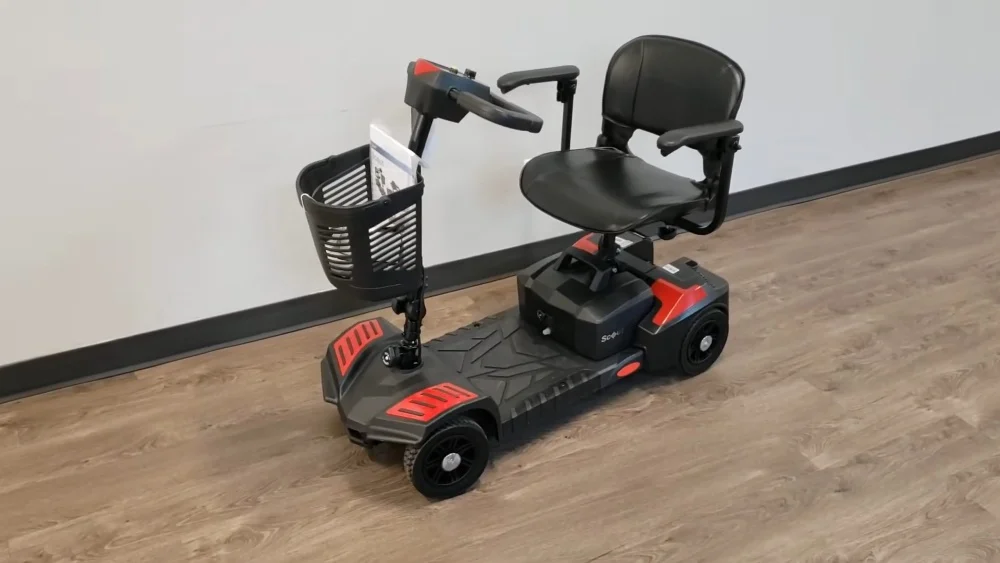
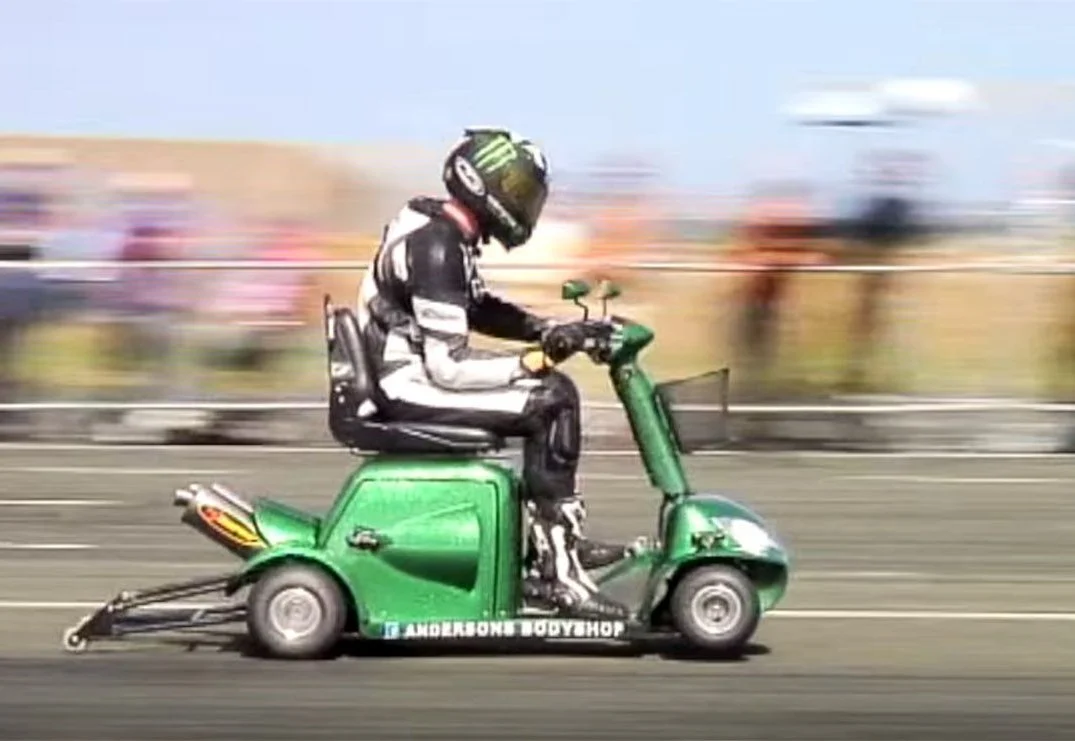
You should not try to make a mobility scooter exceed its designed maximum speed by fitting a higher-voltage battery, adding another battery, rewinding the motor, removing a speed limiter or changing its gearing. Those changes can affect the controller, braking, stability, electrical protection, warranty and legal classification.
If a scooter has become slower than it used to be, the safe goal is to restore its specified performance. Start with the speed control setting, battery charge and condition, tire pressure, load, terrain and signs of brake or drivetrain drag. If the scooter has always been too slow for the journeys you need to make, compare purpose-built options through our mobility scooters for seniors guide rather than modifying the existing machine.
By Ray Butcher
SeniorFitness is reader-supported. We may earn a commission through products purchased using links on this page. Learn more about our process here.
Why Is My Mobility Scooter Going Slower?
| What you notice | Possible reason | Safe next step |
|---|---|---|
| It is slow in every setting | The speed dial or a model-specific high/low setting may be limiting speed. | Check the controls against the owner’s manual. |
| It starts normally, then loses speed or range | The battery may be partly charged, aging or unable to supply its former capacity. | Complete a normal charge and arrange a battery test if the problem continues. |
| It is slower on hills or soft ground | Incline, surface, load and battery condition all increase demand. | Use a suitable route and remain within the scooter’s stated limits. |
| It feels sluggish and has pneumatic tires | One or more tires may be below the pressure marked on the tire or specified in the manual. | Check pressure with an appropriate gauge; never exceed the stated pressure. |
| It pulls, makes noise or resists rolling | A brake, wheel, bearing, tire or drivetrain problem may be creating drag. | Stop using it if control is affected and have it inspected. |
| It has never been fast enough | The scooter may not be designed for the intended route or pace. | Consider a correctly specified scooter rather than altering this one. |
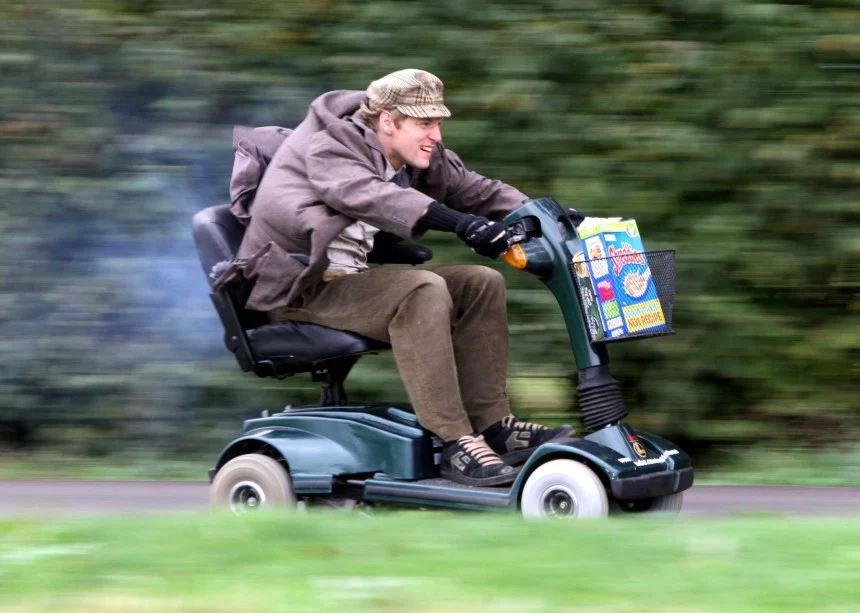
Safe Ways to Recover Normal Scooter Performance
1. Check the Speed Controls
Many scooters have a dial that lets the rider select a speed up to the model’s preset maximum. Some also have a high/low switch. Confirm that the dial is not set near its slowest position and that any model-specific mode is selected correctly. Do this while stationary and follow the control descriptions in the manual.
If the dial, switch or throttle feels loose, inconsistent or damaged, do not dismantle the tiller. A mobility technician can check the control and controller safely.
2. Fully Charge the Correct Battery
A low or deteriorating battery can reduce acceleration, hill performance and usable range. Charge the scooter with its supplied or manufacturer-approved charger, following the model’s connection sequence and indicator lights. If it will not complete a normal charge or quickly loses charge, work through our guide to mobility scooter charging problems.
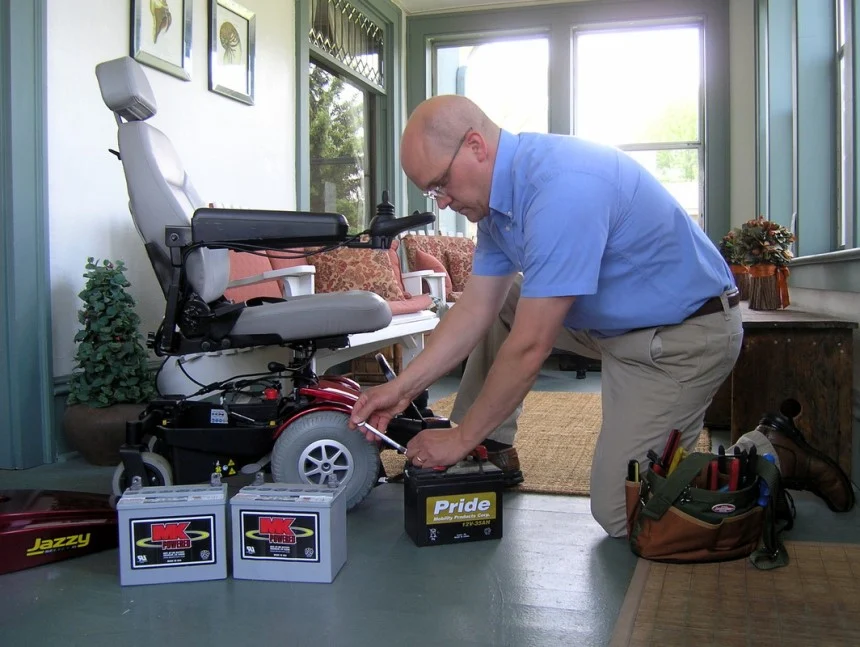
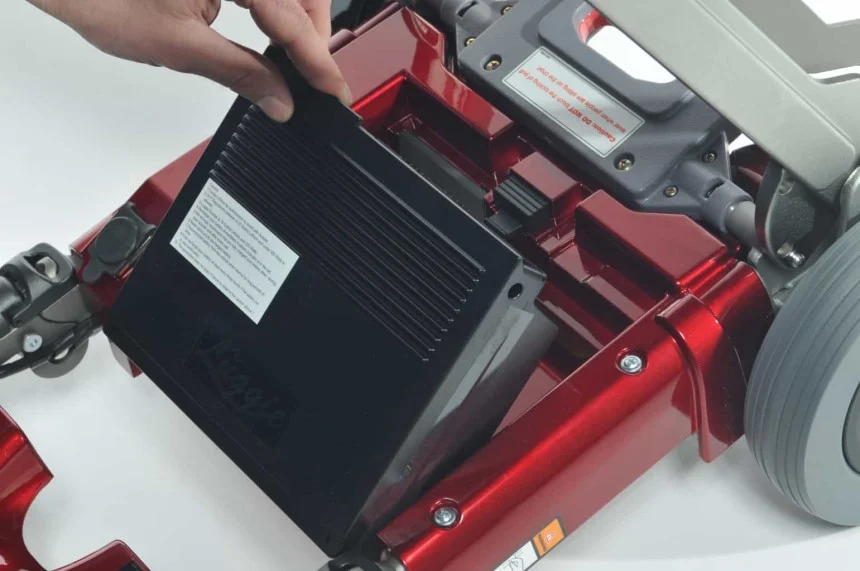
A replacement battery may restore performance that has been lost, but it should not raise the scooter above its engineered maximum speed. Match the voltage, chemistry, capacity and configuration required by the manufacturer. Do not add a second battery or substitute a higher-voltage pack as a speed modification.
3. Check Pneumatic Tire Pressure
If the scooter has pneumatic tires, check each tire against the pressure printed on its sidewall or stated in the manual. Underinflation increases rolling resistance and can affect control; overinflation can damage the tire or wheel and may cause a tire to burst. Solid tires do not need inflation, but they should still be inspected for wear and damage.
4. Reduce Unnecessary Load
The scooter’s weight limit includes the rider and anything carried in baskets or attached to the scooter. Remove items that are not needed and remain within the model’s total capacity. Do not compromise essential medical equipment or supports simply to gain speed; suitability and stability matter more than a small performance difference.
5. Consider the Route and Surface
Hills, grass, gravel, soft ground, cracked pavement, headwinds and repeated starts can all reduce speed and range. A scooter that performs normally on smooth, level pavement may slow considerably on a demanding route. Never exceed the incline or terrain limits in the manual in an attempt to maintain pace.
If uneven ground is part of everyday use, an outdoor mobility scooter may provide the ground clearance, tires, suspension and stability needed for that environment. A folding model is usually optimized around portability, so compare the trade-offs in our guide to foldable mobility scooters.
6. Have Drag or Intermittent Power Checked
Unusual noise, pulling to one side, a wheel that becomes hot, jerky power delivery or resistance when rolling may indicate a mechanical or electrical fault. Stop if steering or braking feels different. Wheels, brakes, motors, transaxles, controllers and wiring should be assessed by a qualified mobility technician rather than adjusted as a speed experiment.
Modifications That Should Not Be Used to Increase Speed
| Proposed modification | Why it is not a safe general recommendation |
|---|---|
| Higher-voltage or additional battery | The controller, charger, motor, wiring and protective devices are designed around a specific electrical system. More voltage is not a routine performance upgrade. |
| Removing or bypassing the speed limiter | The preset maximum is part of the scooter’s engineered operation. Changing it can affect control, braking distance, warranty and legal status. |
| Rewinding or replacing the motor for speed | Motor changes alter electrical load, heat and drivetrain behavior and may exceed the capability of other components. |
| Changing sprockets, gearing or wheel diameter | Many scooters do not use the simple sprocket arrangement implied by older advice. Drivetrain changes can alter torque, braking and stability. |
| Controller reprogramming | Parameters interact with acceleration, deceleration and braking. Only manufacturer-authorized settings should be changed by an appropriately equipped technician. |
Pride Mobility’s scooter manuals, for example, warn users not to modify, add, remove or disable features unless the change is authorized by the manufacturer. Other brands have their own requirements, so use the manual and service network for your exact scooter.
How Fast Should a Mobility Scooter Go?
There is no single international speed class that applies everywhere. The correct reference is the maximum speed in the scooter’s specifications together with the rules for the place where it is being used. Indoor areas, shops and crowded paths often require a pace close to pedestrian traffic even when the scooter is capable of more.
As one jurisdictional example, current UK rules usually describe Class 2 mobility scooters as having a maximum speed of 4 mph or less and Class 3 scooters as having a maximum speed of 8 mph. Those classifications should not be applied to another country. In the United States, facilities may adopt legitimate safety policies that consider the device’s speed, pedestrian traffic and operating environment.
Check national, state or local rules before using a scooter on roads, paths or in public facilities. Increasing the machine’s design speed may also change how it is classified, registered, insured or permitted.
When a Different Mobility Device May Be Better
If your scooter is operating to specification but still cannot handle the required terrain, distance, turning space or pace, the problem may be suitability rather than performance. Compare the intended environment, maximum user-and-cargo load, range, transport requirements and local operating rules before choosing another model.
Speed alone should not decide the replacement. Stability, braking, seat support, control layout and the rider’s ability to transfer and steer may be more important. If your needs have changed substantially, our mobility scooter versus power wheelchair comparison can help frame the decision.
Mobility Scooter Speed FAQs
Will a bigger battery make a mobility scooter faster?
A correct new battery may restore acceleration and range that were lost as an old battery deteriorated, but greater amp-hour capacity does not automatically raise the scooter’s designed top speed. A higher-voltage or incompatible battery can damage the electrical system and should not be used as a speed upgrade.
Can a dealer legally make my scooter faster?
A dealer may be able to correct a fault or apply a manufacturer-authorized setting, but whether any change is permitted depends on the model, jurisdiction and intended place of use. Ask for written confirmation about warranty, braking, classification and local legal requirements before approving a change.
Why does my mobility scooter slow down on hills?
Climbing increases the load on the motor and battery. Rider-and-cargo weight, incline, surface, battery condition and temperature can all affect hill performance. Stay within the manufacturer’s incline limits and do not approach a slope faster to compensate.
Why is my scooter slower than when it was new?
Common possibilities include reduced battery capacity, low pneumatic-tire pressure, increased load, harsher terrain, brake or wheel drag, poor electrical connections or a control fault. Complete the safe checks above and arrange service if performance does not return.
The Safest Way to Improve Performance
Use the controls and maintenance steps approved for the scooter, correct any battery, tire or mechanical problem, and keep the machine within its stated design limits. If that still does not meet your needs, choose a scooter built for the required environment rather than turning a mobility aid into an untested modification project.